The Multiple Myeloma Channel is supported with funding from AbbVie (Platinum), Sanofi (Gold), Legend Biotech (Bronze), and through an educational grant from Alexion Pharma GmbH.
VJHemOnc is an independent medical education platform. Supporters, including channel supporters, have no influence over the production of content. The levels of sponsorship listed are reflective of the amount of funding given to support the channel.
iwMyeloma 2026 | Novel approaches to targeting resistance mechanisms in multiple myeloma
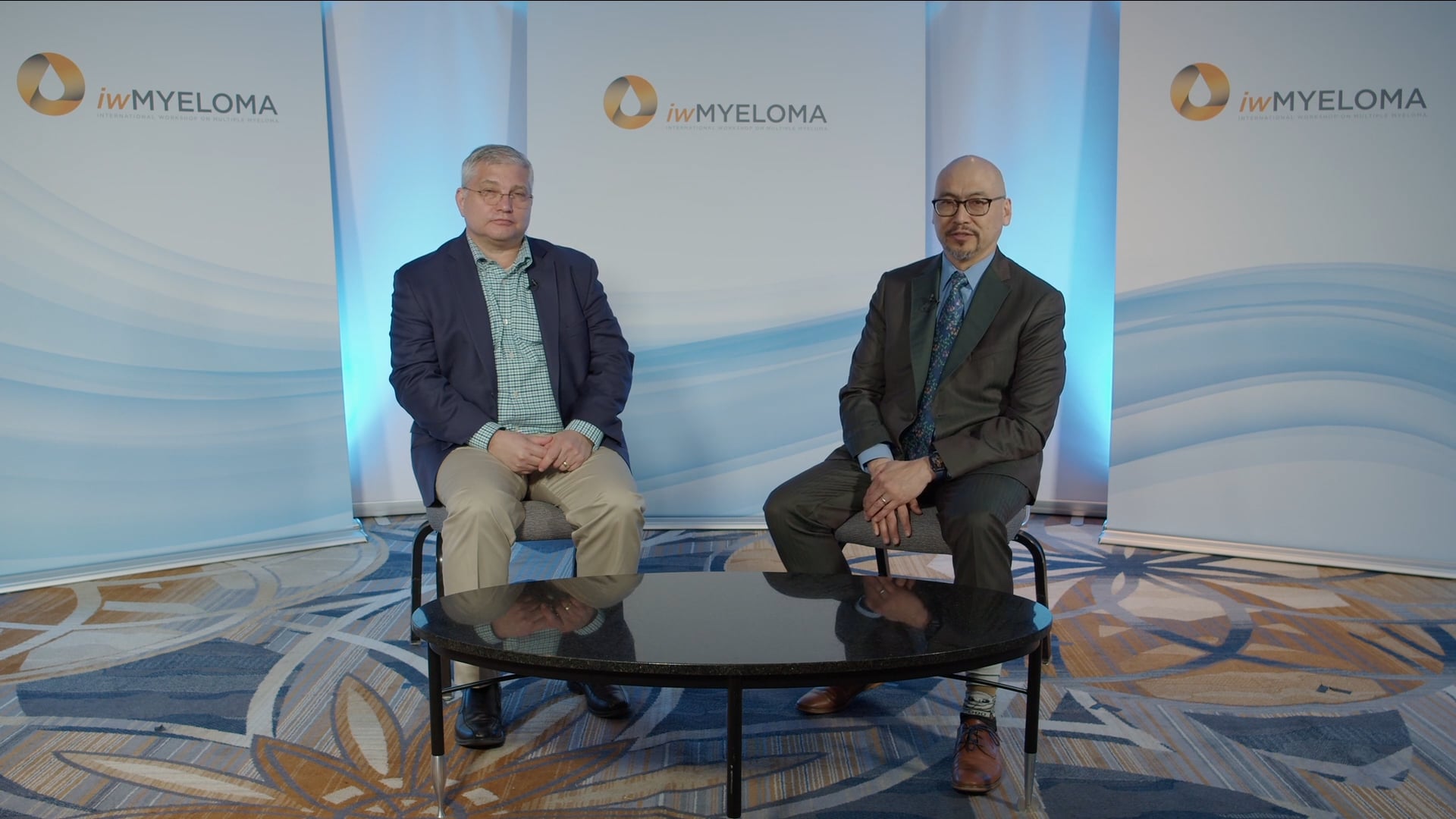
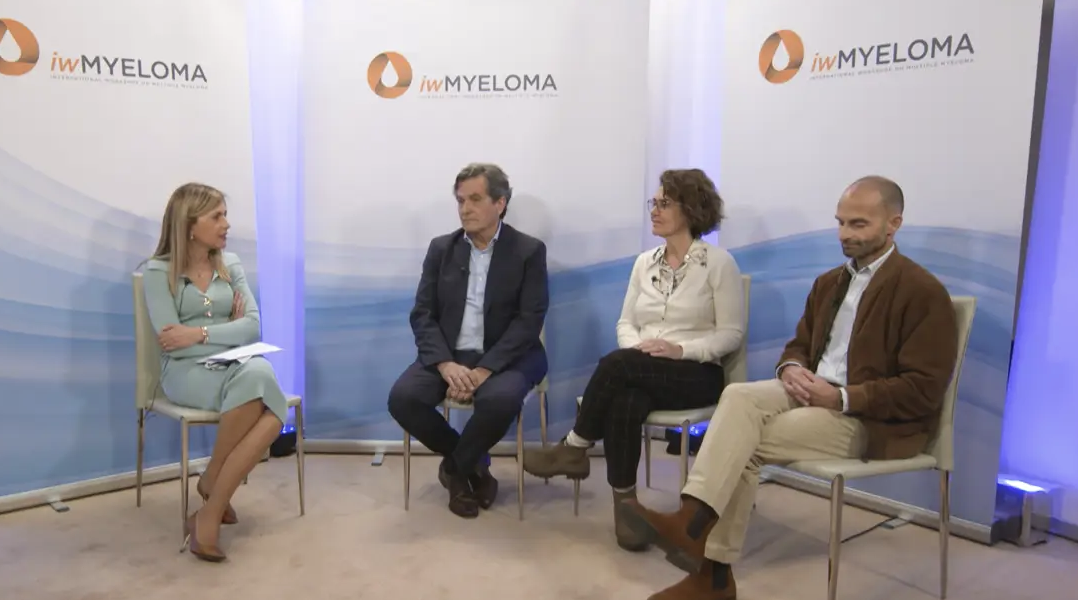
In this discussion, Marta Chesi, PhD, Mayo Clinic, Scottsdale, AZ, Lawrence Boise, PhD, Winship Cancer Institute of Emory University, Atlanta, GA, Charlotte Pawlyn, BA, MBBChir, MRCP, PhD, FRCPath, The Institute of Cancer Research and The Royal Marsden NHS Foundation Trust, London, UK, and Nizar Bahlis, MD, University of Calgary, Calgary, Canada, share insight into the targeting of resistance mechanisms in multiple myeloma (MM). The experts begin by discussing the clinical development of the p300 inhibitor inobrodib for heavily pretreated patients with relapsed/refractory (R/R) disease. Following this, they shed light on acquired mutations after T-cell redirecting therapies and on overcoming mechanisms of resistance to bispecific antibodies. This discussion was filmed at the 19th International Workshop on Multiple Myeloma (iwMyeloma), held in Miami, FL.
These works are owned by Magdalen Medical Publishing (MMP) and are protected by copyright laws and treaties around the world. All rights are reserved.
Transcript
Marta Chesi:
Good morning, everybody. My name is Marta Chesi. I’m an associate professor at Mayo Clinic Arizona, and I’m here with my friends from the session we had this morning about epigenetic targeting in myeloma as well as on mechanism of resistance of bispecific antibodies. And so my colleagues here are…
Lawrence Boise:
Larry Boise from Emory University...
Marta Chesi:
Good morning, everybody. My name is Marta Chesi. I’m an associate professor at Mayo Clinic Arizona, and I’m here with my friends from the session we had this morning about epigenetic targeting in myeloma as well as on mechanism of resistance of bispecific antibodies. And so my colleagues here are…
Lawrence Boise:
Larry Boise from Emory University.
Charlotte Pawlyn:
Charlotte Pawlyn from the Institute of Cancer Research and the Royal Marsden Hospital in London.
Nizar Bahlis:
Nizar Bahlis, University of Calgary.
Marta Chesi:
I think I was super excited today about hearing about the clinical development of a p300 inhibitor that I think is very important in the patient population that we are facing now that is relapsing on the current available therapy. So I think targeting p300 represents a novel mechanism of addressing the relapsing tumor population. So how do you see, you know, the next phase? You described today the very promising phase two study. How do you envision that the next phase three study is going to be?
Charlotte Pawlyn:
So I totally agree. I think even though we’ve seen amazing results with immunotherapy targeting approaches, unfortunately, patients are still relapsing and we need new treatment approaches for those patients. The EP300 targeting approaches also have the benefit of largely the ones in clinical development at the moment being oral combinations, which also makes them very easy to deliver. I think we see really great data in the results that we have so far. I presented the dose optimization phase 1b study that was presented at ASH. And the phase 2 has just started to recruit now a larger cohort of people at the optimal dose selection. So really excited to start to see the data come out from that. That’s a group of patients who all have to be refractory to anti-CD38, PI, pomalidomide, and exposed to BCMA-targeted therapy. So, these are patients with very few clinical options, and we would expect to have very short periods of remission. So, hopefully, we will see exciting data coming from that with the Inobrodib, pomalidomide, dexamethasone combination.
Lawrence Boise:
Yeah, I agree. And I think one of the things that was just exciting about this particular session was that it really focused from, you know, that we’ve been, our backbone drugs really for, you know, almost 20 years now have been all able to target some aspect of the transcription machinery in multiple myeloma, whether it’s the proteasome inhibitors in NF-kappa B or the IMiDS or CELMoDs with the Ikaros, the Aiolos, and of course, dexamethasone itself to the glucocorticoid receptor. So I think this is an area clearly that is effective in myeloma. And so adding new targets here is really important. I think the p300, as you showed, it’s a preferential dependency even in myeloma. So it seems like a right target for that. And we also heard a talk on another transcriptional regulator, IRF2, and that it’s potential as a target moving forward as well. So I think this is an area that I think we’ve all actually worked in and think that it’s going to continue to be an area of therapy in myeloma. I don’t know if you have any thoughts about that, Nizar.
Nizar Bahlis:
I was curious with Charlotte. What is interesting about the compound, it seems to be quite safe hematologically, because previous p300 appeared to be quite toxic. So can you comment on that?
Charlotte Pawlyn:
Yeah, I mean, the main side effects are some cytopenias, but they’re mostly lower grade cytopenias, and particularly at the dose that’s been selected going forward.
Nizar Bahlis:
And reversible.
Charlotte Pawlyn:
Kind of slightly lower rates of thrombocytopenia and neutropenia. And clearly, these are things we’re very used to looking after as hematologists and very quickly reversible. So I think hopefully going forward, it’s not too much of a kind of problem in terms of continuing dosing.
Marta Chesi:
And I think, Nizar, you mentioned in your talk that one of the clear mechanisms of primary resistance to T-cell engager and CAR-T is tumor burden. So, I think in this new refractory patient population, I think having the p300 inhibitor, I think would represent an opportunity to try to debulk the tumor before giving T-cell therapy.
Nizar Bahlis:
Absolutely, Marta. Disease burden is one of the key factors of primary resistance to bispecific antibodies. And actually, as you published very elegantly from your work in the Vk*MYC mouse model, you showed very nicely that when you combine CELMoDs or drugs that can target this pathway through degrading of Ikaros and Aiolos, which p300 eventually do, can dramatically sensitize a Vk*MYC mouse model with high disease burden to T-cell engagers. But also perhaps, as you also showed elegantly in your work, those molecules can perhaps modify the immune environment through depleting of T-regs, perhaps, or altering the immune environment to resensitize to a bispecific antibody. Along those lines, I’m curious, Charlotte, do you know if p300 has any efficacy or modification on the T-cell phenotype? Have you done any work on that?
Charlotte Pawlyn:
I haven’t done any work personally on that, but I think it’s a super interesting area. And as part of the phase one study, we’re starting to combine inobrodib with T-cell engagers in the clinic as well. So we will hopefully have some clinical data to look at that in soon.
Nizar Bhalis:
And that will answer your question, Marta, as well about debulking.
Lawrence Boise:
But it can also be, you know, indirect effects on where the, not p300 necessarily on the T-cell, but it could be because of the response of the tumor cell that you end up inducing things like interferon responses or such that you may, in fact, still influence the immune microenvironment that way.
Nizar Bahlis:
Yeah, absolutely. So, I mean, one of the mechanisms of CELMoDs that you’ve seen even initially with IMIDs, the induction of the free response in the myeloma cells and induction of STING, at least an important factor to allow penetration of immune cells to the tumor bed. And we’ve seen some dramatic responses in patients who are progressing on bispecific alone, but when we added the CELMoD or even an immunomodulator like pomalidomide, this extramedullary disease tends to shrink and rapidly reduce when we added the CELMoD or the IMiD in this context, likely because of the induction of interferon response in the tumor cells.
Lawrence Boise:
Yeah. So definitely there could be some complementary effects that you can get there than following in alterations in the immune microenvironment. And so along those lines, you did talk, Nizar, about the tumor burden and these factors. The acquired resistance mechanisms were also fascinating and quite different than that you see in these intrinsic mechanisms. Can you talk a little bit about some of the acquired mechanisms that you see in the T-cell engagers?
Nizar Bahlis:
Yes. So we have expanded our analysis after initial publication to a larger cohort, especially with BCMA targeting T-cell engagers, and we can confirm that the primary resistance is largely driven by disease burden, by suboptimal T-cell repertoire. By that, I mean low T-cell count. In particular, low CD8-effector T-cells seem to impact the outcome of these primary resistant patients. But more importantly, with patients who initially respond and acquire resistance, in this patient population, resistance is dramatically driven by acquired mutation into BCMA or GPRC5D, restarting GPRC5D. And these mutations eventually lead to either biallelic deletion, but more commonly monoallelic loss plus alteration in the external domain of BCMA, leading to loss of binding of the bispecific antibody. And it’s a very common event for BCMA, more than 80% in our cohort now, which is over 40 patients. Now, there is a small subgroup of patients who do acquire resistance that is tumor-intrinsic, independent, without antigenic loss, and we’re identifying some novel mechanism that’s been known for a long time, actually, to be a mediator of resistance to T-cell-mediated killing. One of them, for example, we observed is a pre-regulation of Serpin B9, a known inhibitor of Granzyme B, for example. Obviously, further validation and further testing to see how often we see this event, but suggesting there are maybe some subgroup of patients where resistance can be driven by antigen-independent mechanism.
Lawrence Boise:
It also seems to point to the idea that that granzyme, the mechanism, is the primary mechanism of the killing through the T-cell engager. Do you think that’s also true for the CAR T-cells?
Nizar Bahlis:
That’s interesting, Larry, and we’ve done some work in collaboration with you, actually, as well, where we looked at the similar cell-mediated killing CAR T-cell versus bispecific antibody. And with CAR T-cell, actually, we do see more dependence or equal dependence on Granzyme B, but also on death receptor-mediated cell death via Fas or TRAIL, which was actually surprising to us, we didn’t see that with bispecific antibody, tt was predominantly driven through Granzyme. So yes, for CAR T-cells, the killing is driven by soluble factors or protease, perforin, granzyme, but also by Fas-mediated cell death or TRAIL, while with bispecific antibody predominantly or almost exclusively driven by granzyme-mediated cell death.
Marta Chesi:
But going back to the acquisition of mutation that you find in 85% of your patient population, I think I would like to advocate that clinically it should be mandatory to do at least whole genome sequencing, I would say coupled with RNA sequencing, of the whole patient population before giving T-cell redirected therapy because these mutations are so prevalent. And I understand that often they are enriched during therapeutic pressure, but regardless, at progression, it should be mandatory to do this sequencing analysis to direct the next therapy.
Nizar Bahlis:
I fully agree with you, Marta, especially because these therapies are first expensive economically on the healthcare system, but more importantly, they’re not void of toxicities, they have side effects. So if we know if a patient doesn’t have expressed BCMA or doesn’t have the binding, the target has altered its binding to the target, it will be unnecessary to expose them to toxicities if they’re not going to benefit from therapies. As well, we can offer perhaps alternate therapy like the p300 or other therapeutics are available to us. So I fully agree. I would love to be able to establish a companion almost test or assay where we can clearly screen, if not by genomics which are ideal, at least by comprehensive flow cytometry profiling to at least document the expression of the target before embarking on these therapies.
Marta Chesi:
Although you elegantly studied, in collaboration with Holly Lee, that expression itself may not be enough because you can have point mutation that specifically abolish the antigen targeted by the antibody.
Charlotte Pawlyn:
But I guess critically important that that information is clinically interpretable in the light of your other data, looking at how certain mutations do not prevent binding of all of the different BCMA targeted bispecifics. So I guess really important that we don’t end up kind of clinically interpreting the presence of an individual mutation as necessarily being a contraindication to treatment. We need that kind of information to come through in those reports.
Lawrence Boise:
But also, again, there’s different ways to target a T-cell now, and so some of the types of mutations that you are seeing aren’t necessarily what you’re going to see with a CAR T-cell either.
Nizar Bhalis:
Exactly.
Lawrence Boise:
And so you also have that possibility that you can overcome some of those by using a different mechanism.
Nizar Bhalis:
Exactly. So as Charlotte and you have mentioned, as well as Marta, these mutations are not leading to universal resistance, meaning they are often selected to one bispecific antibody, and this mutation doesn’t necessarily alter response to CAR T-cells and vice versa. We rarely see mutations post-CAR T-cells, at least with the current follow-up of these patients, and often these patients still respond to bispecific antibodies, and vice versa. Most of the mutations identified post-bispecific antibody, at least with BCMA, tend to retain sensitivity to CAR T-cells, including ide-cel and more so cilta-cel.
Marta Chesi:
But so that is an interesting point because, so bispecific, 85% of mutations, not that many with CAR-T, and we thought that the reason was that perhaps bispecific antibody, the way they were at least initially given, you know, constantly keep the pressure. But then you were making the point that perhaps some of these mutations were pre-existing. So wouldn’t we select them even with the CAR-T? Why we don’t see that many with the CAR-T?
Nizar Bahlis:
Yeah, no, that’s a very good point. I don’t necessarily believe that all mutations are pre-existing. Some of them, perhaps a small proportion may be pre-existing. But going back to the CAR-T cell, now that we’re seeing relapse late in some of these CAR T-cell therapies after three years or four years in long-term responders, we are seeing actually mutation in those patients because of CAR T-cell persistence.
Marta Chesi:
So we were focusing on that earlier, that is almost like an initial failure of control of the tumor and not really capturing the true relapse. So this is very interesting.
Nizar Bahlis:
Exactly, and the initial failure likely because of the suboptimal CAR T-cell product as well. But now we’re seeing those late relapses. Again, numbers are small, but at least the last three patients I’ve sequenced with late CAR T-cell relapse after three years. All of them had BCMA mutations.
Marta Chesi:
Oh, that’s very interesting. You should publish it soon. [laughs] Well, if we want to finish with mutation, any built-in correlative study in the trial you are conducting with p300 to already get a signal of mechanism of resistance to p300 inhibition?
Charlotte Pawlyn:
Yes, there are several ongoing correlative studies looking to try and understand why patients are relapsed within the study, but no data that I’m aware of yet.
Marta Chesi:
Well, stay tuned.
Nizar Bahlis:
Along those lines, the p300 mutation has been reported even in the initial CoMMpass dataset. Do you know if any of these mutations alter the activity of the p300 inhibitors?
Charlotte Pawlyn:
It’s a really good question, actually. We looked in our dataset originally from the Myeloma 11 trial at mutations and reported mutations in EP300. I don’t know, is the answer.
Nizar Bahlis:
I wonder if there’s an activating mutation perhaps. [unintelligible]
Lawrence Boise:
That’s a good question.
Marta Chesi:
But I would like to conclude saying that as a bench scientist, for the long time, we thought that all the myeloma therapies were empiric and we really needed a Gleevec in myeloma, no targeted therapy in myeloma, maybe venetoclax. But I would say after the session today, I think we can conclude that actually myeloma perhaps is the prototype example of targeted therapy in cancer with all these therapies converging on the super enhancer. Do we agree?
Nizar Bahlis:
Very well said. I agree.
Lawrence Boise:
I agree. I think there are some differences. Gleevec targets a translocation where these are actually targeting functional dependencies of the cell, and so I think that’s what really sets myeloma apart, is that we’re not necessarily targeting the oncogenic mutations, but targeting these dependencies that were determined as functional ones.
Marta Chesi:
That mostly are actually plasma cell dependencies more than myeloma dependencies. I want to thank the members of this session for a very engaging and stimulating conversation. And I can’t wait to meet again next year to hear the next development.
Nizar Bahlis & Charlotte Pawlyn:
Thank you.
This transcript is AI-generated. While we strive for accuracy, please verify this copy with the video.
Read more...