The Community Focus Channel is supported with funding from Johnson & Johnson (Gold).
The Multiple Myeloma Channel is supported with funding from AbbVie (Platinum), Sanofi (Gold), Legend Biotech (Bronze), and through an educational grant from Alexion Pharma GmbH.
VJHemOnc is an independent medical education platform. Supporters, including channel supporters, have no influence over the production of content. The levels of sponsorship listed are reflective of the amount of funding given to support the channel.
ASCO 2026 | Age and frailty analyses from MAIA and CEPHEUS: Dara-based regimens in newly diagnosed myeloma
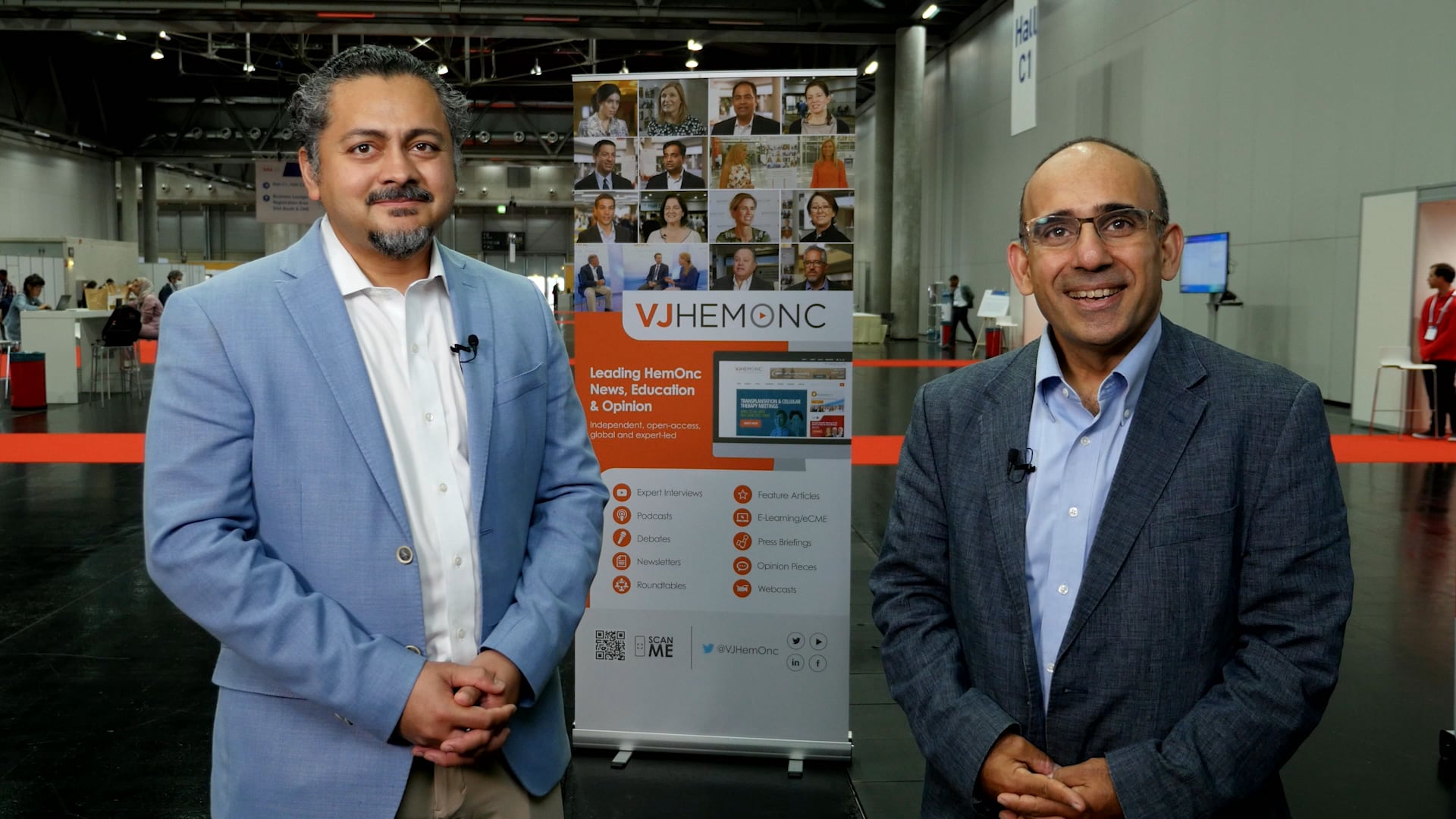
In this video, Saad Usmani, MD, MBA, FRCP, FASCO, FACP, Memorial Sloan Kettering Cancer Center, New York, NY, briefly discusses findings from age and frailty analyses of transplant-ineligible patients with newly diagnosed multiple myeloma (MM) treated with daratumumab (Dara)-based regimens in the MAIA (NCT02252172) and CEPHEUS (NCT03652064) trials. This interview took place during the 2026 American Society of Clinical Oncology (ASCO) Meeting in Chicago, IL.
These works are owned by Magdalen Medical Publishing (MMP) and are protected by copyright laws and treaties around the world. All rights are reserved.
Transcript
It’s very important to appreciate that in the older myeloma patient population, you know, there are patients who are going to have comorbidities and their frailty is going to be different if you look at the International Myeloma Working Group frailty scores. And in the CEPHEUS clinical trial, we had, you know, fit and intermediate fit patients for the most part...
It’s very important to appreciate that in the older myeloma patient population, you know, there are patients who are going to have comorbidities and their frailty is going to be different if you look at the International Myeloma Working Group frailty scores. And in the CEPHEUS clinical trial, we had, you know, fit and intermediate fit patients for the most part. In the MAIA clinical trial, we did have, you know, more frail patients. And the objective of this analysis was to, you know, look at the outcomes in patients based on the frailty in both the experimental arms as well as the standard of care arms. And what we observed is, you know, the combination therapies with anti-CD38s benefit patients across the board, regardless of, you know, frailty. And, you know, so I think the key message was that we have to optimize treatments for patients in the newly diagnosed setting, taking into account their frailty status.
This transcript is AI-generated. While we strive for accuracy, please verify this copy with the video.
Read more...