The Lymphoma Channel is supported with funding from AstraZeneca (Diamond), Johnson & Johnson (Gold), Takeda (Silver) and Galapagos (Bronze).
VJHemOnc is an independent medical education platform. Supporters, including channel supporters, have no influence over the production of content. The levels of sponsorship listed are reflective of the amount of funding given to support the channel.
Tandem Meetings 2026 | The current role of BTK inhibitors in MCL: the shift of these agents to the frontline setting
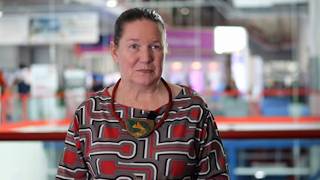
Krish Patel, MD, Sarah Cannon Research Institute, Nashville, TN, discusses the current role of BTK inhibitor (BTKi) therapy in mantle cell lymphoma (MCL), highlighting the shift of these agents towards frontline therapy in both younger and older adults, and notes that incorporation of covalent BTKis can improve outcomes across various risk groups. Dr Patel notes the preference for second-generation covalent BTKis acalabrutinib and zanubrutinib due to improved safety profile, and suggests that the choice of BTKi in the relapsed setting will depend on how they were used in frontline therapy. This interview took place virtually.
These works are owned by Magdalen Medical Publishing (MMP) and are protected by copyright laws and treaties around the world. All rights are reserved.
Transcript
So a lot of things happening in mantle cell, and I think a big one, as you highlight, is the shift of BTK inhibitors towards frontline therapy. So we’ve seen both in younger and older adults, combinations of BTK-containing therapy, typically with chemoimmunotherapy. So in younger adults who historically would have received intensive chemotherapy and potentially a transplant, we now have long-term or longer-term follow-up from the TRIANGLE trial, which I think helps us to recognize that incorporation of BTK inhibitors may help us to avoid the need for transplantation in standard-risk patients...
So a lot of things happening in mantle cell, and I think a big one, as you highlight, is the shift of BTK inhibitors towards frontline therapy. So we’ve seen both in younger and older adults, combinations of BTK-containing therapy, typically with chemoimmunotherapy. So in younger adults who historically would have received intensive chemotherapy and potentially a transplant, we now have long-term or longer-term follow-up from the TRIANGLE trial, which I think helps us to recognize that incorporation of BTK inhibitors may help us to avoid the need for transplantation in standard-risk patients. I think an area that’s still maybe controversial is what to do in patients who have high-risk disease factors. The TRIANGLE data follow-up is still relatively short compared to other transplant trials, but nonetheless, outcomes are better by incorporating a BTK inhibitor into that upfront intensive chemotherapy and potentially in the maintenance setting as well.
For our older adults, where historically we might have been using bendamustine-based chemotherapy alone, we have the results from the ECHO trial, which again show us that incorporation of a BTK inhibitor does improve progression-free survival. And so I think across the spectrum, we’re seeing that incorporation of BTK inhibitors in frontline therapy for mantle cell lymphoma across a variety of risk groups can improve outcomes, and that’s specifically for covalent BTK inhibitors.
And I think many of our studies have demonstrated that there are differences in the covalent BTK inhibitors, in particular in terms of toxicity profile. So we tend to prefer second-generation covalent BTK inhibitors like acalabrutinib and zanubrutinib. The ECHO trial I mentioned incorporates the use of acalabrutinib with BR, whereas the TRIANGLE study was done at a time where ibrutinib was more widely used. So I think at least in the U.S., there’s been a shift towards replacing ibrutinib with covalent second-generation inhibitors like acalabrutinib and zanubrutinib because of their more favorable safety profile. And certainly in the relapsed setting now, if we’re shifting towards more use of covalent inhibitors up front, it begs the question is what would be the appropriate agent in the relapsed setting? And I think that’s an area where we’re still trying to define exactly what will happen. And that’ll be a little bit dependent on how BTK inhibitors were used in the frontline setting, were they used in continuous therapy models, were they used as fixed-duration, but an area for continued investigation.
This transcript is AI-generated. While we strive for accuracy, please verify this copy with the video.
Read more...