The Community Focus Channel is supported with funding from Johnson & Johnson (Gold).
The Lymphoma Channel is supported with funding from AstraZeneca (Diamond), Johnson & Johnson (Gold), Takeda (Silver) and Galapagos (Bronze).
VJHemOnc is an independent medical education platform. Supporters, including channel supporters, have no influence over the production of content. The levels of sponsorship listed are reflective of the amount of funding given to support the channel.
SOHO 2026 | Bringing bispecifics into everyday practice in LBCL: overcoming toxicity challenges
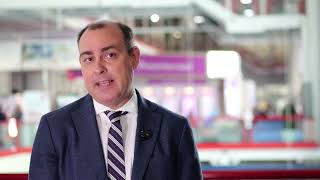
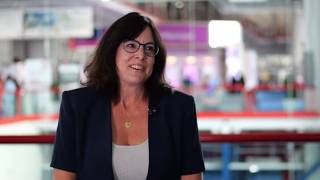
Juan Alderuccio, MD, Sylvester Comprehensive Cancer Center, Miami, FL, briefly discusses the challenges of bringing bispecifics into community practice for patients with large B-cell lymphoma (LBCL), largely due to therapy-related toxicities. Dr Alderuccio explains that these toxicities can often be managed with dexamethasone and highlights debulking strategies, which can help mitigate these toxicities. This interview took place at the 14th Annual Meeting of the Society of Hematologic Oncology (SOHO 2026) in Houston, TX.
These works are owned by Magdalen Medical Publishing (MMP) and are protected by copyright laws and treaties around the world. All rights are reserved.
Transcript
I think it’s the toxicity of the CRS and the ICANS that is unique to bispecifics that makes it sometimes difficult to be providing for the community. However, most of these toxicities can be resolved with the use of dexamethasone and potentially developing bulking strategies like using a combination with ADC a week before and subsequently starting with a bispecific dose type of strategies can decrease the risk of CRS and ICANS that has been demonstrated in combination with polatuzumab or with loncastuximab that are two ADCs that with the subsequent use of glofitamab, the incidence of CRS and ICANS is significantly lower...
I think it’s the toxicity of the CRS and the ICANS that is unique to bispecifics that makes it sometimes difficult to be providing for the community. However, most of these toxicities can be resolved with the use of dexamethasone and potentially developing bulking strategies like using a combination with ADC a week before and subsequently starting with a bispecific dose type of strategies can decrease the risk of CRS and ICANS that has been demonstrated in combination with polatuzumab or with loncastuximab that are two ADCs that with the subsequent use of glofitamab, the incidence of CRS and ICANS is significantly lower.
This transcript is AI-generated. While we strive for accuracy, please verify this copy with the video.
Read more...