The Lymphoma Channel is supported with funding from AstraZeneca (Diamond), Johnson & Johnson (Gold), Takeda (Silver) and Galapagos (Bronze).
VJHemOnc is an independent medical education platform. Supporters, including channel supporters, have no influence over the production of content. The levels of sponsorship listed are reflective of the amount of funding given to support the channel.
SOHO 2026 | Treatment options for patients with R/R DLBCL who progress after CAR-T and bispecifics
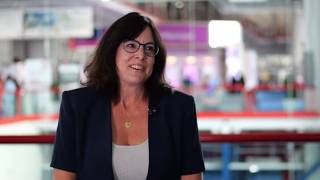
Juan Alderuccio, MD, Sylvester Comprehensive Cancer Center, Miami, FL, discusses challenges in treating patients with relapsed/refractory diffuse large B-cell lymphoma (R/R DLBCL) who progress after bispecific and CAR-T therapies. Dr Alderuccio highlights the potential of new agents, such as CELMoDs and newer bispecifics, as well as in vivo CAR-T, to address this gap. This interview took place at the 14th Annual Meeting of the Society of Hematologic Oncology (SOHO 2026) in Houston, TX.
These works are owned by Magdalen Medical Publishing (MMP) and are protected by copyright laws and treaties around the world. All rights are reserved.
Transcript
The biggest gap are those patients that progress after bispecific and CAR T. Even after CAR T, we know that bispecific, the progression of his survival is very short. This was a Eliza study showing a median PFS of only three months with glofitamab, so different strategies are needed. That’s where the new agents like the CELMoDs and the newer bispecifics like the surovatamig CD19, CD3 may have a role...
The biggest gap are those patients that progress after bispecific and CAR T. Even after CAR T, we know that bispecific, the progression of his survival is very short. This was a Eliza study showing a median PFS of only three months with glofitamab, so different strategies are needed. That’s where the new agents like the CELMoDs and the newer bispecifics like the surovatamig CD19, CD3 may have a role. Also, they’re in development in vivo CAR-T that although has not been tested in this setting, potentially can be associated with higher activity in the early lines of therapy or in patients that after frontline immunochemotherapy are MRD positive. Also, the tri-specifics and tetra-specifics are in development and we look forward to see the data to see if they will have any role in the treatment for these patients.
This transcript is AI-generated. While we strive for accuracy, please verify this copy with the video.
Read more...