The Lymphoma Channel is supported with funding from AstraZeneca (Diamond), Johnson & Johnson (Gold), Takeda (Silver) and Galapagos (Bronze).
VJHemOnc is an independent medical education platform. Supporters, including channel supporters, have no influence over the production of content. The levels of sponsorship listed are reflective of the amount of funding given to support the channel.
CAR-T Meeting 2026 | The potential for utilizing AI-driven systems to engineer T-cell therapies
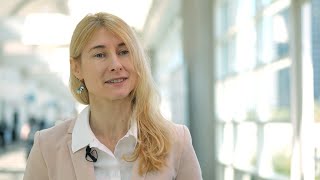
In this video, Zinaida Good, PhD, Stanford University, Stanford, CA, discusses the potential of using AI-driven systems to engineer T-cell therapies for hematological malignancies and autoimmune diseases. Dr Good highlights proof-of-concept work that utilized single-cell sequencing data from CAR-T infusion products to predict patient response and identify potential genetic changes to enhance outcomes. This interview took place at the EBMT-EHA 8th European CAR T-cell Meeting, held in Palma de Mallorca, Spain.
These works are owned by Magdalen Medical Publishing (MMP) and are protected by copyright laws and treaties around the world. All rights are reserved.
Transcript
I’m very excited about the possibility of how AI systems can affect how we make T-cell therapies in the future. Today I presented a proof-of-concept work where we have connected single-cell sequencing data from CAR-T infusion products, which in this case was axi-cel for large B-cell lymphoma, and they connected this data to predict patient, durable patient response after this therapy...
I’m very excited about the possibility of how AI systems can affect how we make T-cell therapies in the future. Today I presented a proof-of-concept work where we have connected single-cell sequencing data from CAR-T infusion products, which in this case was axi-cel for large B-cell lymphoma, and they connected this data to predict patient, durable patient response after this therapy. With this model, in addition to predicting the response, it was also able to predict which genetic changes we need to make to enhance predicted patient outcomes. And by understanding this model, we were able to come up with a list of genes, which we then integrated into a genetic screen, and in the context of these in vivo genetic screens, we were able to validate many of these hits. And I’m pretty excited about the possibility that in the future we could do that at scale, designing AI systems to tell us how to better engineer the cell therapy.
This transcript is AI-generated. While we strive for accuracy, please verify this copy with the video.
Read more...


Disclosures
Boom Capital Ventures: Advising; Sangamo Therapeutics: Speaker fees, Reagents and technical support; AstraZeneca: Speaker fees; 10x Genomics: Reagents and technical support; Kite Pharma, a subsidiary of Gilead Sciences: Grant, Technical support.