CAR-T Meeting 2026 | Potential applications of AI in the field of CAR-T & cellular therapy
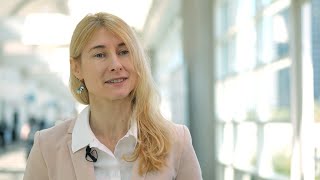
In this video, Zinaida Good, PhD, Stanford University, Stanford, CA, briefly discusses the potential applications of artificial intelligence (AI) in the field of CAR-T and cellular therapy, highlighting that AI-based tools may be used to improve CAR T-cell function, enhance binder and protein design, and facilitate diagnostics and patient stratification using routine clinical data. This interview took place at the EBMT-EHA 8th European CAR T-cell Meeting, held in Palma de Mallorca, Spain.
These works are owned by Magdalen Medical Publishing (MMP) and are protected by copyright laws and treaties around the world. All rights are reserved.
Transcript
I really am excited about the possibility of AI changing how we think about developing new T-cell therapies, and specifically, there is some initial proof-of-concept work that our group has done to show that you can potentially improve CAR T-cell function that would be guided by patient clinical data. In addition, there are exciting opportunities in binder design and protein design for T-cell therapies that some of the AI-based methods are unlocking...
I really am excited about the possibility of AI changing how we think about developing new T-cell therapies, and specifically, there is some initial proof-of-concept work that our group has done to show that you can potentially improve CAR T-cell function that would be guided by patient clinical data. In addition, there are exciting opportunities in binder design and protein design for T-cell therapies that some of the AI-based methods are unlocking. And another one or two ways that I wanted to mention is that, first, AI methods can be really helpful in diagnostics from routine data, for example, diagnostic pathology biopsies or clinical data sets that are health records. So, there is, I think, those types of methods where we use patient data that’s routinely available to forecast patient outcomes will be deployed as one of the first applications. And later, in the future, it’s possible that some of the AI-based models will help us stratify patients based on which kind of therapy they should have, or potentially even design a therapy for them in the future that we could synthesize really quickly for them, in a few decades.
This transcript is AI-generated. While we strive for accuracy, please verify this copy with the video.
Read more...

Disclosures
Boom Capital Ventures: Advising; Sangamo Therapeutics: Speaker fees, Reagents and technical support; AstraZeneca: Speaker fees; 10x Genomics: Reagents and technical support; Kite Pharma, a subsidiary of Gilead Sciences: Grant, Technical support.