The Lymphoma Channel is supported with funding from AstraZeneca (Diamond), Johnson & Johnson (Gold), Takeda (Silver) and Galapagos (Bronze).
VJHemOnc is an independent medical education platform. Supporters, including channel supporters, have no influence over the production of content. The levels of sponsorship listed are reflective of the amount of funding given to support the channel.
EHA 2026 | The evolving role of immunotherapy and frontline treatment strategies in DLBCL
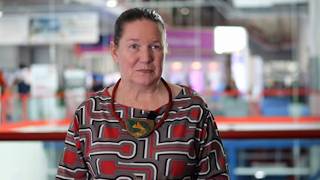
Shinichi Makita, MD, National Cancer Center Hospital, Tokyo, Japan, shares insight into the current treatment landscape for newly diagnosed diffuse large B-cell lymphoma (DLBCL), highlighting recent advancements with polatuzumab vedotin (Pola)-R-CHOP and tafasitamab plus R-squared-CHOP. Dr Makita notes that immunotherapy and precision medicine are transforming the treatment landscape and have the potential to increase the proportion of patients who may achieve a cure. This interview took place at the 31st Congress of the European Hematology Association (EHA) in Stockholm, Sweden.
These works are owned by Magdalen Medical Publishing (MMP) and are protected by copyright laws and treaties around the world. All rights are reserved.
Transcript
In the satellite symposium at this year’s EHA Congress, I presented the current treatment landscape for newly diagnosed diffuse large B-cell lymphoma. For more than 20 years, R-CHOP has been the standard frontline therapy and remains the backbone of treatment today. More recently, the POLARIX study established Pola-R-CHOP as a new standard of care for patients with DLBCL and an IPI score of 2 or higher...
In the satellite symposium at this year’s EHA Congress, I presented the current treatment landscape for newly diagnosed diffuse large B-cell lymphoma. For more than 20 years, R-CHOP has been the standard frontline therapy and remains the backbone of treatment today. More recently, the POLARIX study established Pola-R-CHOP as a new standard of care for patients with DLBCL and an IPI score of 2 or higher. In addition, a frontline study demonstrated superior progression-free survival with tafasitamab plus R-squared-CHOP compared with R-CHOP. Although these results represent important milestones, I believe they are only the beginning of the new era. Immunotherapy is rapidly transforming the treatment landscape, and several randomized Phase III studies are currently evaluating bispecific antibodies in combination with standard chemotherapy. And these approaches have the potential to further increase the proportion of patients who are cured. At the same time, we are entering the era of precision medicine. Technologies such as circulating tumor DNA for molecular response assessment and genomic profiling for biological risk stratification may enable us to better tailor treatment intensity according to each patient’s disease biology. So overall, I believe the future of frontline DLBCL treatment will rely not only on new drugs, but also on biomarker-driven treatment strategies that maximize efficacy while minimizing unnecessary toxicity.
This transcript is AI-generated. While we strive for accuracy, please verify this copy with the video.
Read more...