The Myeloproliferative Neoplasms Channel is supported with funding from Takeda (Gold) and Kartos Therapeutics, Inc. (Bronze).
VJHemOnc is an independent medical education platform. Supporters, including channel supporters, have no influence over the production of content. The levels of sponsorship listed are reflective of the amount of funding given to support the channel.
EHA 2026 | Ropeginterferon may redefine frontline and second-line treatment in ET
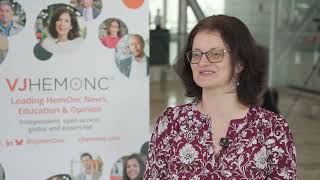
Lucia Masarova, MD, The University of Texas MD Anderson Cancer Center, Houston, TX, discusses how ropeginterferon alfa-2b could reshape the treatment landscape for essential thrombocythemia (ET). Dr Masarova reviews data supporting the use of ropeginterferon in both frontline and second-line settings, comments on patient selection and safety considerations, and highlights the growing importance of molecular responses and disease modification in ET management. This interview took place at the 31st Congress of the European Hematology Association (EHA) in Stockholm, Sweden.
These works are owned by Magdalen Medical Publishing (MMP) and are protected by copyright laws and treaties around the world. All rights are reserved.
Transcript
We’ll be changing the paradigm of how we approach ET patients where currently, of course, most of the front lines would be hydroxyurea, but there we had also data from the EXCEED-ET study that were just published and basically also included newly diagnosed patients in need of therapy and show quite surprisingly nice, not surprising to me, but nice responses in these patients as well. So although SURPASS-ET, that’s presented here, showed great efficacy and superiority, even in the primary analysis over anagrelide as a randomized phase three control trial, the EXCEED-ET study showed efficacy in frontline patients...
We’ll be changing the paradigm of how we approach ET patients where currently, of course, most of the front lines would be hydroxyurea, but there we had also data from the EXCEED-ET study that were just published and basically also included newly diagnosed patients in need of therapy and show quite surprisingly nice, not surprising to me, but nice responses in these patients as well. So although SURPASS-ET, that’s presented here, showed great efficacy and superiority, even in the primary analysis over anagrelide as a randomized phase three control trial, the EXCEED-ET study showed efficacy in frontline patients. So that could actually help or establish where you use interferon in patients with ET, which actually, definitely, we see a second-line role, which is superior to anagrelide that will be used as a second line. But we also see a role broadly in patients in need of therapies regardless of the lines. So let’s see how that data mature to really get a little bit better ideas and safety profile in any patients. But bottom line, it seems to be quite encouraging to see it across ET patients. So that may shake a little bit of the profile. Of course, injectable versus pills versus nothing, right? So the options will be guided by what the goals of therapies are, what the safety concerns are, and a couple of features of the disease as well as the patients. But I think it will kind of more reinforce the role of these agents for seeing deeper and more meaningful, hopefully meaningful responses in the long-term goals. So for example, controlling of the molecular, the mutations, right? Not only JAK2, but we’ve seen some calreticulin improvements in this data, which has been a little bit more novel, where we haven’t seen those in the past. Partly because calreticulin has been the latest mutation developed or discovered, but partly also nobody paid that much attention. Now we pay more attention to what do we see on a deeper level, so molecular and I’m so looking forward to seeing bone marrow responses if we had any to really even more kind of tighten and focus on what are the goals of therapies for patients in ET now that would determine what do we do about that.
This transcript is AI-generated. While we strive for accuracy, please verify this copy with the video.
Read more...