The Myeloproliferative Neoplasms Channel is supported with funding from Takeda (Gold) and Kartos Therapeutics, Inc. (Bronze).
VJHemOnc is an independent medical education platform. Supporters, including channel supporters, have no influence over the production of content. The levels of sponsorship listed are reflective of the amount of funding given to support the channel.
EHA 2026 | Insights into the evolving treatment paradigm for myelofibrosis beyond spleen and symptom control
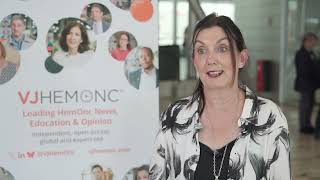
In this video, Haifa Kathrin Al-Ali, MD, University Hospital Halle, Halle, Germany, discusses the evolving treatment landscape for patients with myelofibrosis, highlighting the importance of addressing anemia and transfusion dependence, as well as the need for therapies that achieve disease modification. Dr Kathrin Al-Ali notes the emergence of new drugs that offer precision-medicine approaches, such as targeted antibodies against specific mutations. This interview took place at the 31st Congress of the European Hematology Association (EHA) in Stockholm, Sweden.
These works are owned by Magdalen Medical Publishing (MMP) and are protected by copyright laws and treaties around the world. All rights are reserved.
Transcript
The treatment landscape for patients with myelofibrosis is really very crowded, which is very, very good news for patients, but also for physicians. As anemia, particularly transfusion dependency, remains a major challenge for the well-being of patients on one side, but also for their survival. It is very, very important to have more and more monotherapies, but also combination therapies that address not only anemia and transfusion dependency, but also survival, reduction of the allele burden of the phenotype driver mutations, the so-called disease modification...
The treatment landscape for patients with myelofibrosis is really very crowded, which is very, very good news for patients, but also for physicians. As anemia, particularly transfusion dependency, remains a major challenge for the well-being of patients on one side, but also for their survival. It is very, very important to have more and more monotherapies, but also combination therapies that address not only anemia and transfusion dependency, but also survival, reduction of the allele burden of the phenotype driver mutations, the so-called disease modification. And so many new drugs are emerging, which are more than just spleen and symptoms, disease modification, as we have said, but additionally, really precision medicine. A very simple example is all these antibodies against, for example, the mutant calreticulin in patients. So it is a promising time and we are all in the process of learning.
This transcript is AI-generated. While we strive for accuracy, please verify this copy with the video.
Read more...

Disclosures
Consultancy: BMS, AOP, Novartis, AbbVie, GSK, Kartos, Telios, Takeda, Otsuka, Stemline, MSD, Ionctura, Sanofi; Research funding: BMS, Incyte.