The Myelodysplastic Syndromes Channel is supported with funding from Geron (Silver).
VJHemOnc is an independent medical education platform. Supporters, including channel supporters, have no influence over the production of content. The levels of sponsorship listed are reflective of the amount of funding given to support the channel.
iwMDS 2026 | What are the right endpoints for future MDS clinical trials?
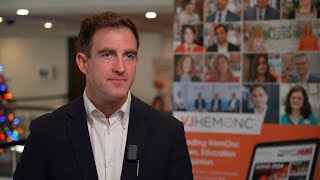
This discussion features experts Amer Zeidan, MBBS, MHS, Yale University and Yale Cancer Center, New Haven, CT, Valeria Santini, MD, University of Florence, Florence, Italy, and Andrew Brunner, MD, Massachusetts General Hospital, Boston, MA, who discuss potential endpoints for future clinical trials in myelodysplastic syndromes (MDS) in both higher-risk and lower-risk disease. The experts also explore endpoints that reflect patients’ lived experience and disease modification, and highlight the need for standardized reporting to enable more accurate comparisons between MDS trials. This roundtable discussion took place at the 4th International Workshop on Myelodysplastic Syndromes & Myeloproliferative Neoplasms (iwMDS/iwMPN) 2026, held in Washington, D.C.
These works are owned by Magdalen Medical Publishing (MMP) and are protected by copyright laws and treaties around the world. All rights are reserved.
Transcript
Amer Zeidan:
Hi, everyone. My name is Amer Zeidan from Yale University. It’s a true pleasure to be speaking to you here from Washington, DC, where we are in the international workshop for MDS and MPN, where we had very productive discussions over the last few days talking about MDS and MPN and we had a very exciting session this morning talking about new drug approvals for MDS and in that session we had several distinguished speakers...
Amer Zeidan:
Hi, everyone. My name is Amer Zeidan from Yale University. It’s a true pleasure to be speaking to you here from Washington, DC, where we are in the international workshop for MDS and MPN, where we had very productive discussions over the last few days talking about MDS and MPN and we had a very exciting session this morning talking about new drug approvals for MDS and in that session we had several distinguished speakers. Two of them are with me here today, Dr. Valeria Santini from University of Firenze and Dr. Andrew Brunner from MGH. So maybe I can start with you, Valeria. So what’s your view on the best endpoints for drug approval in MDS, both higher-risk and lower-risk?
Valeria Santini:
That’s a really important point and issue. We are not really agreeing on what are the real best endpoints for clinical studies. First of all, as you mentioned, we have lower-risk MDS and higher-risk MDS with different endpoints in the studies. But is this correct? We have to discuss this as well because we keep overall survival especially in mind when we are treating and designing a clinical study for high-risk MDS. But we can also look for surrogate of overall survival and we discussed whether the CR, its complete remission is a good surrogate for the overall survival or for the effective activity of drugs that are tested. And this is something that we should really understand better because it is not clear despite the fact that the response criteria have been changed in 2023. The IWG led by you was really changing the thresholds of the response criteria. For lower-risk MDS, on the other hand, we keep on thinking that transfusion independence, reaching transfusion independence is the main endpoint and the principal endpoint to keep in mind. But as a matter of fact, we are moving towards early treatment. So we treat, we will treat patients who are not transfusion dependent, who are just anemic. So what is the real endpoint we should look for? Not the time to transfusion dependence, maybe, the interval that is event free from progression or from achieving transfusion independence. This is something that we should really clarify because is the increase of 1.5 gram hemoglobin enough? And what is the threshold for transfusion? So these are all open questions that we should face in the next few months to understand how to design the study, how to speak the same language and use the same lexicon. We discussed it yesterday as well. So I think we still have to refine our understanding of endpoints of clinically significant endpoints for clinical studies.
Amer Zeidan:
So Andrew, maybe I’ll ask you about two points because you have done some interesting work on both aspects. One is the idea of things short of CR, like less than CR responses. And you’ve done a nice study looking at CRH, which is a complete response with a partial count recovery and endpoint that was used in AML in the refractory lab setting for drug approval and being explored and actually was included as a provisional endpoint in the 2023 revision. And for lower-risk MDS, you also have done nice work looking at cardiovascular outcomes as a main cause of morbidity and mortality in patients with lower-risk MDS. So and how can we think about adding that as an endpoint for drug therapy in lower-risk MDS?
Andrew Brunner:
Yeah, absolutely. I think that both of those concepts really get into this idea that when you’re taking care of a patient with MDS, you’re taking care of that whole patient. And our patients are generally older. They often have other comorbidities. And their anemia, their thrombocytopenia, their recurrent infections, they all contribute to then their lived experience. And so can we try to develop goals in our therapeutics that improve their lived experience with their disease? And so I think that talking about CRH reflects some of that. Again, most of our focus for higher-risk protocols is based in this idea that we’re going to reduce blasts. A lot of the patients historically and even today had increased blasts that were enrolled on higher-risk. And so while that’s not the only defining element of higher-risk disease, it’s certainly a core element. So seeing blast reduction may or may not have an emphasis on blood count improvement. I think that when we think about how we talk about lower-risk trials, we think about transfusion independence. CRH, in many ways, is a metric of that. Because if you’ve got good platelets, you’re not needing platelet transfusions. If you, you know, CRH as developed for AML or ALL does not necessarily touch upon red cell transfusion needs, but can we adapt this kind of concept of reasonable blood count improvement for our patients, which I do think changes their lived experience and use that to explore benefit. Because it really is getting to this idea of what is creating a direct clinical benefit for our patients. Similarly, patients who are going to live with their MDS for many, many years, they have a risk of developing cardiovascular events. And if you look in large population data sets, the risk of developing a cardiovascular event is similar to that of like diabetes or hypertension. So it’s its own risk factor that increases the chance that they’re going to have a heart attack, a stroke, heart failure, other complications over their…during the time that you’re treating them for their MDS. And when we think about how do we look at lower-risk protocols, lower-risk outcomes, should we be thinking about the effects that our transfusions have on their cardiovascular endpoints? Should we be thinking about the effect that anemia has on cardiovascular disease? Can we incorporate MACE endpoints into lower-risk trials? And would that be a way…for instance, we talk about trials where they’re not yet transfusion dependent, should it be a mixed endpoint where we’re trying to both help other side effects of anemia, like cardiovascular endpoints, and prevent the need for transfusions? And so I think that, recognizing that these patients, it’s a whole patient and the less of a burden that their MDS places on their overall lived experience. You know? Can we spend less time in the hospital? All of that will translate into a better quality of life that we have ways to measure now.
Amer Zeidan:
Yeah. And to your point, it wasn’t in this session, but we had a separate discussion about the PROs and patient-reported outcomes, which reflect the patient experience. And I think it’s very important in cancer trials because if we cannot make patients live longer, which is ideal, but at least make their quality of life better, and there is an ongoing work on a kind of tool that’s easy to use in clinical trials. And hopefully, this would be applied in the near future. Another aspect, Valeria, was kind of hinted at, although we did not discuss it much, is the idea of disease modification and how is that being viewed from kind of a regulatory perspective. We think about disease modification in, I think, in different terms than what the regulators think about it. They tend to think about more in terms of reducing progression to acute myeloid leukemia, prolonging survival. I tend to think about it also in terms of can you keep a patient in remission even after you stop the drug, which probably means that you have changed something in the disease biology, like what you have shown with lenalidomide in del(5q) patients. So how do you think this could be used from kind of a drug approval point? You showed some nice data with imetelstat and the variant allele frequency reduction as well to that end.
Valeria Santini:
You know, that’s a very good point you are taking here. I think that our view are more on the biological side, so we want to see how long and what is the duration of response, mirroring probably the decrease in the burden of the disease. And this we measured usually with cytogenetics in the past, and now we have a more sensitive tool. That is the evaluation of molecular alterations. So if we have a decrease in the variant allele frequency of the mutations, we reckon that the drug is really affecting the clone, the dysplastic clone and this is for us extremely relevant, also because it reflects also a longer duration of response. Usually, not only that, it may be in fact accompanying and accompanied by a decrease in the CBC, in the blood values, that is seen as, let’s say, a pitfall, a problem of the therapy, but on the other hand, it’s a sort of side effect that preludes to response to therapy. So I think that this concept of the targeting of the clone is something that we have to reinforce for future studies. So if a drug is on target, it’s very probable that we can improve the result of the drugs, as it is clear for lenalidomide, as it’s clear for imetelstat. Then there are other issues that are, of course, the tolerability of the drug and the duration of therapy. You know, we have not yet thought about it in MDS, but in other diseases like CLL or others, they they think of fixed-duration therapy, will we be able to have this fixed-duration, stop treatment, as you mentioned, have possible maintenance therapy, or even just an observation after therapy? This is something we are not yet seeing in the near future, but I think this is the way we should move now.
Amer Zeidan:
Perfect. Thank you so much. To close this discussion, maybe one last question to you, Andrew. So you presented nice data about the heterogeneity in reporting clinical trial outcomes and how that makes interpreting the trial results, but also comparing between trials more challenging. So maybe you can overview the problem and the proposed solution.
Andrew Brunner:
Sure, yeah. I think that when we are facing MDS, we’re really looking at many diseases, and a patient with MDS may have a very different problem that is impacting their lives. And when we lump them all together into a clinical trial, you have varying outcomes. So it is a challenge when we’re developing new drugs because some responses may matter for a given patient, but you’re capturing things that may not always translate to other therapies, other studies. When we looked at about 80 manuscripts of 72 clinical trials in MDS, we found that how we report that data is very different. It’s very heterogeneous. Even baseline characteristics, what factors went into calling someone MDS and what problems patients had at the entry on to study, how that is reported varies a lot, and many times is not reported at all. It doesn’t mean it wasn’t collected, it’s just when manuscripts are being selected and put out there, it makes it challenging to know if my patient matches that patient population. And then when I’m looking for an effect for either a response rate or transfusion independence, what was defined as a response varies also a lot. And so while it is true that in a different treatment state, there may be different goals for a particular therapy, or we might be trying to get a different transfusion independence duration if you’re in the relapsed/refractory setting compared to upfront, we should also be thinking about using a bit of a Rosetta Stone. You know, can we create some sort of basic language that we can share with one another, so that when we’re reading something, we know how to compare trials a little bit in the context of what we’ve learned about MDS care over the last 10, 20 years. And so we have a proposal now ongoing to try to standardize, to some degree, some basic reporting. And if we follow that, sure, I think we can build upon that. You can highlight things that are still really meaningful for a given trial, but at a minimum, we’ll have a core, basic, translatable set of responses that we will be able to talk to each other about and frame that study with one another in the field.
Amer Zeidan:
Yeah, this is a very important effort, and hopefully we’ll see that paper in print soon. So this is Amer Zeidan with Dr Valeria Santini and Dr Andrew Brunner from DC from the International Workshop on MDS and MPN And thank you so much for listening.
This transcript is AI-generated. While we strive for accuracy, please verify this copy with the video.
Read more...