The Community Focus Channel is supported with funding from Johnson & Johnson (Gold).
The Lymphoma Channel is supported with funding from AstraZeneca (Diamond), Johnson & Johnson (Gold), Takeda (Silver) and Galapagos (Bronze).
VJHemOnc is an independent medical education platform. Supporters, including channel supporters, have no influence over the production of content. The levels of sponsorship listed are reflective of the amount of funding given to support the channel.
ASCO 2026 | Navigating sequencing in relapsed lymphoma: advice for community oncologists
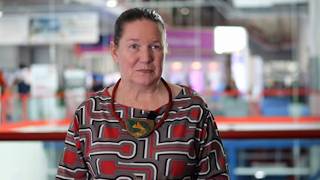
Tycel Phillips, MD, FASCO, City of Hope, Duarte, CA, shares advice on how to sequence treatments for patients with relapsed lymphoma, particularly bispecific antibodies and CAR T-cells. He highlights that while there are still questions to be answered, current limited data suggest that exposing patients to bispecific antibodies before CAR T-cell therapy may not be detrimental, and the goal remains to get patients to CAR-T if possible. This interview took place during the 2026 American Society of Clinical Oncology (ASCO) Meeting in Chicago, IL.
These works are owned by Magdalen Medical Publishing (MMP) and are protected by copyright laws and treaties around the world. All rights are reserved.
Transcript
The sequencing question will be a big one. I mean, ideally, the question is, what can you give and what should you give before CAR T-cell therapy if you can get a patient to CAR T-cell therapy? So for us right now, I think the question is bispecifics and how does it impact the apheresis product? Is it impacting T-cell fitness? Is it negatively impacting the CAR T-cell product? At least from the lymphoma standpoint, I mean, still some questions to be answered, but at least the limited data we have from the French suggested maybe not a detriment to expose patients to bispecific antibodies before you go to CAR T-cell therapy if you have to...
The sequencing question will be a big one. I mean, ideally, the question is, what can you give and what should you give before CAR T-cell therapy if you can get a patient to CAR T-cell therapy? So for us right now, I think the question is bispecifics and how does it impact the apheresis product? Is it impacting T-cell fitness? Is it negatively impacting the CAR T-cell product? At least from the lymphoma standpoint, I mean, still some questions to be answered, but at least the limited data we have from the French suggested maybe not a detriment to expose patients to bispecific antibodies before you go to CAR T-cell therapy if you have to. But for the most part, if you can get a patient to CAR now, the goal should be to get them to CAR. As we get more information about the long-term durability of responses to bispecifics, it’s a possibility that if you can’t necessarily take a patient to CAR, whether because of disease characteristics or other features such as logistically or frailty issues, that maybe you can utilize the bispecific in those patients. And again, maybe save CAR for later if needed. Even though this discussion may flip, as we know, there are several studies in the front line that are being explored with bispecifics plus a CHOP-based backbone. If those studies end up being positive, we’re going to be asking a different question. The question is, how do those regimens impact the efficacy of second-line CAR or later the use of bispecific antibodies? And so I think in the next two to three years, we’re going to have a lot of answers, but also generate more questions. It’s going to take more time to sort of tease out how to best sort of manage these situations. But I mean, as of now, if you need to use a bispecific before CAR, I think it’s OK. I think the goal as of today still remains if you can in the second line, get a patient to CAR T-cell therapy if possible. But if you can’t, the hope is that we’ll have more concrete information to support the durability of the responses with these bispecifics so that if you are in a rural area or an area where you don’t have a CAR T-cell center within 30 to 40 miles, you can still get optimal outcomes for your patients without them having to relocate or transfer care to another provider.
This transcript is AI-generated. While we strive for accuracy, please verify this copy with the video.
Read more...