The Community Focus Channel is supported with funding from Johnson & Johnson (Gold).
The Lymphoma Channel is supported with funding from AstraZeneca (Diamond), Johnson & Johnson (Gold), Takeda (Silver) and Galapagos (Bronze).
VJHemOnc is an independent medical education platform. Supporters, including channel supporters, have no influence over the production of content. The levels of sponsorship listed are reflective of the amount of funding given to support the channel.
EHA 2026 | Underrecognized post-CAR-T toxicities that are important to monitor in patients with DLBCL
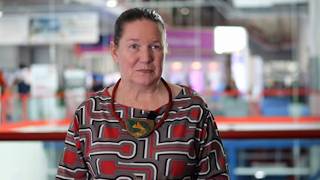
Matthew Frank, MD, PhD, Stanford University, Stanford, CA, reviews key toxicities beyond cytokine release syndrome (CRS) and neurotoxicity that community oncologists should monitor in patients with diffuse large B-cell lymphoma (DLBCL) who received CAR-T therapy. He highlights the importance of monitoring low blood counts, secondary malignancies, and psychological effects. This interview took place at the 31st Congress of the European Hematology Association (EHA) in Stockholm, Sweden.
These works are owned by Magdalen Medical Publishing (MMP) and are protected by copyright laws and treaties around the world. All rights are reserved.
Transcript
Thank you for the question, so beyond cytokine release syndrome and neurotoxicity, there are a number of key toxicities that local oncologists need to monitor. One is low blood counts, and so it’s very common for patients to have low platelets and white cells, so it’s important to give growth factor and to monitor that. Secondary malignancies have also emerged, and so the longer we are from CAR-T infusion, the higher risk for developing particularly myeloid-related malignancies...
Thank you for the question, so beyond cytokine release syndrome and neurotoxicity, there are a number of key toxicities that local oncologists need to monitor. One is low blood counts, and so it’s very common for patients to have low platelets and white cells, so it’s important to give growth factor and to monitor that. Secondary malignancies have also emerged, and so the longer we are from CAR-T infusion, the higher risk for developing particularly myeloid-related malignancies. We’ve actually done some work in that area to study why, and it looks like there is expansion of pre-existing CHIP clones that, particularly if you have TP53 mutations, that can lead towards secondary myeloid malignancies. And then psychologic. I think patients have been through a lot, and I think they are understandably worried about cancer relapse. And that can take a toll. It can prevent them from enjoying life. And I think that needs to be addressed.
This transcript is AI-generated. While we strive for accuracy, please verify this copy with the video.
Read more...