The Community Focus Channel is supported with funding from Johnson & Johnson (Gold).
The Lymphoma Channel is supported with funding from AstraZeneca (Diamond), Johnson & Johnson (Gold), Takeda (Silver) and Galapagos (Bronze).
VJHemOnc is an independent medical education platform. Supporters, including channel supporters, have no influence over the production of content. The levels of sponsorship listed are reflective of the amount of funding given to support the channel.
EHA 2026 | UK insights into how brentuximab vedotin and PD-1 inhibitors are currently sequenced for relapsed HL
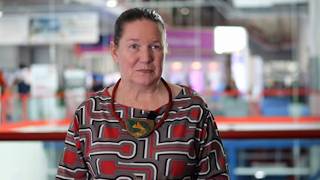
Cathy Burton, MB BChir, MD, MRCP, FRCPath, St James’s University Hospital, Leeds, UK, discusses how limited access to brentuximab vedotin (BV) and PD-1 inhibitors in the UK is shaping the sequencing of treatment for relapsed Hodgkin lymphoma (HL). Dr Burton highlights the efficacy of PD-1 inhibitors prior to autologous stem cell transplant, with BV-based regimens as an effective alternative, and notes that retreatment may benefit patients who relapse after a durable remission. This interview took place at the 31st Congress of the European Hematology Association (EHA) in Stockholm, Sweden.
These works are owned by Magdalen Medical Publishing (MMP) and are protected by copyright laws and treaties around the world. All rights are reserved.”
Transcript
So this is a real challenge in the UK because really our availability of being able to use BV and PD-1 inhibitors is fairly limited. So at the moment, we don’t have any access to PD-1 inhibitors first line other than through clinical trials. The RATIFY trial does use atezolizumab, so BeOne’s PD-1 inhibitor upfront. But as I say, that’s just for a small number of patients over the age of 60...
So this is a real challenge in the UK because really our availability of being able to use BV and PD-1 inhibitors is fairly limited. So at the moment, we don’t have any access to PD-1 inhibitors first line other than through clinical trials. The RATIFY trial does use atezolizumab, so BeOne’s PD-1 inhibitor upfront. But as I say, that’s just for a small number of patients over the age of 60. So at the moment, we can use BV-AVD for stage three and four advanced Hodgkin’s lymphoma. There is also the RADAR trial looking at using BV-AVD in early stage disease. But otherwise, we’re really using these agents beyond first-line. Interestingly, we don’t actually have access to BV or PD-L1 inhibitors or PD-1 inhibitors second line. So we only have those available as monotherapy third line. So traditionally, really, we’ve used a chemotherapy approach and then a transplant for second line and then use these agents if they’ve had inadequate response to salvage chemotherapy. I think what many of us are very impressed by is the PD-1 data prior to autograft definitely seems to improve CMR rates and overall survival and progression-free survival rates. And therefore, in the UK, some of us are using mechanisms to get patients to that third-line PD-1 inhibitor. So that’s maybe using chemotherapy, but not intensive chemotherapy, and then leading on to being able to use PD-1 inhibitors. So I think that’s the favoured option as PD-1, either as monotherapy or in combination with chemotherapy such as GVD. But I think the data does look very good with PD-1. But if they’re not available, then BV is an appropriate alternative in combination with chemotherapy. And I think what’s really come out of data is the retreatment of patients. So definitely patients do remain responsive to treatments that they’ve had previously, particularly if they have longer remission periods. So I think it should definitely as well, I think if we are using targeted therapies up front, they tend to be used for fixed duration and therefore we should look at re-challenging these patients with the targeted therapies.So this is a real challenge in the UK because really our availability of being able to use BV and PD-1 inhibitors is fairly limited. So at the moment, we don’t have any access to PD-1 inhibitors first line other than through clinical trials. The RATIFY trial does use atezolizumab, so BeOne’s PD-1 inhibitor upfront. But as I say, that’s just for a small number of patients over the age of 60. So at the moment, we can use BV-AVD for stage three and four advanced Hodgkin’s lymphoma. There is also the RADAR trial looking at using BV-AVD in early stage disease. But otherwise, we’re really using these agents beyond first-line. Interestingly, we don’t actually have access to BV or PD-L1 inhibitors or PD-1 inhibitors second line. So we only have those available as monotherapy third line. So traditionally, really, we’ve used a chemotherapy approach and then a transplant for second line and then use these agents if they’ve had inadequate response to salvage chemotherapy. I think what many of us are very impressed by is the PD-1 data prior to autograft definitely seems to improve CMR rates and overall survival and progression-free survival rates. And therefore, in the UK, some of us are using mechanisms to get patients to that third-line PD-1 inhibitor. So that’s maybe using chemotherapy, but not intensive chemotherapy, and then leading on to being able to use PD-1 inhibitors. So I think that’s the favoured option as PD-1, either as monotherapy or in combination with chemotherapy such as GVD. But I think the data does look very good with PD-1. But if they’re not available, then BV is an appropriate alternative in combination with chemotherapy. And I think what’s really come out of data is the retreatment of patients. So definitely patients do remain responsive to treatments that they’ve had previously, particularly if they have longer remission periods. So I think it should definitely as well, I think if we are using targeted therapies up front, they tend to be used for fixed duration and therefore we should look at re-challenging these patients with the targeted therapies.
This transcript is AI-generated. While we strive for accuracy, please verify this copy with the video.
Read more...