The Lymphoma Channel is supported with funding from AstraZeneca (Diamond), Johnson & Johnson (Gold), Takeda (Silver) and Galapagos (Bronze).
VJHemOnc is an independent medical education platform. Supporters, including channel supporters, have no influence over the production of content. The levels of sponsorship listed are reflective of the amount of funding given to support the channel.
Tandem Meetings 2026 | Copanlisib plus nivolumab in Richter’s transformation or transformed NHL: Phase I results
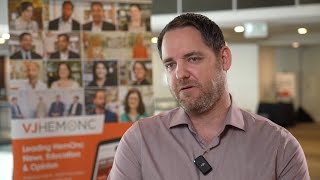
Geoffrey Shouse, DO, PhD, City of Hope Comprehensive Cancer Center, Duarte, CA, discusses the results of a Phase I trial (NCT03884998) investigating the combination of copanlisib and nivolumab in patients with Richter’s transformation (RT) or transformed non-Hodgkin lymphoma (NHL). The combination therapy had a manageable toxicity profile and response rates were promising, especially among patients with transformed NHL, despite the significant burden of prior therapies. This interview took place virtually.
These works are owned by Magdalen Medical Publishing (MMP) and are protected by copyright laws and treaties around the world. All rights are reserved.
Transcript
Given the poor outcomes of Richter’s Transformation and Transformed Non-Hodgkin Lymphoma, we evaluated the combination of PI3 kinase inhibitor with nivolumab, a PD-1 blocking antibody. The rationale behind the study was that in Richter’s transformation, there was evidence for good activity with anti-PD1 antibody treatment in a small proportion of patients...
Given the poor outcomes of Richter’s Transformation and Transformed Non-Hodgkin Lymphoma, we evaluated the combination of PI3 kinase inhibitor with nivolumab, a PD-1 blocking antibody. The rationale behind the study was that in Richter’s transformation, there was evidence for good activity with anti-PD1 antibody treatment in a small proportion of patients. And then adding in the PI3-kinase inhibitor is thought to potentially cause direct responses, but then also help influence the tumor microenvironment to help the cell functionality and thereby enhance responses to nivolumab. The same was thought to be true for the transformed patients indolent non-Hodgkin’s lymphoma as well.
So it was a dose escalation study, a phase 1-2 study. We started out with 45 milligrams of copanlisib given IV on days 1, 8, and 15, combined with nivolumab at 240 milligrams IV on days 1 and 15 in the 28-day cycle. We found dose-limiting toxicities occurring in two patients when we got to dose level 2. So dose level 1, the 45-milligram dose of copanlisib was chosen for dose expansion. The overall response rate of the entire group was 46%, and the median progression-free survival was four months. Patients with Richter’s transformation ended up having an overall response rate of 31%, including two complete responses, with a median progression-free survival of two months. And the correlative study is demonstrating the downregulation of MYC and NF-kappa-B pathways in malignant B-cells. Interestingly, patients with transformed lymphoma who responded to treatment demonstrated sustained activation of interferon-alpha and interferon-gamma signaling pathways in the CD4 and CD8 T-cells. Looking at the survival curves for the patients with each subtype, it seems like the survival curves for transformed indolent lymphoma were similar to what we expect with a response to PI3 kinase. So better response rate initially, but then early relapse. And in contrast to that, the Richter’s patients tended to have lower response rates and a longer survival. And this is probably due to the people out the PD-1 therapy being added in those cases. There were two patients who remained in remission for more than two years, both of which had immune-related adverse events related to the nivolumab and were taken off of treatment, but still remained in remission. So overall, the combination of copanlisib and nivolumab was well tolerated at the 45-milligram dose, and there were decent response rates and survival in this subgroup of patients.
This transcript is AI-generated. While we strive for accuracy, please verify this copy with the video.
Read more...


Disclosures
Consultancy: Abbvie, ADC Therapeutics, Astra Zeneca, BMS, BeOne Medicines, Kite Pharma, Merck; Prior Speakers Bureaus: ADC Therapeutics, BeOne Medicines, Kite Pharma.