The Lymphoma Channel is supported with funding from AstraZeneca (Diamond), Johnson & Johnson (Gold), Takeda (Silver) and Galapagos (Bronze).
The Multiple Myeloma Channel is supported with funding from AbbVie (Platinum), Sanofi (Gold), Legend Biotech (Bronze), and through an educational grant from Alexion Pharma GmbH.
VJHemOnc is an independent medical education platform. Supporters, including channel supporters, have no influence over the production of content. The levels of sponsorship listed are reflective of the amount of funding given to support the channel.
EBMT 2026 | Factors contributing to the reduction in the incidence of higher-grade CRS and ICANS
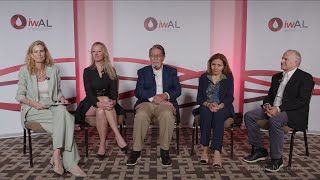
In this video, Marion Subklewe, MD, Ludwig Maximilians University of Munich, Munich, Germany, outlines the main factors contributing to the reduction in the incidence of higher-grade cytokine release syndrome (CRS) and immune effector cell-associated neurotoxicity syndrome (ICANS) following CAR T-cell therapy. These include improved CAR T-cell design and production, and earlier physician intervention when low-grade complications begin to arise. This interview took place at the 52nd Annual Meeting of the EBMT in Madrid, Spain.
These works are owned by Magdalen Medical Publishing (MMP) and are protected by copyright laws and treaties around the world. All rights are reserved.
Transcript
Yes, so the good news is the rate of higher grade in CRS and ICANS has reduced over time and I think that’s closely connected to the risk profile for CRS and ICANS. So there are three factors that are contributing to the reduction in the incidence of higher grade CRS and ICANS. First of all, it’s the CAR T-cell design and the CAR T-cell production. So CD28 constructs have a higher rate of higher-grade CRS and ICANS versus 4...
Yes, so the good news is the rate of higher grade in CRS and ICANS has reduced over time and I think that’s closely connected to the risk profile for CRS and ICANS. So there are three factors that are contributing to the reduction in the incidence of higher grade CRS and ICANS. First of all, it’s the CAR T-cell design and the CAR T-cell production. So CD28 constructs have a higher rate of higher-grade CRS and ICANS versus 4.1BB products, and we are using more 4.1BB products and have more products available. So that is already contributing to the reduction. And then I also like to highlight, we have a lot of dual-target CAR T-cells evolving and they are not only dual targeting, and you could even imagine that they have more toxicity, but often they also have a different process of production earlier shorter production stem like phenotype and has been shown so far from the early phase one trial data that CRS and ICANS is also going down. So it seems also that the novel constructs will decrease toxicity.
Second is we know that high metabolic tumor volume, and that is associated with inflammatory markers, contributes to high-grade toxicity like CRP and ferritin. And we looked using the CAR-HEMATOTOX, just as a reminder, that integrates neutrophils, platelets, hemoglobin, CRP and ferritin. It’s taken at time of leukophoresis. And if you look at the high versus low CAR-HEMATOTOX patients, you can see that when we look at now large B-cell lymphoma, fourth line, about 60% of the patients have a high CAR-HEMATOTOX score, also reflecting high inflammatory markers, reflecting often high tumor volume. Now, if you go in earlier treatment lines, the second line, we only have about 30% of these patients to be high risk. So reflecting that now as CAR T-cells move in earlier treatment lines, as we’ve seen in lymphoma, as we’ve seen in multiple myeloma, we have fitter patients with lower tumor volume, less inflammatory marker. So that is also contributing to the reduction in higher grade CRS and ICANS.
And third, so are the physicians doing anything differently? So there’s also data that was actually presented at ASH 2024 where 1,600 patients were looked at treated with axi-cel in third-line large B-cell lymphoma over time comparing 2017 to 2019 with then 2022, 2023. And you can see a marked decrease in the incidence of higher grade toxicity, and I think that is due to our learning curve that we intervene early. So for CRS, often we use tocilizumab already with persisting grade one. We don’t wait for progression to grade two. So earlier intervention. And the same is true also for neurotoxicity. I think here we’ve also learned to intervene early. We know that steroids short term have no negative impact on CAR T-cell function and outcome. And we’ve also learned that anakinra used at higher dose can also help to relieve symptoms and reduction of higher grade ICANS in a shorter time period.
So I think these three factors are actually contributing to our better management. And then lastly, we now also have very good prediction scores. Also, if you think about inpatient hybrid outpatient setting so we have scores developed also by the French group to predict which patients are going to develop higher grade CRS and the same is true for ICANS. So I think it’s a good learning curve and we are treating patients better.
This transcript is AI-generated. While we strive for accuracy, please verify this copy with the video.
Read more...


Disclosures
Research Support: Amgen, AvenCell, BMS/Celgene, Miltenyi, Molecular Partners, Roche, Seagen; Educational Grant: BMS, Gilead/Kite, Janssen, Novartis, Roche, Takeda; Consulting/ Scientific Advisory Board: AbbVie, Amgen, Autolus, AvenCell, BMS, Genmab, Gilead/Kite, Janssen, Kyverna, Miltenyi, Molecular Partners, Novartis, Pierre Fabre, Takeda; Speakers Bureau: Amgen, AstraZeneca, Gilead/Kite, Miltenyi, Novartis, Roche; Travel Support: Amgen, Gilead, Pierre Fabre, Roche.