The Acute Myeloid Leukemia Channel is supported through an educational grant from Jazz Pharmaceuticals.
VJHemOnc is an independent medical education platform. Supporters, including channel supporters, have no influence over the production of content. The levels of sponsorship listed are reflective of the amount of funding given to support the channel.
iwAL 2026 | Insights into established therapies in AML: OPTI-AML & the future of combination therapy
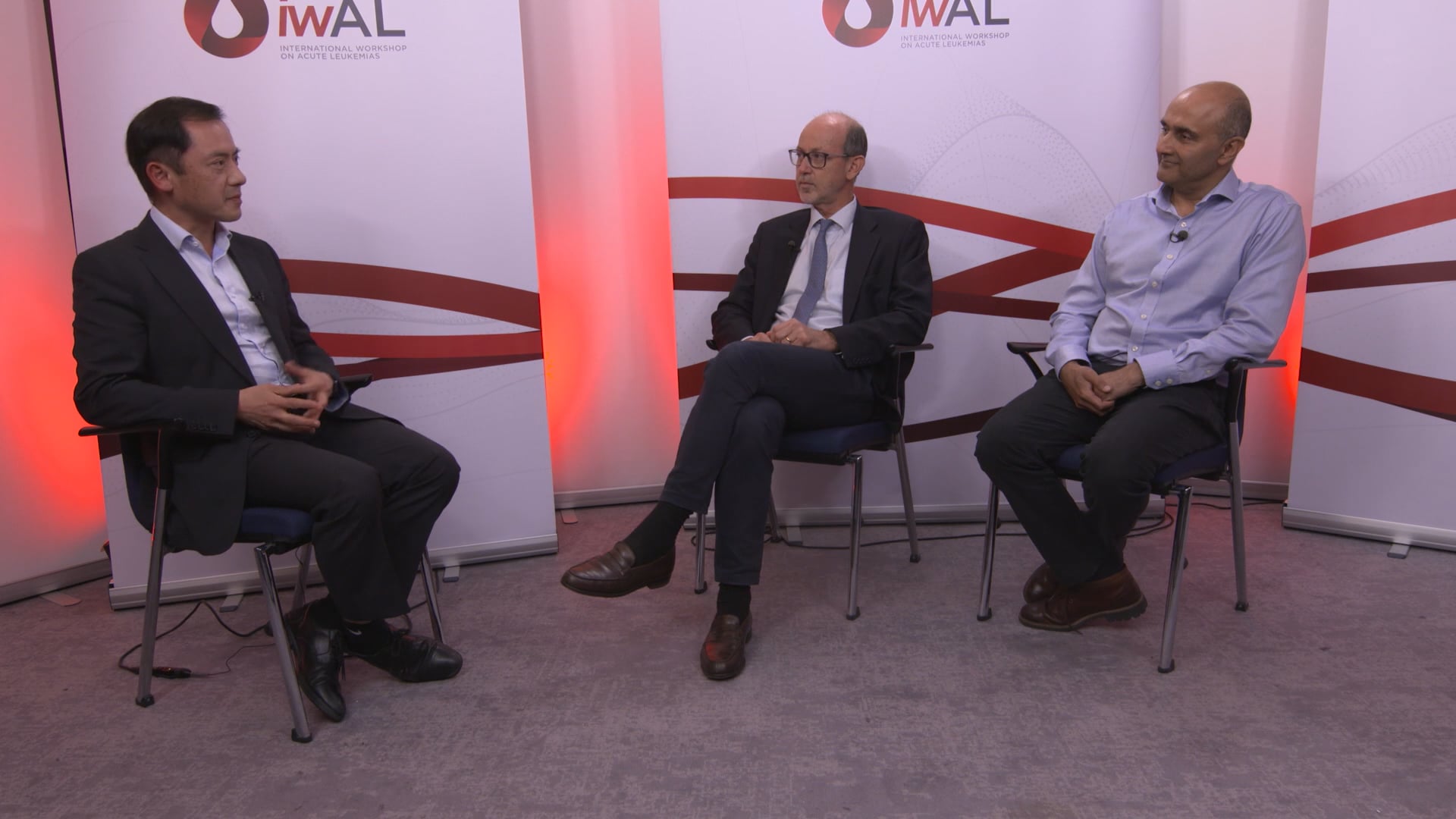
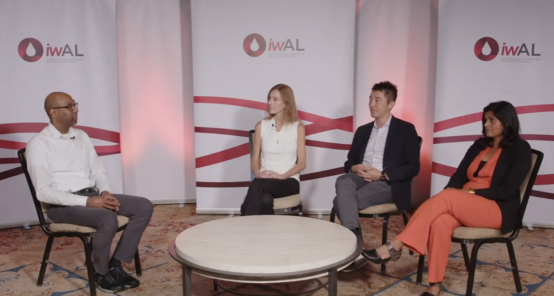
In this discussion, Andrew Wei, MBBS, PhD, Peter MacCallum Cancer Centre & Royal Melbourne Hospital, Melbourne, Australia, Uma Borate, MD, The Ohio State University, Columbus, OH, and Courtney DiNardo, MD, MSc, The University of Texas MD Anderson Cancer Center, Houston, TX, share updates on established therapies in acute myeloid leukemia (AML). The experts discuss the OPTI-AML study (NCT03013998), including key outcomes, and emphasize the importance of considering genomics and mutational status when determining treatment approaches. Dr DiNardo also discusses the potential role of venetoclax in combination with frontline intensive therapy, and the need for further research to determine the optimal backbone for future triplet studies. This panel discussion took place at the 8th International Workshop on Acute Leukemias (iwAL 2026), held in Boston, MA.
These works are owned by Magdalen Medical Publishing (MMP) and are protected by copyright laws and treaties around the world. All rights are reserved.
Transcript
Andrew Wei:
Hello, my name is Andrew Wei from the Peter MacCallum Cancer Centre in Melbourne, Australia, and we are currently here at the iwAL conference here in Boston. And today I have two amazing speakers who just delivered the previous session, Uma Borate from Ohio State and Courtney DiNardo from MD Anderson. So Uma gave the first talk, which was on the OPTI-AML study...
Andrew Wei:
Hello, my name is Andrew Wei from the Peter MacCallum Cancer Centre in Melbourne, Australia, and we are currently here at the iwAL conference here in Boston. And today I have two amazing speakers who just delivered the previous session, Uma Borate from Ohio State and Courtney DiNardo from MD Anderson. So Uma gave the first talk, which was on the OPTI-AML study. And Uma, do you want to just summarize the key points from that particular trial, which I think has generated a lot of really interesting discussion and intrigue.
Uma Borate:
Thanks, Andrew. The reason we did this trial, just for folks to know, is we know azacitidine and venetoclax is such a key treatment for our older patients. But we know that people use a dose of venetoclax variably, depending on the patient in front of them, depending on other factors to do with the patient. And especially the dose reductions of venetoclax are quite frequent. And we were really hoping to understand for our older AML patients, what dose really matters, especially in those first two cycles when you’re hoping to get a good remission response from patients. So we randomized about 166 older AML patients. They had to be 60 or older that couldn’t get intensive chemotherapy to azacitidine and venetoclax for two cycles at 28 days, which is how the label is currently prescribed, versus two cycles for 14 days. And the primary endpoint of the study was to look at the complete remission rate after two cycles, because that’s when most patients will achieve a response. And what we found in our study was that the 28 days for two cycles actually had a higher remission rate than the 14 days. We’d actually hypothesized the opposite because we thought decreasing the venetoclax would help with count recovery, fewer infections, fewer admissions, and maybe the same if not higher response rates. That was not what the study showed. It showed the complications were actually similar, but the response rates were slightly higher in the 28-day arms, especially in older patients with NPM1 and IDH2 mutations. We’re not the first to show that these mutations are more sensitive to venetoclax. That’s been a finding that’s been shown across multiple studies. I think the other intriguing part, as Andrew, you said, generated a lot of discussion, was generally the 28-day arms seem to overall do slightly better, especially with these mutations. If you take away these two mutations, though, both the groups look very similar in terms of their response rates. So I think in conclusion, our message is to be cautious about how you dose venetoclax in your older AML patients in those first couple of cycles when you want to get your deepest response, particularly in NPM1 and IDH2 patients. We’re also recommending, again, you know, more discussion around the venetoclax dosing in the azacitidine-venetoclax backbone as we’re developing triplet therapies, right? We’re adding menin inhibitors, FL3 inhibitors, IDH inhibitors as targets to patients with different genomic subsets. So I think it was a good first attempt to try to clarify what I think is a good problem to have. We have a lot of therapies, but we need to decide how to optimally deliver them to our patients.
Andrew Wei:
So Uma, the whole premise of the study was that with shorter duration therapy, count recovery might be quicker and presumably treatment will be more deliverable. But in fact, as you’ve stated, count recovery was not quicker and clinical outcomes were not superior or grossly inferior. So you also mentioned there were some other studies in progress which would help inform this question. What are those additional studies? And I’ll ask you and also, Courtney, what are you actually doing now based upon that trial and all the other retrospective data which is available suggesting truncated and even metronomic dosing might also be appropriate?
Uma Borate:
So I think, to my knowledge, there’s several studies in Europe that are attempting to do the same thing in slightly different ways, where they’re prospectively randomizing patients to different doses of venetoclax with the hypomethylating backbone. We are also doing a similar study in myelomatch, where we’re looking at an all-oral combination with oral decitabine-cedazuridine and venetoclax. So I think the more data we get, actually, the better for our patients. In terms of what I do, as I mentioned in the session, I still give all patients 28 days of venetoclax for the first cycle in order to really get them into that deep remission. After the first cycle, once they’re blasts are less than 5%, I think my approach is variable depending on the patient in front of me and their genomic subgroup. So I think that is still something that I don’t think we quite know the answer to. But now I’m much more comfortable making sure that my patients get the benefit of that full dose of venetoclax for that first cycle.
Andrew Wei:
And Courtney?
Courtney DiNardo:
I think for me, one of the takeaways from OPTI-AML is that the genomics really does matter. And I think, as Uma mentioned, this is something that’s been shown kind of repeatedly through various different retrospective analyses. And patients who are ven-sensitive derive benefit from getting venetoclax. So the NPM1, the IDH2s in particular, you know, we shouldn’t be so cavalier with truncating. The P53 mutated patients, actually, when you look at those, if anything, they seem to benefit from the shorter durations. And we know that adding venetoclax doesn’t seem to help other than maybe an initial response rate. So I think that’s really useful context. I think it makes it so we really shouldn’t be quite as loose and cavalier with dropping venetoclax in patients getting HMA-venetoclax doublet therapies. And so I do, I think kind of 21 to 28 days, you do your bone marrow kind of at the end of that, you know, that last week between day 21 and day 28 until you get your patient in a remission. I will, I’ll say that one of the challenges is, you know, one of the ideas of doing the OPTI-AML in the first place was to show that 14 days was non-inferior so that you could then move into triplet regimens. And so I’m still struggling a little bit with that because it’s a bit of a bummer, right? We were hoping that we were going to be able to say 14 days is what you need as a backbone to then build in third agents. And so I feel like we’re still going to struggle with that question for a little bit. Do you still need 28 days if you’re adding a third agent? And so that’ll be the focus of future studies, I’m sure.
Andrew Wei:
So what do you think would or should be the backbone for these future triplet studies in terms of aza-ven, first cycle? Should the duration be different to 28 days? Or do you think your study really has just reinforced that that is the right thing to do?
Uma Borate:
I think we don’t know because I think the third agent is key, right? Because if the third agents, for example, FLT3 inhibitors, very potent, really go after the mutation, high ITD burden. I’m not sure you need 28 days of venetoclax along with a potent FLT3 inhibitor if that’s your triplet. So I think it’s still an open question depending on that third agent. I think with NPM1, when you’re adding a menin inhibitor, because it’s so sensitive to venetoclax, I think that’s where we worry a little if you’re dropping your venetoclax quickly in the first cycle to add the third agent where we know it’s effective, but how much is it contributing to the efficacy versus the venetoclax that we know already is affective? That’s a different question in my mind. So I don’t know what you think.
Courtney DiNardo:
No, I think one of the things that you know you’ve mentioned already that is that is interesting and a little bit counterintuitive to me is that shortening the venetoclax really doesn’t seem to improve count recovery. So part of the concern right with doing longer ven durations is that it’s going to be harder to tolerate and at least with HMA-venetoclax doublets, that doesn’t really seem to hold out. Now, I do, I share the concern that a lot of it is kind of the synergistic activity of the venetoclax with whatever that third agent is, right? And we know venetoclax and FLT3 inhibitors, for example, there is cytopenias and myelosuppression that happens just when you use those two oral agents together. So I don’t think it’ll be just quite as easy as just to say, like, everyone should get 28 days of venetoclax, and it’s not going to impact recovery when you’re adding something that we know will modify that. But what the right thing to do is, I don’t know. So leading on from that, Courtney, obviously, with respect to low-intensity therapy, it took a lot of many, many decades to change that, and venetoclax has transformed that. In a similar vein, intensive therapy with 7+3 has also resisted therapeutic modification for many decades. What role do you think, with respect to your talk, venetoclax might have in combination with frontline intensive therapy? And what do you think are the key questions that need to be addressed in future research? So, you know, as I mentioned, as I was giving this talk, I feel like our field is really kind of rapidly de-intensifying therapy, you know, and like with the paradigm, like using lower intensity therapy for younger, fitter patients. So it’s a little bit of a, you know, a completely different approach to think about actually intensifying intensive therapy, where you’re taking kind of 7+3, but actually adding a purine analog and adding venetoclax. So for instance, our FLAG-IDA or our CLAG with venetoclax regimens. But what I can say is that these are profoundly effective for our younger patients who, especially our intermediate and our adverse risk, so long as they’re not P53 or MECOM, right? The adverse risk because of MDS-associated mutations, RUNX1 mutations, things like that, and then getting them to transplant. So we’ve now treated well over 200 patients in these regimens. And I do feel like we’ve kind of optimized them a little bit in the way that we’re giving 7 days of venetoclax. We’re often only doing one or two intensive induction with venetoclax cycles. And we’ve, you know, lowered the cytarabine dose to like 1.5 grams per meter squared. We are giving GCSF to help with count recovery. And these are effective curative regimens for younger patients. So I feel like now the question is, you know, what is the right patient to do this for? And there are several large European as well as U.S.-based through myelomatch studies looking at, you know, standard 7+3 versus intensive chemo then versus, you know, the HMA then and then, you know, CPX littered in there also. So I think these are going to be important questions. And my suspicion, which I hope will have enough patients to really validate this with some kind of adequate numbers and power and statistics, is the patients who have signaling mutations, for instance, like the NRAS, the KRAS, the PTPN11 patients who do fine with intensive chemotherapy, those patients are going to benefit the most from the like intensive chemo-venetoclax regimens. Whereas the patients with, let’s say, kind of maybe the kind of more of an MDS phenotype that are, you know, maybe like 50 to 60 years old, you know, I bet the HMA-venetoclax to transplant is going to be the best approach for that. So I really, you know, I see things very much with a genomics and, you know, mutational lens. And I hope that that’ll be something we’ll be able to address.
Andrew Wei:
And so with the emerging knowledge now with respect to the results of paradigm of ven-aza in younger people. So in your current practice, and I’ll also ask this of Uma, patients under the age of 60, either non-CBF, non-FLT3, fit or not suitable for transplant or not suitable for transplant based on risk, what is your induction approach with respect to 7+3 or augmented 7+3 with venetoclax or HMA-based regimens? Do you have any system that you use at the moment? Courtney and then Uma? Oh, Uma first.
Uma Borate:
We try to enroll these patients on trials, as you can anticipate. We do have the myeloMATCH study that Courtney just referenced open. So we are prioritizing that study for patients like what you mentioned, Andrew. I will say that we were part of PARADIGM. We took part in the study. And we did enroll several of the younger, traditionally, patients that would have gotten intensive chemotherapy on the azacitidine-venetoclax arm. And I think this was borne out by the data that Amir Fathi presented. And we had that same experience. If we did not get those patients to transplant, they relapsed. And so if I think you said this best in the session, to commit a younger patient to unlimited therapy, where we know relapses are almost always inevitable, is hard if you don’t know that that’s a bridge to transplant. And sometimes when you start therapy, you don’t know if they’re a transplant candidate, not because of their fitness, but because as you know, transplant doesn’t happen in isolation. There’s social factors, there’s caregiver support, there’s insurance, there’s all these things that in the beginning, we have no way of knowing how that’s going to turn out in the next, you know, two to three, four months. And so I think we are much more comfortable using azacitidine-venetoclax in our younger, so-called fitter patients. But I think if we see that this is not going to be a patient that will eventually end up in transplant, that is not the patient that we would use something like that in, if that makes sense.
Courtney DiNardo:
Yeah, I’ll just reinforce that. I think the PARADIGM was an incredibly powerful and really important study that showed that just because you are young and able to tolerate intensive chemotherapy doesn’t mean that that’s necessarily the best choice. And so HMA-venetoclax as a means to a curative transplant is a very appropriate way to get into a remission. But there is no data about getting a younger patient, giving them HMA-venetoclax and then not transplanting them, right? Like that was not the idea of that study. And we know HMA-venetoclax is not curative. So to take a, you know, a 35, 40 year old patient and give them HMA-venetoclax, like it’s, they’re going to relapse in, in a year or two. And then their biology is very different. So I just, you know, it’s just a plea to people that if you’re going to be using HMA-venetoclax for younger, fitter patients, great if that’s the right approach. But then you have to follow that with the transplant.
Uma Borate:
And interestingly, one of the patients that that happened to in our center was an IDH2 mutated patient that we’ve said does really well with azacitidine-venetoclax. But it’s not curative. And the patient went on to relapse, acquired a FLT3, and so the disease just sort of morphed as happens. And unfortunately, the patient just could not get to transplant for social reasons, which happens. And so I think, again, reinforcing your reinforcing point that in those patients, I think we really have to make sure transplant is the end goal.
Andrew Wei:
And last question, Courtney, with respect to patients with NPM1 and KMT2A mutations, you showed data that intensive therapy plus venetoclax, the survival curves looked really impressive in those two patients. Obviously, the big challenger in that subgroup are menin inhibitors. And so did you have any thoughts as to whether an intensive backbone, whether combining with menin inhibitors or BCL2-targeted therapies is the way to go?
Courtney DiNardo:
You know, there’s no comparative data, so it’s hard to really know. And certainly the menin inhibitors have been very effective for those subsets, for NPM1 and KMT2A. And so what I highlighted was just as, kind of as references and as, you know, information that when you’re using an intensive chemo-venetoclax regimen, the NPM1 and the KMT2A subsets do quite well. And I think that’s particularly notable for KMT2A, where a standard 7+3 without the venetoclax is generally not very effective. And so, you know, in countries where menin inhibitors are not available yet, you know, obviously intensive chemo-ven is a great strategy for those patients. I mean, the data that’s been shown recently that Amir Zeider showed was 7+3 plus ziftomenib for NPM1, that is an equally impressive curve. So I think that is an equally appropriate strategy to evaluate. And whether or not, you know, we talk a little bit about kind of induction and then consolidation cycles, right? You know, could you do an intensive chemo-ven induction and then instead of doing multiple cycles with venetoclax switched to menin inhibitors, which are much better tolerated as consolidation and maintenance. I kind of feel like that might be the optimal way to do it, whether or not, you know, there’s enough patients and enough company buy-in.
Andrew Wei:
So I think we might stop there. Just wanted to thank both of you for your wonderful talks and your incredible contributions to AML clinical practice. And both of the areas of discussion and presentation today, I think, are incredibly clinically informative. So thank you very much. And thank you all for listening. Thank you.
This transcript is AI-generated. While we strive for accuracy, please verify this copy with the video.
Read more...