The Chronic Lymphocytic Leukemia Channel is supported with funding from AstraZeneca (Diamond), Johnson & Johnson (Gold) and Lilly (Silver).
VJHemOnc is an independent medical education platform. Supporters, including channel supporters, have no influence over the production of content. The levels of sponsorship listed are reflective of the amount of funding given to support the channel.
ERIC CLL 2026 | Translating current CLL evidence into national guidelines: which gaps remain?
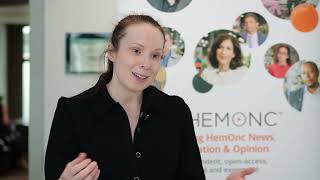
Mary Ann Anderson, MBBS, FRACP, FRCPA, Walter and Eliza Hall Institute of Medical Research, Melbourne, Australia, discusses the challenges of translating clinical trial evidence into national guidelines for chronic lymphocytic leukemia (CLL) treatment, highlighting the difficulties in comparing continuous BTK inhibitors and fixed-duration regimens. Dr Anderson notes that guidelines often focus on progression-free survival (PFS), but overlook other important factors such as duration of therapy, resistance, and toxicities. This interview took place at the 2026 ERIC International Meeting in Barcelona, Spain.
These works are owned by Magdalen Medical Publishing (MMP) and are protected by copyright laws and treaties around the world. All rights are reserved.
Transcript
Yeah, I think that there are a number of areas where the evidence is not fit for practice at the moment. So one of the key issues that came up in our session was the choice between continuous BTK inhibitors and fixed duration regimens. We know that particularly for patients with adverse genetic features, many guidelines internationally do suggest continuous BTK inhibitors as the first step...
Yeah, I think that there are a number of areas where the evidence is not fit for practice at the moment. So one of the key issues that came up in our session was the choice between continuous BTK inhibitors and fixed duration regimens. We know that particularly for patients with adverse genetic features, many guidelines internationally do suggest continuous BTK inhibitors as the first step. One of the challenges with that is that traditionally, when we judge the outcome of a clinical trial, we look to the progression-free survival as the key metric of success. And one of the problems that we have when we’re comparing different types of regimens is that the comparator of PFS for a continuous BTK regimen is probably not a fair comparator to PFS1 when you’re looking at a time-limited regimen. And so we’re left to sort of put together these pseudo-measures of efficacy. We look to MRD, we look to PFS1 plus PFS2. And it’s really very challenging to try and meaningfully compare this kind of data, particularly because we don’t have good prospective PFS1 plus PFS2 from time-limited studies. So I think that is one of the key areas that’s outstanding for us to understand. The CLL17 trial is ongoing, and I think that is going to be a very influential study in this space as it compares a continuous BTK inhibitor to fixed duration therapy and allows for a subgroup analysis based on patients’ adverse genetic features. Unfortunately, that data is still maturing. We had a readout at just over three years, which is quite short for one of the, for a very, for very efficacious regimens in this time, in this era of very highly effective treatments. So we’re all watching that with enthusiasm. The other key thing that I think sometimes gets overlooked when comparing continuous BTK versus time-limited therapy is the cumulative toxicity that a person does experience when they are on long-term treatment, as well as the fact that if you progress on a continuous therapy, it is likely that you will progress with on-target mutations, which have subsequent implications for your response to next lines of therapy. In contrast, typically patients treated with a time-limited therapy respond and then progress off therapy, usually without on-target mutations. So while the guidelines often are highly influenced by PFS1 for both regimens, they’re not necessarily taking into consideration the whole situation. So duration of therapy, resistance on continuous regimens and toxicities.
This transcript is AI-generated. While we strive for accuracy, please verify this copy with the video.
Read more...

Disclosures
Honoraria: AbbVie, Janssen, AstraZeneca, BeOne, Novartis, Gilead, Roche, CSL, Sobi