The Lymphoma Channel is supported with funding from AstraZeneca (Diamond), Johnson & Johnson (Gold), Takeda (Silver) and Galapagos (Bronze).
VJHemOnc is an independent medical education platform. Supporters, including channel supporters, have no influence over the production of content. The levels of sponsorship listed are reflective of the amount of funding given to support the channel.
EHA 2026 | The current role of BTK inhibitors in follicular lymphoma
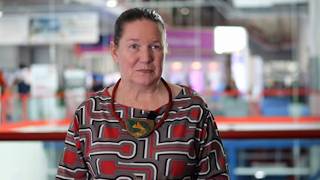
Alexey Danilov, MD, PhD, City of Hope, Duarte, CA, discusses the current role of BTK inhibitors in follicular lymphoma, noting that they are primarily used in the third-line setting, particularly for older or frailer patients who require immediate therapy. Prof. Danilov highlights the potential of exploring next-generation BTK-targeting agents, such as BTK degraders, which have immunomodulatory properties and may be efficacious in this disease. This interview took place at the 31st Congress of the European Hematology Association (EHA) in Stockholm, Sweden.
These works are owned by Magdalen Medical Publishing (MMP) and are protected by copyright laws and treaties around the world. All rights are reserved.
Transcript
Currently in follicular lymphoma, BTK inhibitors, again, they’re used mostly in a third-line setting. Often we think about a regimen like ROSEWOOD in patients who are more frail. We have still more effective therapies in follicular lymphoma in third line, such as bispecific antibodies, CAR T-cells. And nevertheless, BTK inhibitors do have a role, particularly in older patients, frailer patients, patients who need to start therapy today as opposed to wait for CAR-T to be delivered because that’s certainly a much larger process...
Currently in follicular lymphoma, BTK inhibitors, again, they’re used mostly in a third-line setting. Often we think about a regimen like ROSEWOOD in patients who are more frail. We have still more effective therapies in follicular lymphoma in third line, such as bispecific antibodies, CAR T-cells. And nevertheless, BTK inhibitors do have a role, particularly in older patients, frailer patients, patients who need to start therapy today as opposed to wait for CAR-T to be delivered because that’s certainly a much larger process. I also would like to see the next class of BTK targeting agents investigated in follicular lymphoma. And here I mean BTK degraders. There are some BTK degraders which also have immunomodulatory components like lenalidomide. So that particular compound, such as zelebrudomide, would be particularly interesting to investigate in follicular lymphoma as it sort of kills two birds with one stone. BTK does remain a relevant target and it’s also about how you approach it, what kind of combinations you use, what kind of BTK effects you rely on, not just tumor-directed effects but effects on the microenvironment.
This transcript is AI-generated. While we strive for accuracy, please verify this copy with the video.
Read more...