The Lymphoma Channel is supported with funding from AstraZeneca (Diamond), Johnson & Johnson (Gold), Takeda (Silver) and Galapagos (Bronze).
VJHemOnc is an independent medical education platform. Supporters, including channel supporters, have no influence over the production of content. The levels of sponsorship listed are reflective of the amount of funding given to support the channel.
EHA 2026 | Impact of bendamustine exposure in patients with R/R FL treated with odronextamab in the ELM-2 trial
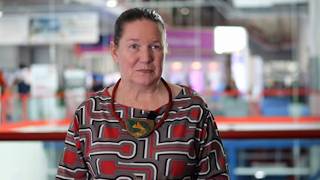
Alexey Danilov, MD, PhD, City of Hope, Duarte, CA, discusses an analysis of data from the Phase II ELM-2 study (NCT03888105), which assessed the impact of prior bendamustine exposure on outcomes of patients with relapsed/refractory (R/R) follicular lymphoma (FL) treated with the bispecific antibody odronextamab. Prof. Danilov highlights that prior exposure to bendamustine did not significantly impact efficacy, with comparable response rates and progression-free survival between groups. This interview took place at the 31st Congress of the European Hematology Association (EHA) in Stockholm, Sweden.
These works are owned by Magdalen Medical Publishing (MMP) and are protected by copyright laws and treaties around the world. All rights are reserved.
Transcript
ELM-2 study was a study which investigated odronextamab, which is a CD3/CD20 targeting bispecific antibody in patients with relapsed/refractory follicular lymphoma. Most patients had two to three, median of three prior lines of therapy. And overall, this regimen was highly efficacious with up to 80% of patients achieving response, and most of these responses were complete responses...
ELM-2 study was a study which investigated odronextamab, which is a CD3/CD20 targeting bispecific antibody in patients with relapsed/refractory follicular lymphoma. Most patients had two to three, median of three prior lines of therapy. And overall, this regimen was highly efficacious with up to 80% of patients achieving response, and most of these responses were complete responses. So a highly effective regimen, typical side effects with CRS, some infections. But the important question is, as we use bendamustine in treatment of follicular lymphoma still, there is data that bendamustine might negatively impact outcomes of CAR T-cell therapies. And odronextamab is obviously a T-cell-engaged antibody, so we asked the question of whether prior bendamustine might negatively affect odronextamab efficacy in follicular lymphoma. And so we used landmark analysis of less than nine months prior exposure to bendamustine or more than nine months. And it seems that prior bendamustine does not significantly affect odronextamab outcomes. So efficacy still remains high. Progression-free survival is similar. Responses are similar, although somewhat numerically higher, but not statistically significant. So, and it seems to be consistent with other published data emerging there that bendamustine does not negatively affect efficacy of bispecific antibodies, which does help think about sequencing of therapeutic approaches in follicular lymphoma.
This transcript is AI-generated. While we strive for accuracy, please verify this copy with the video.
Read more...