The Lymphoma Channel is supported with funding from AstraZeneca (Diamond), Johnson & Johnson (Gold), Takeda (Silver) and Galapagos (Bronze).
VJHemOnc is an independent medical education platform. Supporters, including channel supporters, have no influence over the production of content. The levels of sponsorship listed are reflective of the amount of funding given to support the channel.
EHA 2026 | Optimizing diagnosis and treatment of NK/T-cell lymphoma
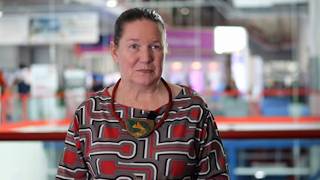
Shinichi Makita, MD, National Cancer Center Hospital, Tokyo, Japan, comments on the importance of accurate and early diagnosis of NK/T-cell lymphoma, highlighting the value of pathological review by an experienced hematopathologist. Dr Makita encourages clinicians to consider referring patients to clinical trials for first-line treatment, as novel immunotherapies may offer meaningful benefits for patients with limited treatment options. This interview took place at the 31st Congress of the European Hematology Association (EHA) in Stockholm, Sweden.
These works are owned by Magdalen Medical Publishing (MMP) and are protected by copyright laws and treaties around the world. All rights are reserved.
Transcript
Thank you. My first recommendation would be to establish the diagnosis as accurately and as early as possible. So NK/T-cell lymphoma is a rare disease and management differs substantially from that of more common lymphomas. So whenever possible, a pathological review by an experienced hematopathologist is valuable. And second, in the first-line treatment, CHOP, I would encourage clinicians to consider referral for clinical trials whenever feasible...
Thank you. My first recommendation would be to establish the diagnosis as accurately and as early as possible. So NK/T-cell lymphoma is a rare disease and management differs substantially from that of more common lymphomas. So whenever possible, a pathological review by an experienced hematopathologist is valuable. And second, in the first-line treatment, CHOP, I would encourage clinicians to consider referral for clinical trials whenever feasible. So novel immunotherapies, including immune checkpoint inhibitors and other emerging approaches, are expanding the therapeutic landscape and may offer meaningful benefit for patients who previously had fairly limited treatment options. Although NK/T-cell lymphoma remains a challenging disease, significant progress has been made over the past decades, especially in the first-line treatment. The continued collaboration between community physicians and specialized centers will be essential to ensure that patients have access to the most appropriate and treatments.
This transcript is AI-generated. While we strive for accuracy, please verify this copy with the video.
Read more...