The Community Focus Channel is supported with funding from Johnson & Johnson (Gold).
The Lymphoma Channel is supported with funding from AstraZeneca (Diamond), Johnson & Johnson (Gold), Takeda (Silver) and Galapagos (Bronze).
VJHemOnc is an independent medical education platform. Supporters, including channel supporters, have no influence over the production of content. The levels of sponsorship listed are reflective of the amount of funding given to support the channel.
EBMT 2026 | Insights into the EBMT Consensus on transplantation in Hodgkin lymphoma
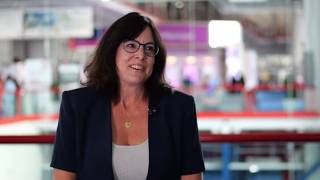
Anna Sureda, MD, PhD, Catalan Institute of Oncology, Duran I Reynals Hospital, Barcelona, Spain, provides insight into the EBMT Consensus on autologous and allogeneic transplantation in Hodgkin lymphoma (HL). Prof. Sureda highlights the role of brentuximab vedotin and checkpoint inhibitors for patients with relapsed/refractory (R/R) disease, as well as outlining strategies for patients who relapse following allogeneic transplantation. This interview took place at the 52nd Annual Meeting of the EBMT in Madrid, Spain.
These works are owned by Magdalen Medical Publishing (MMP) and are protected by copyright laws and treaties around the world. All rights are reserved.
Transcript
So, within the Harmonization and Guidelines Committee, the Lymphoma Working Party has undertaken the task to put some guidelines with respect to the use of autologous and allogeneic stem cell transplantation in patients with relapsed or refractory classical Hodgkin lymphoma. So a group of experts, not only coming from Europe, but also experts coming from the U.S., were gathered under the leadership of the chair of the Lymphoma Working Party and also myself...
So, within the Harmonization and Guidelines Committee, the Lymphoma Working Party has undertaken the task to put some guidelines with respect to the use of autologous and allogeneic stem cell transplantation in patients with relapsed or refractory classical Hodgkin lymphoma. So a group of experts, not only coming from Europe, but also experts coming from the U.S., were gathered under the leadership of the chair of the Lymphoma Working Party and also myself. And we put forward several questions that were discussed online before the face-to-face meeting that happened at the end of September 2025 in Berlin. And we have already put a manuscript that has already been sent out for publication. So basically, which are the highlights of these guidelines with respect to auto and allo stem cell transplantation?
So first of all, autologous stem cell transplant is considered the standard of care for patients with primary refractory disease and for patients with relapsed disease. We try to achieve a metabolic complete remission with salvage chemotherapy strategies, and we try to include either brentuximab vedotin or checkpoint inhibitors in these salvage treatment strategies. The BEAM conditioning regimen is the most frequently used in patients that are candidates for an autologous stem cell transplantation. We can eventually consider radiotherapy either before or after autologous stem cell transplantation after consultation with a radiation oncologist. And we consider basically consolidation or maintenance strategies with brentuximab vedotin following the data coming from the AETHERA trial, but also in specific cases, the possibility to use checkpoint inhibitors.
With respect to allogeneic stem cell transplantation, we consider patients with relapsed refractory classical Hodgkin lymphoma being candidates for an allogeneic stem cell transplant if they have failed an autologous stem cell transplantation and also brentuximab and checkpoint inhibitors. And we potentially discuss with the patient the possibility to consolidate a response or a prior response with checkpoint inhibitors to be consolidated with an allogeneic stem cell transplantation. We normally use reduced intensity conditioning protocols in the allogeneic stem cell transplantation setting. Matched sibling donors, unrelated donors, and later on haploidentical donors are the kind of strategy to be used in this specific setting to allograft the patient with relapsed/refractory classical Hodgkin lymphoma. Peripheral blood stem cells is the most frequently used stem cell source for these patient. And we try to use cyclo post as GvHD prophylaxis platform strategy, basically in those patients that have received checkpoint inhibitors before allogeneic stem cell transplant.
Finally, we don’t have a standard of care for those patients that relapse after an allogeneic stem cell transplantation. And in this specific situation, we are eventually considering donor lymphocyte infusions, plus or minus brentuximab vedotin, the possibility to use checkpoint inhibitors, being cautious because of the enhanced risk of developing GVHD after the use of checkpoint inhibitors, and of course, more conventional salvage strategies such as chemotherapy, radiation, and of course, the first possibility would be to rely on the inclusion of the patient in a prospective clinical trial.
This transcript is AI-generated. While we strive for accuracy, please verify this copy with the video.
Read more...