The Lymphoma Channel is supported with funding from AstraZeneca (Diamond), Johnson & Johnson (Gold), Takeda (Silver) and Galapagos (Bronze).
VJHemOnc is an independent medical education platform. Supporters, including channel supporters, have no influence over the production of content. The levels of sponsorship listed are reflective of the amount of funding given to support the channel.
EBMT 2026 | Integrating bispecific antibodies into the transplant strategy for B-cell non-Hodgkin lymphomas
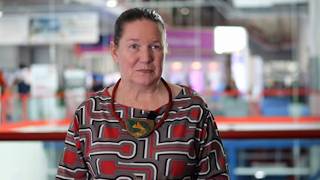
Anna Sureda, MD, PhD, Catalan Institute of Oncology, Duran I Reynals Hospital, Barcelona, Spain, comments on the evolving role of stem cell transplantation in non-Hodgkin lymphoma (NHL) in the era of CAR T-cell therapy, highlighting that optimizing the transplant strategy is necessary, as some areas do not have access or reimbursement for CAR T-cell therapies. Prof. Sureda outlines how the use of bispecific antibodies before transplantation may increase curative potential by improving disease status and performance status of patients. This interview took place at the 52nd Annual Meeting of the EBMT in Madrid, Spain.
These works are owned by Magdalen Medical Publishing (MMP) and are protected by copyright laws and treaties around the world. All rights are reserved.
Transcript
So, both autologous and allogeneic stem cell transplantation have decreased in numbers in patients with non-Hodgkin lymphoma, basically in patients with B-cell non-Hodgkin lymphoma. And the major reason for that has been the integration of CAR T-cell therapies, not only in the third-line treatment strategy or more, and in this case, CAR-Ts have been clearly competing with allogeneic stem cell transplantation, but also because of the advent of CAR-Ts in second-line treatment for patients with early relapse or with primary refractory disease...
So, both autologous and allogeneic stem cell transplantation have decreased in numbers in patients with non-Hodgkin lymphoma, basically in patients with B-cell non-Hodgkin lymphoma. And the major reason for that has been the integration of CAR T-cell therapies, not only in the third-line treatment strategy or more, and in this case, CAR-Ts have been clearly competing with allogeneic stem cell transplantation, but also because of the advent of CAR-Ts in second-line treatment for patients with early relapse or with primary refractory disease. Nevertheless, CAR T-cells are not accessible around the world, and we have clear differences in terms of geographical access and, of course, in terms of reimbursement. And this is why we also have to look at potential strategies to optimize the results of both autologous and allogeneic stem cell transplantation, even in the CAR T-cell era.
So one of the treatment strategies that we are trying to integrate and to combine with the stem cell transplantation, both with autologous and allogeneic stem cell transplant, are bispecific monoclonal antibodies that have been demonstrated to be very effective in patients with B-cell non-Hodgkin lymphoma. If we talk about autologous stem cell transplantation, we can use the combination of bispecific monoclonal antibodies with conventional salvage chemotherapy to improve the overall response rate and complete remission rate of patients that could be otherwise candidates for an autologous stem cell transplant, and we have some prospective clinical trials that are looking at this specific topic. And if we talk about allogeneic stem cell transplantation, there have been some retrospective analyses using bispecific monoclonal antibodies in heavily pretreated patients with B-cell lymphomas that are potential candidates for an allogeneic stem cell transplant. And information derived from these studies indicate that bispecific monoclonal antibodies being used before allogeneic stem cell transplant don’t significantly modify the toxicity profile of the allogeneic stem cell transplantation itself, but can potentially increase the curative potential of allogeneic stem cell transplantation by improving the disease status before allogeneic stem cell transplantation and also the performance status of the patients who are potentially candidates for an allogeneic transplant.
This transcript is AI-generated. While we strive for accuracy, please verify this copy with the video.
Read more...