The Community Focus Channel is supported with funding from Johnson & Johnson (Gold).
VJHemOnc is an independent medical education platform. Supporters, including channel supporters, have no influence over the production of content. The levels of sponsorship listed are reflective of the amount of funding given to support the channel.
iwAL 2026 | Optimizing allogeneic transplantation through prospective randomized trials in AML
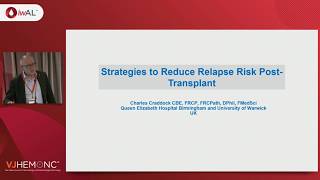
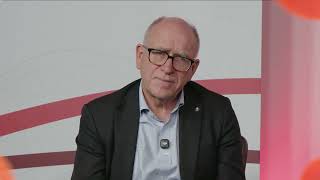
Charles Craddock, CBE, FRCP(UK), FRCPath, DPhil, FMedSci, University of Birmingham, Birmingham, UK, discusses the UK IMPACT transplant trials network and the importance of prospective randomized studies in optimizing allogeneic stem cell transplantation for acute myeloid leukemia (AML). He highlights the network’s successful recruitment of more than 1,500 patients to trials evaluating strategies to reduce transplant-related toxicity and relapse, including approaches to graft-versus-host disease and conditioning. This interview took place at the 8th International Workshop on Acute Leukemias (iwAL 2026), held in Boston, MA.
These works are owned by Magdalen Medical Publishing (MMP) and are protected by copyright laws and treaties around the world. All rights are reserved.
Transcript
Yes, I think it’s important to recognize that in 2026, stem cell transplantation plays a really central curative role in the management of many fit adults with AML. The number of patients who are eligible for transplant is increasing. That’s partly because we’re better at molecular stratification of patients with a high risk of relapse if they don’t have a transplant. And secondly, with the advent of post-transplant cyclophosphamide, we can use now mismatched unrelated donors...
Yes, I think it’s important to recognize that in 2026, stem cell transplantation plays a really central curative role in the management of many fit adults with AML. The number of patients who are eligible for transplant is increasing. That’s partly because we’re better at molecular stratification of patients with a high risk of relapse if they don’t have a transplant. And secondly, with the advent of post-transplant cyclophosphamide, we can use now mismatched unrelated donors. And now, remarkably, almost 95% of patients, regardless of ethnicity or race, will have a suitable donor identified in a rapid time frame. We have to recognize, however, that although transplant is highly effective, it still has significant toxicity with a transplant-related mortality of 10% to 12%, typically at two years. But for older or unfit patients, that can rise to 15%. And at the same time, up to 30% or 40% of patients can relapse post-transplant. Obviously, it’s a much smaller relapse rate if you go to transplant than just having chemotherapy. But nonetheless, this costly and intensive procedure doesn’t deliver long-term durable remission in every patient. And it’s responsible for patients to be presented with trials that address how we can reduce both the toxicity of transplant and also reduce the risk of disease relapse. And what we prioritized in the UK is the establishment of a transplant trial network that rapidly accrues to prospective randomized studies asking exactly those questions. Whether it’s how we reduce the risk of GVHD, whether it’s how we reduce the risk of disease relapse, whether it is what is the optimal conditioning regimen. And we’ve identified that there’s a huge appetite among patients to enter such studies, and also a great collegiate, cohesive approach in the UK that allows us to rapidly recruit to these studies, and more than 1,500 patients have been put on trials. And I think many of us feel that at a time when prospective data is so important in all other diseases, it’s only right that we generate such data for patients having transplant. And lastly, if you’re a donor, particularly an unrelated donor, it’s an enormous gift really and it’s a significant challenge in terms of time and time off work and if I was a donor I would want to know that there was a strategy that made sure that my donation was being used to maximum effect.
This transcript is AI-generated. While we strive for accuracy, please verify this copy with the video.
Read more...