The Lymphoma Channel is supported with funding from AstraZeneca (Diamond), Johnson & Johnson (Gold), Takeda (Silver) and Galapagos (Bronze).
The Multiple Myeloma Channel is supported with funding from AbbVie (Platinum), Sanofi (Gold), Legend Biotech (Bronze), and through an educational grant from Alexion Pharma GmbH.
VJHemOnc is an independent medical education platform. Supporters, including channel supporters, have no influence over the production of content. The levels of sponsorship listed are reflective of the amount of funding given to support the channel.
Tandem Meetings 2026 | Streamlining CAR T-cell therapy: a multidisciplinary screening tool to improve brain-to-vein time
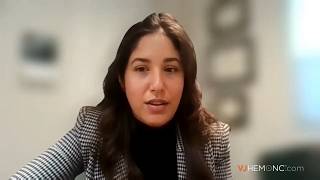
Megan Melody, MD, Northwestern University Feinberg School of Medicine, Chicago, IL, discusses the development and validation of a multidisciplinary screening tool to improve brain-to-vein (B2V) time and streamline CAR T-cell therapy in hematological malignancies. The questionnaire aims to evaluate potential barriers to CAR T-cell therapy and, ideally, replace standard institutional evaluations for selected patients, enabling expedited apheresis and reducing B2V time. This interview took place virtually.
These works are owned by Magdalen Medical Publishing (MMP) and are protected by copyright laws and treaties around the world. All rights are reserved.
Transcript
For CAR T-cell therapy, obviously this is an effective therapy, but there are often delays in administering the therapy either due to insurance administration or pre-screening evaluations. And so at our institution, we support our patients by doing psychological and social work evaluations for all patients. But, you know, we know also that brain-to-vein time, or also known as like B2V time, is very essential in impacting patient outcomes...
For CAR T-cell therapy, obviously this is an effective therapy, but there are often delays in administering the therapy either due to insurance administration or pre-screening evaluations. And so at our institution, we support our patients by doing psychological and social work evaluations for all patients. But, you know, we know also that brain-to-vein time, or also known as like B2V time, is very essential in impacting patient outcomes. And so we really sought to optimize this and really make sure that we were hoping to support our patients and allowing them to go through all necessary evaluations prior to CAR T-cell therapy, to address psychosocial and socioeconomic issues, but we also want to make sure that we’re optimizing brain to vein time as well. So to kind of address this issue at our institution, our team worked closely with the social work team and psychology team as well as our BMT coordinators at Tampa General Cancer Institute to develop a prospective 27-question screening tool developed from the insights and input from all of these teams and the evaluations that they normally make for these patients undergoing CAR T-cell therapy to sort of identify high-risk versus low-risk patients from both a socioeconomic and psychological perspective.
So this initial sort of cohort of patients was meant to validate this questionnaire, and so we looked at about seven patients completing the questionnaire, demonstrating a median concordance of about 100% with a range of 92.6% to 100% with our social work and psychology evaluation. So patients were administered this questionnaire at the time prior to going through any evaluations, and then they proceeded with their normal CAR T-cell evaluations, including a social work and psychology evaluation. And then we compared the results of the questionnaire with the actual evaluation itself. And like I said, of the seven patients who completed this questionnaire, 100% demonstrated concordance. Five patients showed full line up between the responses and the evaluations. And then, like I said, there was that median of 100%, but there was that range. So two patients had a total of two discordant answers. The discrepancies noted involved patient-reported dental visits, over-the-counter supplements, and financial concerns. So one patient reported a higher concern in the evaluation than he did in the questionnaire, and one patient reported higher anxiety levels in the questionnaire than they did in the evaluations.
All participating patients proceeded to apheresis with a median time of 29 days, and five patients received CAR T-cell infusion, and two were actually awaiting manufacturing at the time that we were writing up this abstract. So essentially, we felt that this 27-question screening tool provides an accurate and comprehensive assessment of patients undergoing CAR T-cell therapy and probably is effective in identifying low-risk patients that may be able to proceed with apheresis before undergoing these evaluations. And then obviously would identify high-risk patients that should really proceed with these evaluations before proceeding to CAR T-cell therapy, not necessarily inhibiting apheresis, delaying apheresis, but at least prior to receiving the cell therapy. And so we have now since been implementing this screening tool, and we really hope that utilizing this continues to improve brain to vein time for our patients, so reducing the time from initial consultation to CAR T-cell infusion for our patients and thereby improving outcomes, but still allowing us to support our patients coming from, you know, all over the state from a socioeconomic and psychological aspect.
This transcript is AI-generated. While we strive for accuracy, please verify this copy with the video.
Read more...


Disclosures
Consultancy: Abbvie; Advisory Board: BMS, KITE, Pfizer; Speakers Bureau: KITE; Steering committee: BMS.