The Community Focus Channel is supported with funding from Johnson & Johnson (Gold).
The Lymphoma Channel is supported with funding from AstraZeneca (Diamond), Johnson & Johnson (Gold), Takeda (Silver) and Galapagos (Bronze).
VJHemOnc is an independent medical education platform. Supporters, including channel supporters, have no influence over the production of content. The levels of sponsorship listed are reflective of the amount of funding given to support the channel.
EHA 2026 | Key strategies being explored to optimize patient outcomes for CAR-T in DLBCL
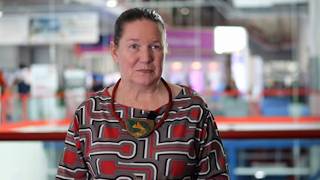
Megan Melody, MD, Tampa General Hospital, Tampa, FL, comments on the importance of optimizing outcomes for patients with diffuse large B-cell lymphoma (DLBCL) undergoing CAR T-cell therapy. Dr Melody emphasizes three key areas: pre-infusion optimization, early recognition and intervention of CAR T-cell-related toxicities, and monitoring for delayed-onset toxicities. This interview took place at the 31st Congress of the European Hematology Association (EHA) in Stockholm, Sweden.
These works are owned by Magdalen Medical Publishing (MMP) and are protected by copyright laws and treaties around the world. All rights are reserved.
Transcript
I think it’s really important when we’re thinking about optimizing patient outcomes in CAR T-cell therapy to consider this in three buckets. We have the pre-infusion optimization, which includes debulking and bridging therapy to minimize tumor volume and optimize patient outcomes. That’s been demonstrated in real-world studies showing that patients with limited tumor burden or reduced metabolic tumor volume at the time of CAR T-cell infusion do better with CAR T-cell therapy...
I think it’s really important when we’re thinking about optimizing patient outcomes in CAR T-cell therapy to consider this in three buckets. We have the pre-infusion optimization, which includes debulking and bridging therapy to minimize tumor volume and optimize patient outcomes. That’s been demonstrated in real-world studies showing that patients with limited tumor burden or reduced metabolic tumor volume at the time of CAR T-cell infusion do better with CAR T-cell therapy. Then there’s the early recognition and early intervention of CAR T-cell-related toxicities. So at our institution, we’re often utilizing early dexamethasone and tocilizumab to mitigate the development of those high-grade toxicities. And then most importantly, and I think the most overlooked, is the monitoring for delayed-onset toxicities, including infections such as immunosuppressed states such as hypogammaglobulinemia and prolonged cytopenia. So I think monitoring for those and early intervention with IVIg and infusions, recognizing those rare toxicities such as treatment-related immune thrombocytopenia are important. And that’s where, you know, really good collaboration with the academic treating center and the local treating physicians is important. So once patients return home, those toxicities don’t go unrecognized.
Read more...