The Community Focus Channel is supported with funding from Johnson & Johnson (Gold).
VJHemOnc is an independent medical education platform. Supporters, including channel supporters, have no influence over the production of content. The levels of sponsorship listed are reflective of the amount of funding given to support the channel.
EBMT 2026 | The importance of multidisciplinary clinical intervention in the management of SOS and VOD
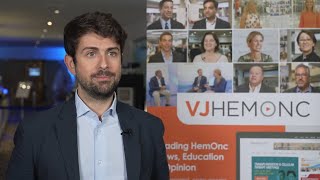
Daniele Avenoso, MD, University of Brescia, Brescia, Italy, discusses the importance of multidisciplinary clinical intervention in the management of sinusoidal obstruction syndrome (SOS) and veno-occlusive disease (VOD). Dr Avenoso notes that a combined evaluation from nurses and transplant physicians can help improve diagnosis and provide educational value for other healthcare professionals who may be less familiar with these complications. This interview took place at the 52nd Annual Meeting of the EBMT in Madrid, Spain.
These works are owned by Magdalen Medical Publishing (MMP) and are protected by copyright laws and treaties around the world. All rights are reserved.
Transcript
VOD/SOS is a topic that we discuss and address at every conference because it is a rare complication but due to its rarity it is very difficult to be familiar with it. Also the transplant platform changed over the last few years, therefore some features are different and also have different diagnostic criteria and a growing list of risk factors for these complications...
VOD/SOS is a topic that we discuss and address at every conference because it is a rare complication but due to its rarity it is very difficult to be familiar with it. Also the transplant platform changed over the last few years, therefore some features are different and also have different diagnostic criteria and a growing list of risk factors for these complications. Both nurses and doctors have the same aim when they are looking after transplant patients, offering a safe and effective procedure and a combined evaluation of a nurse and transplant physician can improve the differential diagnosis process and can offer a prompt diagnosis. In our experience in the previous institution where I worked, we analyzed our approach with a weekly ward round, and thanks to this tool, we were able to identify VOD and start treatment in moderate and severe cases without any delay. And very interesting, we became aware that late-onset VOD does exist. Indeed, in our manuscript, 32% of patients had late-onset VOD. This multidisciplinary approach had also some other effects not on patients but in the broad spectrum of the transplant team because other healthcare professionals became aware of these rare complications. Also, doctors in training became aware and familiar with these complications and this tool allowed us to make a better diagnosis, an earlier diagnosis but it has also an educational value for other healthcare professionals within the transplant field.
This transcript is AI-generated. While we strive for accuracy, please verify this copy with the video.
Read more...

Disclosures
MEDAC, Sanofi, Jazz Pharma, Therakos, Alexion.