The Lymphoma Channel is supported with funding from AstraZeneca (Diamond), Johnson & Johnson (Gold), Takeda (Silver) and Galapagos (Bronze).
VJHemOnc is an independent medical education platform. Supporters, including channel supporters, have no influence over the production of content. The levels of sponsorship listed are reflective of the amount of funding given to support the channel.
ASCO 2026 | Improving the outcomes of patients with MCL who progress on BTK inhibitors
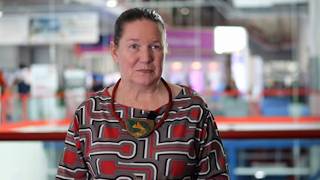
In this video, Manali Kamdar, MD, University of Colorado Cancer Center, Denver, CO, provides insight into the potential approaches for improving outcomes in patients with mantle cell lymphoma (MCL) who progress on BTK inhibitor (BTKi) therapy. Dr Kamdar highlights the benefits of bringing BTKis into frontline treatment and the potential of agents such as pirotbrutinib and sonrotoclax for treating patients who ultimately progress on covalent BTKis. This interview took place during the 2026 American Society of Clinical Oncology (ASCO) Meeting in Chicago, IL.
These works are owned by Magdalen Medical Publishing (MMP) and are protected by copyright laws and treaties around the world. All rights are reserved.
Transcript
So initially, when covalent BTK inhibitors got approved for relapsed mantle cell lymphoma, I think we got a fresh lease of life for those patients who had relapsed with mantle cell lymphoma, but then quickly were able to also see that patients who progressed with lymphoma after having been exposed to BTK inhibition with covalent inhibitors did not have a very high survival...
So initially, when covalent BTK inhibitors got approved for relapsed mantle cell lymphoma, I think we got a fresh lease of life for those patients who had relapsed with mantle cell lymphoma, but then quickly were able to also see that patients who progressed with lymphoma after having been exposed to BTK inhibition with covalent inhibitors did not have a very high survival. So in order to improve upon those outcomes, I think we now have two ways to tackle that. Number one, the question was maybe we could bring BTK inhibitors up front. And from that standpoint, the TRIANGLE study in the young newly diagnosed mantle cell lymphoma, where you incorporate BTK up front, and the ECHO study, which incorporates BTK up front for transplant-ineligible newly diagnosed mantle cell lymphoma, showed a higher PFS benefit compared to standard of care. In the young population, we are able to get rid of an autotransplant and just supplement chemotherapy with the BTK inhibition. In the transplant-ineligible population, we have seen that chemotherapy plus a BTK inhibitor like acalabrutinib actually has a very improved PFS compared to chemotherapy alone. So I think BTK inhibitors, covalent BTK inhibitors, have made a foray into frontline mantle cell. Now the question is what happens for people who relapse. And I think there we have a few agents that are looking very good. From the BRUIN study, we do have the reversible BTK inhibitor pirtobrutinib. We do have sonrotoclax, which is a BCL2 inhibitor, just recently gotten approved in relapsed mantle cell lymphoma. And then we have CD19 CAR-T cell therapies; at the ASCO 2026 meeting, we also are now seeing some really assuring data with regards to efficacy as well as manageable safety when it comes to CD20 bispecific T-cell engagers. So I do think that the landscape of relapsed mantle cell lymphoma is looking refreshingly positive.
This transcript is AI-generated. While we strive for accuracy, please verify this copy with the video.
Read more...