iwAL 2026 | Emerging targets, biomarker strategies and cancer stem cell approaches in AML
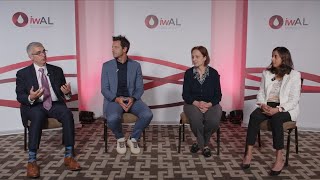
Aditi Shastri, MD, Albert Einstein College of Medicine, New York City, NY, Andrew Lane, MD, PhD, Dana-Farber Cancer Institute, Boston, MA, and Asiri Ediriwickrema, MD, PhD, Stanford University School of Medicine, Stanford, CA, discuss emerging science and novel therapeutic approaches in acute myeloid leukemia (AML). Dr Lane highlights early clinical data on PI3Kγ inhibition and the potential for biomarker-driven patient selection, while Dr Shastri discusses STAT3-targeted therapies in AML, including approaches for venetoclax-resistant disease. Dr Ediriwickrema discusses advances in identifying AML cancer stem cells and the potential to incorporate cancer stem cell-specific biomarkers into clinical trials. This panel discussion took place at the 8th International Workshop on Acute Leukemias (iwAL 2026), held in Boston, MA.
These works are owned by Magdalen Medical Publishing (MMP) and are protected by copyright laws and treaties around the world. All rights are reserved.
Transcript
Aditi Shastri
Hi everyone, we’re live here at the International Working Group for AML in Cambridge, Massachusetts. I’m Aditi Shastri. I am an attending physician and associate professor at the Albert Einstein College of Medicine and Montefiore Medical Center in the Bronx, New York. And I’m joined here by my colleagues. Would you like to introduce yourself?
Asiri Ediriwickrema
Sure...
Aditi Shastri
Hi everyone, we’re live here at the International Working Group for AML in Cambridge, Massachusetts. I’m Aditi Shastri. I am an attending physician and associate professor at the Albert Einstein College of Medicine and Montefiore Medical Center in the Bronx, New York. And I’m joined here by my colleagues. Would you like to introduce yourself?
Asiri Ediriwickrema
Sure. I am Asiri Ediriwickrema. I’m a hematologist as well as an assistant professor at Stanford University.
Andrew Lane
I’m Andy Lane. I’m a professor at Dana-Farber Cancer Institute here in Boston, and I’m the chief of the division of hematologic neoplasia.
Aditi Shastri
Very nice. And we actually just concluded a session on new science implications in acute myeloid leukemia where we discussed a lot of novel pathways, new therapeutics that are entering early-phase clinical trials in AML. Maybe I will start with you, Dr. Lane. You know, you are a global expert in PI3 kinase gamma pathways and targeting them.
Can you give us a little bit of an update about what you presented at the session today?
Andrew Lane
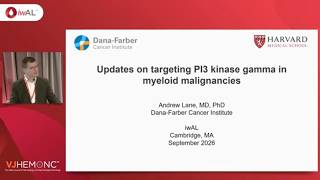
Thanks, Aditi. Yeah, it was really fun to present because I was able to present at this meeting last year in 2025 in Washington, DC, where I talked about recent data that came from multiple labs, including my own, where we found that PI3 kinase gamma pathway, which is sort of an understudied PI3 kinase pathway, is important in the survival of AML cells and MDS cells and other myeloid malignancy cells.
And last year I talked a little bit about the biology behind that. And what has happened in the last year since then, that’s really exciting, is that a drug has gone into clinical trials. And Phase I data were presented at the ASCO meeting in June, which I reviewed here today as well. The short answer is that it looks like there is some activity of this drug as a single agent, and we may be able to pre-select patients who are more likely to respond based on a biomarker that measures activity of the pathway in their leukemias.
So it was really exciting to present that today here at iwAL.
Aditi Shastri
That’s actually very cool, very exciting, and I think this biomarker selection is novel, right, for this kind of trial which is targeting like a signaling pathway essentially. Can you tell us a little bit more about, you know, what led you to develop the strategy for the upcoming study? Yeah.
Andrew Lane
It’s really fun because it actually goes all the way back to the lab. So in the lab, we had done a CRISPR screen genome-wide and looked for genes that, when knocked down, were dependencies in leukemia. And the top hit was this gene called PIK3R5, which encodes a binding protein that stabilizes the PI3 kinase gamma complex. And we looked because you know, recent drugs in AML, many of them are linked to specific gene mutations, like FLT3 inhibitors, IDH inhibitors.
Menin inhibitors. But this one in large data sets did not seem to be linked to particular mutations, even though it’s a signaling pathway. And we were somewhat disappointed at first, but then reminded that venetoclax, you know, our blockbuster drug in AML, we give to many patients, and there’s not a genetic biomarker for that. And so we started to look back to the actual signaling pathway. And it turns out that the expression levels of the protein, this PIK3R5 itself.
In simple IHC staining of bone marrow biopsies from patients, seems to pre-select those patients that have the capability of responding to this inhibitor. And so it’s almost like a step back, we think akin to HER2 in breast cancer, and HER2 is the biomarker is simply IHC staining of the tumor. And it’s a similar idea. And so what’s exciting for the next steps are is that the next generation of clinical trials is going to begin to select patients ahead of time.
Based on activity of the pathway showing expression of this biomarker.
Aditi Shastri
Yeah, this is actually super exciting. And you know, in some ways, there is a common thread to what I presented today as well. So I actually presented on targeting STAT3, which is a well-known oncogenic transcription factor. and it’s been difficult to target, you know, just because transcription factors are really hard, but we have much better state-of-the-art drugs that have entered preclinical and clinical testing right now. This is again mutationally
agnostic, we don’t really find a specific mutation that ties into high STAT3 expression. So I actually presented a mouse model that hyperactivates STAT3 and you know develops leukemia, which could be a really good way to test novel therapeutics targeting JAK–STAT3 pathway. I also presented preclinical data on a STAT3 degrader, which was selectively better in therapy-resistant
AML and particularly in venetoclax resistance because it’s actually able to overcome the high MCL-1 activity that we see in venetoclax resistance and you know it can abrogate this high MCL-1 activity. So this is exciting and I think the drug is ripe for combination with other agents to enter Phase I studies.
I also have a Phase I study in collaboration with our institution and the MD Anderson institution with Dr. Daver, there where we’re testing an antisense oligonucleotide inhibitor of STAT3 called danvatirsen as monotherapy. And this cohort is completed, and the cohort we open now will be in combination with venetoclax. So we’re actually, I’m excited for the future of STAT3-targeting therapeutics as well.
Andrew Lane
It’s really interesting. I was gonna ask you a question? I was thinking that JAK mutations and very upstream mutations we see in some malignancies, but it sounds like what you’re saying is that it’s not only those with the upstream mutations that may have this activation of STAT3. It could be that that’s like a marker to kind of point us to that pathway, but you’re saying that STAT3 downstream might be activated by other mechanisms in addition to mutations.
Aditi Shastri
Absolutely. So there is of course, as you mentioned, you know, the canonical signaling and you know there’s JAK and then STAT3 activation, but there are autoactivatory loops for STAT3 within tumor cells as well. And particularly in leukemic stem cells, we find that certain compartments that include, you know, the long-term HSCs and the granulocyte-monocyte progenitors are really enriched for this STAT3 expression. So we think this is definitely targetable.
in acute leukemias, this. but you know, bringing us to stem cells, you know, I wanna talk to you, Dr. Ediriwickrema. Can you tell us about what you presented today?
Asiri Ediriwickrema
Yeah, sure. So the work that I presented on today was a bit more preliminary, but there’s certainly avenues of crosstalk here that could be interesting for the future. You know, our group is interested in studying cancer stem cells in blood cancers, and they’ve been notoriously hard to pin down and they’re, you know, often associated with worse outcomes in the disease. So we were able to develop a framework to
not only computationally isolate cancer stem cells, but also purify them from primary patient samples so we could potentially do more sophisticated analyses. For instance, if my colleagues were interested in testing out their particular pathways or their mutation-agnostic therapeutic approaches on the stem cell compartment, I think there’s certainly ways that we could do that now in in a very robust and efficient way. So I’m actually excited to kind of look into these pathways when I get back home and see if they are upregulated in these cells.
So
Aditi Shastri
Yeah. Let me ask you this, you know, given that, you know, we’re kind of talking a lot of the sessions were focused on, you know, as was our session, novel therapeutics, and then, you know, CAR-Ts, you know, targeting receptors. Is there is there potentially like a high-throughput way or a way for us to really do this in a clinical trial? You know, it like look at maybe expression
of various markers in LSCs and, you know, try to find the right drugs that could, you know, benefit a specific patient. How far away do you think we’re from this kind of actual like implementation science into clinical trials?
Asiri Ediriwickrema
Yeah, no, absolutely. That’s also a fantastic question. And I think we’re there. I mean, I think the work really shows us that there are cancer stem cell-specific biomarkers that we could essentially hard-code into our clinical investigations and we should. And I’m hoping to start doing that moving forward. But yeah, I think it it’s a great opportunity to start actually asking how is the cancer stem cell compartment is modified, manipulated, disrupted with the use of new therapies.
Aditi Shastri
That’s great. I mean, so I guess, you know, I know that the diseases we treat are bleak, you know, we still have ways to go, but it looks like we’re definitely making some progress and you know there’s definitely much better options out there for patients that may have even failed one or two lines of therapy already. So thank you so much. and looking forward to more excellent talks at the iwAL later today and for the next two days.
Read more...