The Community Focus Channel is supported with funding from Johnson & Johnson (Gold).
The Lymphoma Channel is supported with funding from AstraZeneca (Diamond), Johnson & Johnson (Gold), Takeda (Silver) and Galapagos (Bronze).
The Multiple Myeloma Channel is supported with funding from AbbVie (Platinum), Sanofi (Gold), Legend Biotech (Bronze), and through an educational grant from Alexion Pharma GmbH.
VJHemOnc is an independent medical education platform. Supporters, including channel supporters, have no influence over the production of content. The levels of sponsorship listed are reflective of the amount of funding given to support the channel.
Tandem Meetings 2026 | Advice for community physicians monitoring patients for less common toxicities following CAR-T
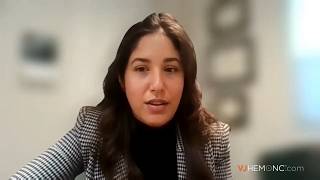
Megan Melody, MD, Northwestern University Feinberg School of Medicine, Chicago, IL, discusses the importance of community physicians monitoring for less common toxicities associated with CAR T-cell therapy, such as immune effector cell-associated hemophagocytic lymphohistiocytosis-like syndrome (IEC-HS), prolonged cytopenias, and profound infections. Dr Melody emphasizes the importance of collaboration between community physicians and CAR-T treating centers to manage these toxicities and improve patient outcomes. This interview took place virtually.
These works are owned by Magdalen Medical Publishing (MMP) and are protected by copyright laws and treaties around the world. All rights are reserved.
Transcript
Yeah, so I mean, I think that all of these toxicities should be monitored in collaboration with the CAR-T Treating Center. And so I think the toxicities you’re more referring to are maybe the IEC-HS, which is like a very robust inflammatory response kind of mirroring the disease course of HLH and possibly some hypogammaglobulinemia, and then some of these pretty profound infections, post-CAR T-cell therapy and bispecific antibodies...
Yeah, so I mean, I think that all of these toxicities should be monitored in collaboration with the CAR-T Treating Center. And so I think the toxicities you’re more referring to are maybe the IEC-HS, which is like a very robust inflammatory response kind of mirroring the disease course of HLH and possibly some hypogammaglobulinemia, and then some of these pretty profound infections, post-CAR T-cell therapy and bispecific antibodies. And so truthfully, when my patients are monitored post-CAR T-cell therapy in the immediate setting, so like for the first 60 days, I am checking their ferritin and CRP, and that really does help us to monitor for IEC-HS. And so as my patients re-enter the community at an earlier time, now with the new updated FDA guidelines that sometimes they’re returning home at 14 days, I’m always sending a letter to their treating physician just saying, hey, you know, when you see these patients for blood work or if they come to you, please make sure that in addition to normal CBC, CMP, LDH, you’re also checking the ferritin and CRP, and if these are rising, feel free to reach out to me. It is not our expectation, or at least not my expectation, nor the expectation of the colleagues I’ve interacted with, that we expect our community physicians to be able to manage IEC-HS. But simply knowing that it is a toxicity and knowing what labs are easily monitored for to kind of identify this toxicity is essential. And so a rise in ferritin really is concerning for IEC-HS. Also, we can see some liver and organ dysfunction and some profound cytopenias. So if you see those happening, please feel free to reach out to your CAR T-cell treating center and they will talk you through what to do next.
Other things that we look for, and again, this is included often in my letter when I’m sending patients back to the community, are things like profound cytopenias and profound immunocompromised state. And so, again, with each blood check, you know, for the first 60 days, I’m typically monitoring blood work every week. If patients really recover well, maybe I’ll move it to every other week. But with those blood checks, like I said, again, we’re checking a CBC, a CMP, an LDH, and a ferritin and CRP. And, you know, the other thing that we also are checking for is something called IgG. Now I’m not checking that weekly, but I’m checking that periodically. So I recommend at least checking it every two weeks for the first 60 days, post-CAR T-cell therapy, and then moving to monthly. And why are we doing that? Well, you know, these T-cell engaging therapies deplete our B-cells. So they cause B-cell aplasia and, you know, our B-cells and our plasma cells are what make antibodies. And so these patients often have really suppressed IgG levels resulting in profound infections. And so the administration of IgG in patients with an IgG level less than 400 or even less than 500 with recurrent infections has been associated with improved outcomes. So if you’re starting to see the IgG level trend down or you’re having a patient, you know, who just can’t clear rhinovirus and their IgG is kind of stably hovering at like 495, reach out to your treating CAR T-cell therapy provider. They’ll be happy to kind of guide you in this, but ultimately this is most likely suggested that your patient would benefit from IVIG. And, you know, like I said, this has been shown to improve treatment-related mortality and overall outcomes. So I think that it’s essential, you know, in making sure that we really help to support our patients.
And like I said, there are some long-term toxicities like prolonged cytopenias or delayed onset cytopenias. And so there’s ways that we can identify patients who are at high-risk for this using the HEMATOTOX score. But now there’s also a grading criteria for these post-CAR T-cell cytopenia, something called ICAHT. And so, you know, there’s actually now becoming standardized management for these cytopenias. So if your patient initially was discharged and their platelets and their hemoglobin and their neutrophils are recovering, and now you’re seeing them post-CAR T-cell therapy, you know, three, four, six weeks out and their cells are dropping, again, this is a time to just sort of trigger a reach out to your CAR T-cell treating center. And they can kind of guide you through the management, either through GCSF, transfusion support, or sometimes we’re even using like TPO agonists, et cetera, to kind of help support these patients.
This transcript is AI-generated. While we strive for accuracy, please verify this copy with the video.
Read more...


Disclosures
Consultancy: Abbvie; Advisory Board: BMS, KITE, Pfizer; Speakers Bureau: KITE; Steering committee: BMS.