The Multiple Myeloma Channel is supported with funding from AbbVie (Platinum), Sanofi (Gold), Legend Biotech (Bronze), and through an educational grant from Alexion Pharma GmbH.
VJHemOnc is an independent medical education platform. Supporters, including channel supporters, have no influence over the production of content. The levels of sponsorship listed are reflective of the amount of funding given to support the channel.
IMS 2026 | UK frailty guidelines for managing older patients with multiple myeloma
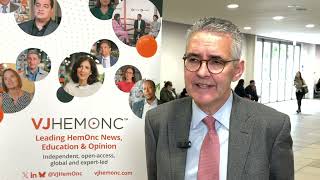
Gordon Cook, MB ChB, PhD, FRCP(Glas), FRCPath, Leeds Teaching Hospitals NHS Trust, Leeds, UK, discusses practical considerations from the UK Myeloma Research Alliance frailty guidelines for managing older patients with multiple myeloma. He highlights a holistic approach that incorporates exercise, nutrition and rehabilitation alongside individualized treatment delivery and assessment of treatment-related risks. This interview took place at the 23rd International Myeloma Society (IMS) Annual Meeting in Glasgow, UK.
These works are owned by Magdalen Medical Publishing (MMP) and are protected by copyright laws and treaties around the world. All rights are reserved.
Transcript
In the UK, one of the things that I was keen to do was to set out a framework that people could aspire to in terms of oncogeriatric practice in delivering myeloma care. There are many facets of how you look after an older person with cancer, and particularly relevant with myeloma. So we set out with producing these guidelines, which did have a level of evidence-based, but it wasn’t entirely evidence-based...
In the UK, one of the things that I was keen to do was to set out a framework that people could aspire to in terms of oncogeriatric practice in delivering myeloma care. There are many facets of how you look after an older person with cancer, and particularly relevant with myeloma. So we set out with producing these guidelines, which did have a level of evidence-based, but it wasn’t entirely evidence-based. As I said, it was more a framework. And what we were really after was looking at a more holistic approach to treating patients, looking at dealing with diet, looking at dealing with exercise. I’m a huge fan of exercise rehabilitation in cancer care, but especially in that older person. Within that, there’s also looking at not so much selecting the anti-myeloma agents, but selecting how you deliver those. Thinking about the additional risks that patients are exposed to when they’re older and frailer. So the framework, the guidelines was trying to direct people towards that.
This transcript is AI-generated. While we strive for accuracy, please verify this copy with the video.
Read more...