The Acute Myeloid Leukemia Channel is supported with funding from BMS (Silver), and through an educational grant from Jazz Pharmaceuticals.
The Myelodysplastic Syndromes Channel is supported with funding from Geron (Silver).
The Myeloproliferative Neoplasms Channel is supported with funding from Takeda (Gold) and Kartos Therapeutics, Inc. (Bronze).
VJHemOnc is an independent medical education platform. Supporters, including channel supporters, have no influence over the production of content. The levels of sponsorship listed are reflective of the amount of funding given to support the channel.
ASH 2020 | Venetoclax prior to allo-HCT for high-risk myeloid malignancies
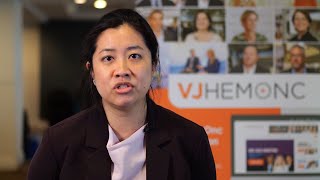
Jacqueline Garcia, MD, Dana-Farber Cancer Institute, Boston, MA, discusses the findings of a Phase I trial (NCT03613532) combining the BCL-2 inhibitor venetoclax with conditioning chemotherapy prior to allogenic hematopoietic cell transplantation (allo-HCT). The frequency of relapse following allo-HCT in high-risk acute myeloid leukemia (AML), myelodysplastic syndrome (MDS) or MDS/myeloproliferative neoplasm-unclassifiable warranted investigation of venetoclax plus fludarabine and busulfan reduced intensity conditioning chemotherapy to explore the possibility of increasing anti-leukemic efficacy. 76% of evaluable patients were in complete response (CR) at day +100, and the 12-month overall survival (OS) and progression-free survival (PFS) were 72% and 55% respectively. Addition of venetoclax at the highest tested dose of 400mg did not increase chemotherapy toxicity or the incidence of graft-versus-host disease, supporting further evaluation as a recommended Phase II dose. This interview took place during the 62nd American Society of Hematology (ASH) Annual Meeting and Exposition, 2020.




Disclosures
Jacqueline Garcia, MD, has received institutional/trial support from Eli Lily, Pfizer, Genentech and AbbVie, and is on the scientific advisory board for AbbVie.