EHA 2026 | Evolving treatment strategies and unmet needs in acute lymphoblastic leukemia
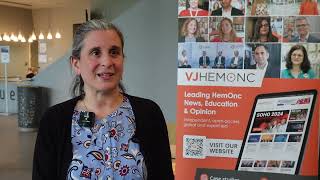
Marlise Luskin, MD, MSCE, Dana-Farber Cancer Institute, Boston, MA, discusses how the treatment landscape for acute lymphoblastic leukemia (ALL) is rapidly evolving with the integration of novel targeted therapies, including bispecific antibodies, antibody-drug conjugates, and CAR T-cell therapies. Dr Luskin explores how frontline strategies for both Philadelphia chromosome-positive and -negative ALL are expected to shift toward less intensive chemotherapy and more personalized approaches, while also highlighting the ongoing unmet need for effective therapies in T-cell ALL. This interview took place at the 31st Congress of the European Hematology Association (EHA) in Stockholm, Sweden.
These works are owned by Magdalen Medical Publishing (MMP) and are protected by copyright laws and treaties around the world. All rights are reserved.
Transcript
As a specialist in acute leukemia, I treat a range of diagnoses, both myeloid and lymphoid acute leukemia, as well as other chronic myeloid disorders. So I have experienced treating a range of patients with hematologic malignancies. And as you point out, ALL has had a, even standing out among that group, this is a disease where we’ve seen a proliferation of treatment options for our patients, including targeted therapies, particularly for Philadelphia chromosome positive ALL, where we’ve seen the development of increasingly potent and effective BCR-ABL inhibitors...
As a specialist in acute leukemia, I treat a range of diagnoses, both myeloid and lymphoid acute leukemia, as well as other chronic myeloid disorders. So I have experienced treating a range of patients with hematologic malignancies. And as you point out, ALL has had a, even standing out among that group, this is a disease where we’ve seen a proliferation of treatment options for our patients, including targeted therapies, particularly for Philadelphia chromosome positive ALL, where we’ve seen the development of increasingly potent and effective BCR-ABL inhibitors. And then immunotherapies, including immunotherapies that are directed against CD19 and CD22, bispecific antibodies, blinatumomab, CD19, CD20 bispecific, and CD22, an antibody drug conjugate, inotuzumab, and some other bispecific antibody drug conjugates in clinical development are coming behind. And then we have cellular therapy, the CAR T-cell therapy, as you alluded to. We now have three approvals for autologous anti-CD19 therapy. So it is great to have so many tools in our toolkit. And what we’re seeing is a proliferation of clinical studies for both Ph positive and negative in different age groups, really trying to discern how can we use all of our agents with the best efficacy, the least toxicity, and for these different subgroups, bringing these novel therapies that have often been developed first in the second line or the relapse setting and bringing them to the frontline setting. And then as we integrate into the frontline setting, figuring out how to integrate one or two together and how the chemotherapy should be adjusted in terms of adjustment, often decreasing the intensity of chemotherapy to improve tolerability.
So as we move forward, I think we’re going to see less reliance on chemotherapy, more reliance on novel immunotherapies and targeted therapies. But, you know, we have to proceed cautiously. We know that there are certain limitations of the novel therapies, including efficacy against CNS disease, potentially less efficacy against extramedullary disease. And there may be certain subtypes that are more vulnerable to immune escape from cellular and immunotherapies. So we need to make sure that we move aggressively. We don’t want to wait many, many years before making bold moves, but also pay attention to the long-term outcomes and figure out what is the best balance of the old and the new with the answer for that question may be different with different age groups, you know, with younger patients still benefiting from some chemotherapy and maybe the oldest patients who have the most toxicity, really going real slim. So I think we’re going to see this landscape changing rapidly.
I will emphasize, unfortunately, that our progress in T-cell ALL has not been as rapid and we don’t have as many tools in our toolkit. We’ve had some promising trials and there are ongoing trials looking at targeted therapy and novel approaches, but that’s an area of really unmet need. And hopefully we’ll see folks doing further research, basic science research and clinical investigation for that disease subgroup.
This transcript is AI-generated. While we strive for accuracy, please verify this copy with the video.
Read more...



Disclosures
Research Funding to Institution: Novartis, AbbVie; Advisory Boards/Consulting: AbbVie, Amgen, Astra Zeneca, Autolus, Jazz, KITE, Merck, Novartis, Pfizer, Servier, Syndax.