The Chronic Lymphocytic Leukemia Channel is supported with funding from AstraZeneca (Diamond), Johnson & Johnson (Gold) and Lilly (Silver).
The Lymphoma Channel is supported with funding from AstraZeneca (Diamond), Johnson & Johnson (Gold), Takeda (Silver) and Galapagos (Bronze).
VJHemOnc is an independent medical education platform. Supporters, including channel supporters, have no influence over the production of content. The levels of sponsorship listed are reflective of the amount of funding given to support the channel.
Tandem Meetings 2026 | Optimizing the treatment of B-cell malignancies: progress and challenges
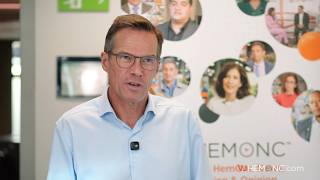
Nirav Niranjan Shah, MD, Medical College of Wisconsin, Milwaukee, WI, discusses progress in the treatment of B-cell malignancies, highlighting a shift toward targeted approaches that tailor treatment to specific disease mechanisms and markers, resulting in improved patient outcomes with reduced side effects. Dr Shah emphasizes the importance of further research to not only develop next-generation therapies but also optimize the current treatment paradigm. This interview took place virtually.
These works are owned by Magdalen Medical Publishing (MMP) and are protected by copyright laws and treaties around the world. All rights are reserved.
Transcript
I think the great evolution that’s happened over the last 20 years is we used to take a hammer to every problem. Everybody with all these different types of lymphoma were getting different forms of chemotherapy. And we have now navigated each different malignancy to optimize the correct pathway and treat that disease according to its mechanistic development. So for CLL, we use BTK inhibitors and BCL2 inhibitors...
I think the great evolution that’s happened over the last 20 years is we used to take a hammer to every problem. Everybody with all these different types of lymphoma were getting different forms of chemotherapy. And we have now navigated each different malignancy to optimize the correct pathway and treat that disease according to its mechanistic development. So for CLL, we use BTK inhibitors and BCL2 inhibitors. In mantle cell, we’re using BTK with or without chemotherapy. In other aggressive lymphomas, we’re now giving targeted drugs with chemotherapy. And so what we’re getting to is really a targeted approach, targeting specific markers of the disease or mechanistic pathways to get the best upfront outcome. And by doing so, we’re improving patient outcomes, we’re giving drugs with less side effects, and allowing people to either live with these diseases like a chronic illness or potentially be cured for some of the other types of B-cell malignancies that we have. And so as we move forward, we’re going to continue to optimize based on that disease biology to try to figure out what is the best treatment for each individual patient or situation.
I think that the hardest part of B-cell cancers is that we’re victims of our own success. We have made such incredible, you know, sort of innovations over the last decade that we have so many therapies available for people that it’s sometimes hard to get the next generation of therapies through the pipeline. You know, so we sort of have almost too many options for patients available. And so, you know, the whole sequencing becomes a question. When do you move a therapy from a later line therapy to a frontline therapy? Those trials can take years to accrue and always come with risk because the standard of care therapies are also really good options. So I think, you know, what I would simply encourage is that we continue to research, continue to investigate because we’re going to develop better methodologies. And hopefully one day we might be completely chemotherapy free or be able to offer more curative intent therapies or offer shorter duration of therapy. And so, you know, the next step in B-cell malignancies may not just be, you know, the next best drug, but sort of optimizing a treatment paradigm, figuring out how to give a shorter regimen, figuring out how to give a safer regimen. And so there’s still a lot of work to be done, and I’m excited to be a part of it.
This transcript is AI-generated. While we strive for accuracy, please verify this copy with the video.
Read more...