The Lymphoma Channel is supported with funding from AstraZeneca (Diamond), Johnson & Johnson (Gold), Takeda (Silver) and Galapagos (Bronze).
VJHemOnc is an independent medical education platform. Supporters, including channel supporters, have no influence over the production of content. The levels of sponsorship listed are reflective of the amount of funding given to support the channel.
EHA 2026 | Can the gut microbiome predict response to CAR T-cell therapy in lymphoma?
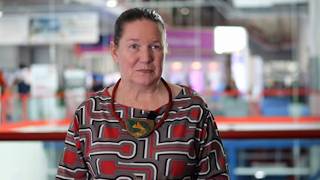
Sandrine Roulland, PharmD, PhD, Center for Immunology of Marseille-Luminy (CIML), Marseille, France, discusses the growing role of the gut microbiome in predicting response to CAR T-cell therapy in lymphoma. She explains how microbiome profiling may help identify patients most likely to benefit from treatment, while highlighting ongoing efforts to develop practical blood-based biomarkers that could support future clinical decision-making. This interview took place at the 31st Congress of the European Hematology Association (EHA) in Stockholm, Sweden.
These works are owned by Magdalen Medical Publishing (MMP) and are protected by copyright laws and treaties around the world. All rights are reserved.
Transcript
So for now, what has been discovered in the field of microbiota is that based on the microbiota profiling in patients receiving CAR-T cells, you are able to define people that are more responsive to CAR-T cells than non-responders. And so we believe that maybe microbiota profiling could be a good way, a good biomarker to define people that will respond better to CAR-T. However, what is still unknown is how you can develop this kind of microbiota profiling at the large-scale level, which is still under process...
So for now, what has been discovered in the field of microbiota is that based on the microbiota profiling in patients receiving CAR-T cells, you are able to define people that are more responsive to CAR-T cells than non-responders. And so we believe that maybe microbiota profiling could be a good way, a good biomarker to define people that will respond better to CAR-T. However, what is still unknown is how you can develop this kind of microbiota profiling at the large-scale level, which is still under process. Actually, during the session, what the two presenters showed is that we need to find some surrogates of this microbiota profiling, maybe in the blood or soluble markers or metabolites of the microbiota that could be easily measured in other analytes like blood or serum. And this can be a good way to develop that in a future clinical trial.
This transcript is AI-generated. While we strive for accuracy, please verify this copy with the video.
Read more...