The Lymphoma Channel is supported with funding from AstraZeneca (Diamond), Johnson & Johnson (Gold), Takeda (Silver) and Galapagos (Bronze).
VJHemOnc is an independent medical education platform. Supporters, including channel supporters, have no influence over the production of content. The levels of sponsorship listed are reflective of the amount of funding given to support the channel.
EHA 2026 | Using CRISPR to identify the next generation of CAR T-cell targets
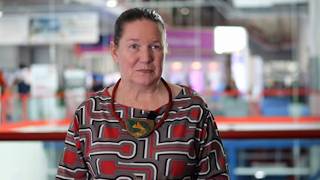
Sandrine Roulland, PharmD, PhD, Center for Immunology of Marseille-Luminy (CIML), Marseille, France, explores how CRISPR screening is being used to identify new targets that could improve CAR T-cell therapies. She discusses the shift from in vitro to in vivo models, the potential to enhance T-cell expansion and tumour infiltration, and the challenges that remain before these discoveries can be translated into clinical practice. This interview took place at the 31st Congress of the European Hematology Association (EHA) in Stockholm, Sweden.
These works are owned by Magdalen Medical Publishing (MMP) and are protected by copyright laws and treaties around the world. All rights are reserved.
Transcript
During the lymphatic workshop, we have a session on CRISPR screen and how this CRISPR screen could help to enhance immunotherapies. And so we are still at a discovery level, meaning most of the application of CRISPR screen to enhance immunotherapies in T cells have been based on in vitro assays. And during the session, the two speakers show us that in fact, the discoveries that are made in vitro are not always valid in vivo and so they are actually developing CRISPR screen in T cells using primary samples in vivo and this will give rise to new targets and the idea behind this is really to have some targets that can be inactivated in T cells and that can enhance the CAR T cells expansion, that can enhance the CAR T cell infiltration of the tissue and this is where we are right now...
During the lymphatic workshop, we have a session on CRISPR screen and how this CRISPR screen could help to enhance immunotherapies. And so we are still at a discovery level, meaning most of the application of CRISPR screen to enhance immunotherapies in T cells have been based on in vitro assays. And during the session, the two speakers show us that in fact, the discoveries that are made in vitro are not always valid in vivo and so they are actually developing CRISPR screen in T cells using primary samples in vivo and this will give rise to new targets and the idea behind this is really to have some targets that can be inactivated in T cells and that can enhance the CAR T cells expansion, that can enhance the CAR T cell infiltration of the tissue and this is where we are right now. So it’s really at the discovery level but we believe that the next step will be to develop those CAR T cells into the clinics and then to have better therapies.
This transcript is AI-generated. While we strive for accuracy, please verify this copy with the video.
Read more...