The Community Focus Channel is supported with funding from Johnson & Johnson (Gold).
The Lymphoma Channel is supported with funding from AstraZeneca (Diamond), BMS (Gold), Johnson & Johnson (Gold), Takeda (Silver) and Galapagos (Bronze).
VJHemOnc is an independent medical education platform. Supporters, including channel supporters, have no influence over the production of content. The levels of sponsorship listed are reflective of the amount of funding given to support the channel.
ASH 2025 | Quality improvement initiative to optimize AE management for bispecifics for DLBCL in the community
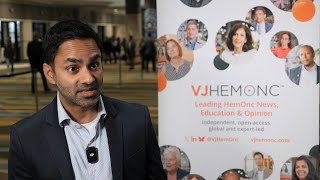
In this video, Krish Patel, MD, Sarah Cannon Research Institute, Nashville, TN, discusses a quality improvement initiative that aimed to help community oncology sites to develop confidence in using bispecific antibodies for the treatment of diffuse large B-cell lymphoma (DLBCL) and to optimize processes for adverse event (AE) management in this setting. This interview took place at the 67th ASH Annual Meeting and Exposition, held in Orlando, FL.
These works are owned by Magdalen Medical Publishing (MMP) and are protected by copyright laws and treaties around the world. All rights are reserved.
Transcript
Bispecific antibodies have really, I think, revolutionized the treatment of lymphomas, given us another active immunotherapy. Importantly, these are therapies that can be delivered in community oncology settings. But we’ve noted that these therapies have unique treatment toxicities. And so trying to really think about, first and foremost, how are community oncologists using bispecifics? So we started this quality improvement initiative first to really just define that...
Bispecific antibodies have really, I think, revolutionized the treatment of lymphomas, given us another active immunotherapy. Importantly, these are therapies that can be delivered in community oncology settings. But we’ve noted that these therapies have unique treatment toxicities. And so trying to really think about, first and foremost, how are community oncologists using bispecifics? So we started this quality improvement initiative first to really just define that. What are the barriers? How often are people using bispecifics in what cases? And then through really a guided series of interactions to help kind of reflect those challenges that practices identified and really come up with an action plan to help enable them to feel more confident. And what we saw through this quality improvement intervention was that at the end of that, sites that had maybe not used bispecifics or were using them in different settings had developed more confidence in what the tools would need to be and how they would approach using bispecifics or implement them in their practice in the community for the benefit of more patients.
This transcript is AI-generated. While we strive for accuracy, please verify this copy with the video.
Read more...