The Community Focus Channel is supported with funding from Johnson & Johnson (Gold).
The Lymphoma Channel is supported with funding from AstraZeneca (Diamond), Johnson & Johnson (Gold), Takeda (Silver) and Galapagos (Bronze).
VJHemOnc is an independent medical education platform. Supporters, including channel supporters, have no influence over the production of content. The levels of sponsorship listed are reflective of the amount of funding given to support the channel.
Tandem Meetings 2026 | Rethinking surveillance post–CAR-T in LBCL due to the low incidence of late-onset toxicities
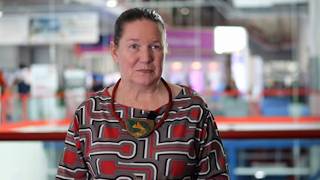
Megan Melody, MD, Northwestern University Feinberg School of Medicine, Chicago, IL, presents the findings of the largest real-world study examining the incidence of late-onset cytokine release syndrome (CRS) and immune effector cell-associated neurotoxicity syndrome (ICANS) associated with FDA-approved anti-CD19 CAR T-cell therapies in large B-cell lymphoma (LBCL). Dr Melody highlights that the risk of late-onset CRS or ICANS (occurring more than 14 days post-infusion) was low across all constructs, supporting the recent FDA label changes that reduced monitoring requirements for patients receiving these therapies. This interview took place virtually.
These works are owned by Magdalen Medical Publishing (MMP) and are protected by copyright laws and treaties around the world. All rights are reserved.
Transcript
So, basically, we all know that CAR T-cell therapy is an effective therapy for relapsed/refractory large B-cell lymphoma, and there are three FDA-approved products in this setting, Axicabtagene ciloleucel, Lisocabtagene maraleucel, and Tisagenlecleucel. However, CAR T-cell therapy is associated with a unique toxicity profile, the cytokine release syndrome, and ICANS, or Immune Effector Cell-Associated Neurotoxicity Syndrome, and these often necessitate medical intervention and inpatient management...
So, basically, we all know that CAR T-cell therapy is an effective therapy for relapsed/refractory large B-cell lymphoma, and there are three FDA-approved products in this setting, Axicabtagene ciloleucel, Lisocabtagene maraleucel, and Tisagenlecleucel. However, CAR T-cell therapy is associated with a unique toxicity profile, the cytokine release syndrome, and ICANS, or Immune Effector Cell-Associated Neurotoxicity Syndrome, and these often necessitate medical intervention and inpatient management. So the initial pivotal studies of CAR-T cell therapy, such as ZUMA-1, JULIET, and TRANSCEND, demonstrated the median time to onset of, I think, like two to five days with a median duration of five to eight days, and the median onset of ICANS of five days with a median duration anywhere from 11 to 17 days. And so given these toxicities, historically patients were required to remain within one hour of a CAR T-cell treating center for 30 days post CAR T-cell infusion to monitor for and manage these late-onset toxicities. And patients were also restricted from driving for eight weeks post-infusion, and this often created barriers to receiving CAR T-cell therapy, particularly impacting those socioeconomically disadvantaged patients at a higher rate.
But more recently, given the early recognition of these toxicities improved management, data has come out that suggests a low incidence of CAR T-cell toxicities occurring later on in the CAR T-cell process. So I think there was an abstract presented at ASCO in 2025, which examined pooled data from clinical trials and treatment across various subtypes of lymphoma, as well as the CIBMTR data, and that showed that treatment with liso-cel therapy demonstrated only a 2% to 3% chance of developing grades of CRS greater than 15 days post-CAR T-cell therapy. And so given this data and similar analyses demonstrating a low incidence of delayed onset CRS and ICANS, in June of this past year, so 2025, the FDA revised CAR T-cell monitoring guidelines, reducing the required monitoring period from four weeks to two weeks and driving restrictions to two weeks post-CAR T-cell infusion. But despite that, it seems that, you know, some providers are a bit hesitant to adopt this given the historical data and given the fact that some of this data, you know, was just isolated to one CAR-T construct or spread across multiple different subtypes of lymphoma.
And so what we really sought to look at was all FDA-approved constructs for the treatment of specifically large B-cell lymphoma to see how the incidence of delayed onset, which we defined as greater than 14 days given the new FDA changes to two weeks of monitoring, so we really focused on greater than 14 days post-infusion of post-CAR T-cell infusion, specifically for patients with large B-cell lymphoma. So utilizing this ABC consortium, it’s a collaboration of 15 academic CAR T-cell centers across the USA, we retrospectively identified 925 patients treated with CAR T-cell therapy or anti-CD19 CAR T-cell therapy specifically for the treatment of large B-cell lymphoma, and we examined all three constructs. So among the 925 patients treated with anti-CD19 CAR T-cell therapy specifically for the treatment of large B-cell lymphoma, and we examined all three constructs.
So among the 925 patients treated with anti-CD19 CAR T-cell therapy, 668 patients did develop CRS or ICANS post-CAR T-cell infusion, but only 25 or 2.7% of patients developed these acute toxicities greater than 14 days post-infusion. There was no difference in patient or disease characteristics, including disease histology, performance status, stage of disease, presence of extranodal disease, or median LDH at the time of infusion between patients who developed CRS or ICANS within 14 days post-CAR T-cell therapy and patients who had delayed onset toxicities. In terms of readmission, of the 25 patients who developed delayed onset toxicity, only one patient received CAR T-cell as an outpatient and required admission. Of the remaining 24 patients who were initially treated as inpatient, only 22 had available data remaining in readmission, and 15, or about 68 percent, experienced these delayed toxicities after initial hospitalization discharge, and they were necessitated readmission.
So overall in our cohort, 68% of patients developed CRS with a median time to onset of two to three days, but only less than 1% of patients developed CRS greater than 14 days past infusion of CAR T-cell therapy, with a median duration of four to seven days. Nearly all delayed CRS was low grade, with only one patient experiencing grade three CRS. Five out of seven patients were treated with Tocilizumab and two patients were treated, and two patients treated with Axicabtagene ciloleucel received steroids for the management of CRS. One of the patients received steroids for CRS was due to just the historical management of this toxicity because you have to keep in mind that this cohort spanned from 2018 to 2025. And one was due to grade three toxicity. So that one patient we talked about, that higher grade toxicity. There was no difference in incidence of delayed onset CRS across the three CAR T-cell constructs, with a p-value of 0.86.
And then out of the entire cohort, again, the 925 patients, 41% of patients developed ICANS with a median time to onset of four to six days, but only 17 patients or less than 2% of these patients developed ICANS greater than 14 days post-CAR T-cell infusion with a median duration of toxicity ranging from five to 16 days, so a little bit longer than the patients who develop toxicities prior to 14 days. Again, nearly all delayed onset ICANS was low grade with only two patients experiencing greater than grade two ICANS, and there was no difference in incidence of delayed onset ICANS across the CAR T-cell constructs, so the p-value was 0.43. Nearly all patients were treated with steroids. Two patients were treated with siltuximab. One of those patients who was treated with siltuximab was treated with Axicabtagene ciloleucel and developed a grade four ICANS, and the other was treated with Tisagenlecleucel, who only had a grade two ICANS, but it was prolonged. So it was that one that, you know, kind of really set that median range from five to 16 days. So it didn’t improve with Anakinra.
So in summary, this is the largest real-world study to date examining delayed-onset CRS and ICANS in line with the new FDA guidelines of greater than 14 days, and it’s across all three FDA-approved anti-CD19 CAR T-cell constructs for the treatment of large B-cell lymphoma. And we really feel that, you know, of the 925 patients treated with anti-CD19 CAR T-cell therapy, delayed onset CRS and ICANS really occurred in less than 3% of patients, with less than 1% of patients developing CRS, and less than 2% of patients developing ICANS. Of the patients who developed delayed onset toxicities, 88% were less than or equal to grade 2 toxicities, so they all seemed quite low grade. 68% of patients who developed CRS and ICANS greater than 14 days post-CAR T-cell therapy did so after initial discharge from the hospital and required readmission. However, despite the fact that they were discharged initially and required readmission, management of delayed onset toxicities appeared to reflect standard management, and all patients experienced toxicity resolution.
So we really feel that these results support the FDA June 2025 label updates, which reduce required monitoring and driving restrictions for these patients treated with anti-CD19 therapy, particularly for large B-cell lymphoma. And we really hope that this data further supports providers to feel comfortable limiting the monitoring post-CAR T-cell infusion in line with these new FDA guidelines, and thereby really reducing socioeconomic barriers for patients and expanding access to CAR T-cell therapy for patients with large B-cell lymphoma, which is ultimately our driving cause.
This transcript is AI-generated. While we strive for accuracy, please verify this copy with the video.
Read more...


Disclosures
Consultancy: Abbvie; Advisory Board: BMS, KITE, Pfizer; Speakers Bureau: KITE; Steering committee: BMS.