The Lymphoma Channel is supported with funding from AstraZeneca (Diamond), Johnson & Johnson (Gold), Takeda (Silver) and Galapagos (Bronze).
VJHemOnc is an independent medical education platform. Supporters, including channel supporters, have no influence over the production of content. The levels of sponsorship listed are reflective of the amount of funding given to support the channel.
ASCO 2026 | Reducing second cancer risk in Hodgkin lymphoma: findings from a national cohort study
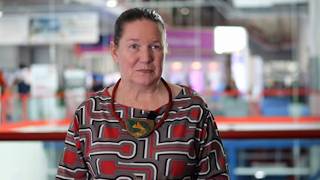
Aislinn Macklin-Doherty, MBChB, PhD, The Royal Marsden NHS Foundation Trust, London, UK, shares insights from a national cohort study in England and Wales investigating second cancer risk in 7,428 women aged under 36 who were treated for Hodgkin lymphoma (HL). She highlights that, despite the incidence of second cancers beginning to decrease, the overall relative risk of second cancer remains high, particularly for young women and those treated in and around breast and lung tissue or with high doses of radiation. Dr Macklin-Doherty notes that the reduction in radiation use with the advent of novel treatments is the primary driver for reducing second cancer risk; however, the prevalence of high-risk subgroups necessitates ongoing targeted surveillance. This interview took place during the 2026 American Society of Clinical Oncology (ASCO) Meeting in Chicago, IL.
These works are owned by Magdalen Medical Publishing (MMP) and are protected by copyright laws and treaties around the world. All rights are reserved.
Transcript
This was a national cohort study in England and Wales in seven and a half thousand women treated for Hodgkin lymphoma and this is a really important question about second cancer risk and how it’s changed over time because second cancers remain the leading cause of non-disease-related death in these patients. And what we found over 60 year follow-up period is that, pleasingly, second cancer risks are starting to come down, which is great news for doctors, great news for patients...
This was a national cohort study in England and Wales in seven and a half thousand women treated for Hodgkin lymphoma and this is a really important question about second cancer risk and how it’s changed over time because second cancers remain the leading cause of non-disease-related death in these patients. And what we found over 60 year follow-up period is that, pleasingly, second cancer risks are starting to come down, which is great news for doctors, great news for patients. But despite that, the overall relative risk remains very high, and there are subgroups for which it is significantly raised, particularly young women treated, so those treated below the age of 15, those treated in and around particularly the breast tissue and lung tissue who have significantly raised risk of breast and lung cancer, and also patients treated with the highest doses of radiation. What we know is that the use of radiation and the dose of radiotherapy use is coming down significantly. It halved in the treatment period we were looking at, and that is the predominant driver of this reduction in second cancer risk. But despite that, because of the ongoing high-risk subgroups that we see, so young women treated in and around breast, lung tissue, treated at young ages. We recommend that there is an ongoing targeted enhanced surveillance program so that we’re picking these second cancers up early and trying to prevent these early deaths.
This transcript is AI-generated. While we strive for accuracy, please verify this copy with the video.
Read more...