The Community Focus Channel is supported with funding from Johnson & Johnson (Gold).
The Lymphoma Channel is supported with funding from AstraZeneca (Diamond), Johnson & Johnson (Gold), Takeda (Silver) and Galapagos (Bronze).
VJHemOnc is an independent medical education platform. Supporters, including channel supporters, have no influence over the production of content. The levels of sponsorship listed are reflective of the amount of funding given to support the channel.
ASCO 2026 | Treating newly diagnosed HL in the UK: practical advice for physicians
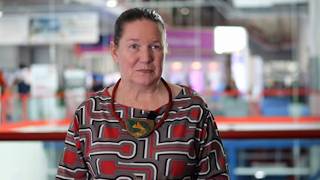
Aislinn Macklin-Doherty, MBChB, PhD, The Royal Marsden NHS Foundation Trust, London, UK, shares practical advice for physicians treating relapsed/refractory Hodgkin lymphoma (R/R HL) in the UK. Dr Macklin-Doherty highlights the increasing array of available agents and notes that while advancements in radiation have been significant, there are still high-risk subgroups that require protection from enhanced risks, emphasizing the need for targeted, enhanced early screening. This interview took place during the 2026 American Society of Clinical Oncology (ASCO) Meeting in Chicago, IL.
These works are owned by Magdalen Medical Publishing (MMP) and are protected by copyright laws and treaties around the world. All rights are reserved.
Transcript
We’re in a very exciting time for treating Hodgkin lymphoma. We’ve got an array of different agents, particularly in the relapsed setting that we’re seeing coming further up into earlier lines of treatments, which makes it a little bit more nuanced, the decision-making about how we treat patients earlier on upfront and about when we really use those more toxic treatments like radiotherapy, particularly in high-risk groups like young women...
We’re in a very exciting time for treating Hodgkin lymphoma. We’ve got an array of different agents, particularly in the relapsed setting that we’re seeing coming further up into earlier lines of treatments, which makes it a little bit more nuanced, the decision-making about how we treat patients earlier on upfront and about when we really use those more toxic treatments like radiotherapy, particularly in high-risk groups like young women. Obviously, the improvements of radiation have been significant in the last few decades, but what our data show is that there are still high-risk subgroups that need to be protected from these enhanced risks. So it’s really about choosing those groups, those very high-risk patients who we really think need the radiotherapy in addition to the chemotherapy. And when they do, what we know is that targeted, enhanced early screening to try and pick up these cancers at an earlier stage is going to help them in the long run. It’s going to reduce morbidity and try and prevent early death from these second cancers.
This transcript is AI-generated. While we strive for accuracy, please verify this copy with the video.
Read more...