The Lymphoma Channel is supported with funding from AstraZeneca (Diamond), Johnson & Johnson (Gold), Takeda (Silver) and Galapagos (Bronze).
VJHemOnc is an independent medical education platform. Supporters, including channel supporters, have no influence over the production of content. The levels of sponsorship listed are reflective of the amount of funding given to support the channel.
EBMT 2026 | The role of allogeneic transplantation and immune therapies following CAR-T failure in DLBCL
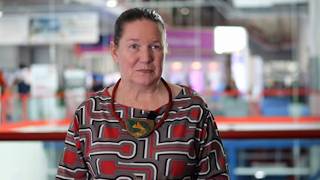
Although CAR T-cell therapy has revolutionized the treatment of B-cell lymphoma, relapse remains a significant challenge. In this interview, Ali Bazarbachi, MD, PhD, American University of Beirut, Beirut, Lebanon, discusses the role of allogeneic stem cell transplantation and other immune therapies following CAR-T failure in diffuse large B-cell lymphoma (DLBCL). He explains that prognostic factors can predict CAR T-cell therapy failure, and that allogeneic transplantation represents a potentially curative treatment option for patients who have progressed after CAR-T. Dr Bazarbachi also comments on the potential of bispecific antibodies and polatuzumab vedotin-based regimens in this setting. This interview took place at the 52nd Annual Meeting of the EBMT in Madrid, Spain.
These works are owned by Magdalen Medical Publishing (MMP) and are protected by copyright laws and treaties around the world. All rights are reserved.
Transcript
So basically, as you know, CAR T-cell therapy has reshaped the landscape of B-cell lymphoma treatment. However, relapse after CAR T-cells, particularly in the case of diffuse large B-cell lymphoma, remains an unmet medical need. So when we look, for example, to the ZUMA-1 study for advanced DLBCL, there progression-free survival at five years is only 32%, which means 68% of patients treated with CAR-T will relapse...
So basically, as you know, CAR T-cell therapy has reshaped the landscape of B-cell lymphoma treatment. However, relapse after CAR T-cells, particularly in the case of diffuse large B-cell lymphoma, remains an unmet medical need. So when we look, for example, to the ZUMA-1 study for advanced DLBCL, there progression-free survival at five years is only 32%, which means 68% of patients treated with CAR-T will relapse. Still, around half of the patients are not cured with this treatment modality based on TRANSFORM and ZUMA-7 studies. And so the first question is, can we predict CAR T-cell therapy failure?
And indeed, we have prognostic factors that predict outcome of CAR T-cell therapy. Some of them are patient-related, such as the age, performance status, and comorbidity index, but these we cannot do anything about. Others are lymphoma-related. For example, some histologies will do better or less well after CAR-T. Primary mediastinal B cell lymphoma typically will do better. The total metabolic tumor volume, the bigger it is, the less good are the results, and the LDH level also can predict outcome. And similarly, even the number of extranodal sites can predict the risk of disease progression after CAR-T. We also have the clinical impact of CD19 expression with higher CD19 expression correlating with better response rates and event-free survival. And the number of prior lines of therapy will affect directly the quality of the resulting CAR T-cell product. And finally, previous exposure to bendamustine, particularly recent exposure, less than nine months typically, will lead to a lower quality of the CAR T-cell product and therefore a higher risk of progression after CAR-T.
So yes, we can predict a CAR-T failure, but what is the prognosis after CAR-T failure? Is CAR-T cell therapy failure a death sentence? So in general, when we look to multiple published series and studies, we have in general a dismal prognosis with a median overall survival after failing, for example, Axi-cel of approximately six months. But not all patients will have this dismal outcome after CAR T-cell failure. And we have prognostic scoring systems, including performance status, LDH, hemoglobin, number of extranodal sites, and months from CAR-T to progressive disease that will predict the outcome. For example, patients with low risk will have a one-year survival above 56%. And again, the time-to-treatment failure is a key prognostic factor.
So to come back to your question, what are the treatment options, post-CAR T-cell therapy failure? So we have multiple available therapies. And when we look to a meta-analysis about the pooled complete remission rates, with bispecific antibodies, we have a 33% CR rate, with polatuzumab-based 29%, radiation therapy-based 25%, but these are not the same patient. And we have other options, checkpoint inhibitors, 22%, tafasitamab or loncastuximab-based, 17%, and chemoimmunotherapy, 7%. By definition, these patients are chemorefractory.
So bispecific antibodies, whether we look to glofitamab, epcoritamab, or odronextamab, they have a similar efficacy after CAR T-cell therapy compared to patients who receive these bispecifics without prior CAR T-cell therapy. The efficacy is dependent on the time to relapse after CAR-T. So the earlier the relapse after CAR-T, the lower the efficacy, and this is related somehow to T-cell exhaustion and lack of immune recovery that can explain the lower outcome, the inferior outcome after early CAR T-cell therapy failure. So we have some specific trials with bispecific antibodies after CAR T-cell therapy, and overall, we have a complete remission rate of around 30% to 45% and a one-year progression-free survival of 27% to 37%. And when we look to the meta-analysis of the use of bispecific antibodies after CAR T-cell therapy failure, we have a pooled PFS of 31%, overall survival 41%, relapse rate 43%, and treatment-related mortality of 17%.
So what about allogeneic transplant? Well, allogeneic transplant represents a potentially curative treatment modality and probably the only one for patients who have failed CAR T-cell therapy. We have recent results published in 2022 and 2024 showing a one-year survival exceeding 60% to sometimes 80% after CAR T-cell therapy. This survival is directly dependent on the disease status at transplant with patients allografted in complete remission having a significantly better outcome. When we look to the meta-analysis about the pooled PFS rate, it’s around 43% after allogeneic transplant, overall survival 59%, treatment-related mortality 20%, and we have the plateau, again indicating that allo-transplant after CAR T-cell failure can be curative.
So in conclusion of what I presented at the EBMT meeting in Madrid is that clinical models are helping in better predicting outcomes of patients with relapse progression after CAR T-cell therapy, and patients with low risk score can still have long or longer life expectancy. In allogeneic transplant-eligible patients, achievement of a complete remission prior to the procedure is necessary to achieve higher PFS and overall survival. Clinical trials remain the best option whenever available and possible. And in the absence of clinical trials, bispecific antibodies and polatuzumab-based regimen appear to yield the highest complete remission rate. Radiation in localized relapse will give you around 25% complete remission rate.
This transcript is AI-generated. While we strive for accuracy, please verify this copy with the video.
Read more...


Disclosures
Speaker bureau or advisory board: Novartis, Roche, Sanofi, Jazz, Adienne, Astellas, Takeda, Hikma, Janssen, MSD, Abbvie, Pfizer, Amgen; Research support: Novartis, Roche, Takeda, Janssen, Astellas, Biologix, Pfizer, Amgen.