The Lymphoma Channel is supported with funding from AstraZeneca (Diamond), Johnson & Johnson (Gold), Takeda (Silver) and Galapagos (Bronze).
VJHemOnc is an independent medical education platform. Supporters, including channel supporters, have no influence over the production of content. The levels of sponsorship listed are reflective of the amount of funding given to support the channel.
ASCO 2026 | Updated data from a 3.5-year follow-up of fixed-duration glofitamab monotherapy in R/R MCL
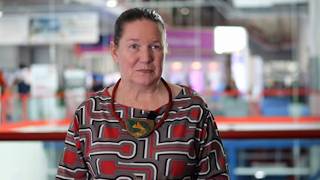
Yasmin Karimi, MD, University of Michigan, Ann Arbor, MI, discusses data from the 3.5-year follow-up of a Phase I/II study (NCT03075696) assessing fixed-duration glofitamab monotherapy in patients with relapsed/refractory (R/R) mantle cell lymphoma (MCL), with or without prior BTK inhibitor exposure. Dr Karimi outlines the encouraging efficacy data and highlights that patients who achieved a complete response (CR) and were measurable residual disease (MRD)-negative at cycle three or at the end of treatment had improved outcomes. She also notes that high-risk patients with prior exposure to BTK inhibitor therapy exhibited slightly lower response rates. This interview took place during the 2026 American Society of Clinical Oncology (ASCO) Meeting in Chicago, IL.
These works are owned by Magdalen Medical Publishing (MMP) and are protected by copyright laws and treaties around the world. All rights are reserved.
Transcript
Yeah, so what this was is an analysis, a longer-term follow-up for a median of 41.5 months of follow-up in patients who had received glofitamab monotherapy for relapsed/refractory mantle cell lymphoma. What we showed is that with longer duration of follow-up, we see that the complete responses are durable, and in patients who achieved a complete response at the end of treatment, the median progression-free survival after completion of this fixed duration therapy was 44 months, with around 66% of patients remaining progression-free and alive at two years after completion of therapy...
Yeah, so what this was is an analysis, a longer-term follow-up for a median of 41.5 months of follow-up in patients who had received glofitamab monotherapy for relapsed/refractory mantle cell lymphoma. What we showed is that with longer duration of follow-up, we see that the complete responses are durable, and in patients who achieved a complete response at the end of treatment, the median progression-free survival after completion of this fixed duration therapy was 44 months, with around 66% of patients remaining progression-free and alive at two years after completion of therapy. So it’s nice that with this longer-term follow-up, we’re seeing durability of response and continued benefit to these high-risk patients.
So I think that the two additional analyses that we showed at this presentation was one, the landmark analysis with patients with complete response at end of treatment, and that’s where I mentioned that these patients who are in complete response maintain complete response. The second is we showed some MRD data. So patients who achieve MRD negativity at either cycle three or at end of treatment have improved outcomes compared to patients who are MRD detectable at these time points. So this was assessed using the adaptive Clonaseq assay and patients who are MRD negative at these time points tend to have a better prognosis overall. In addition, we also continue to explore the impact of COVID-19 infections on this patient population. This study was conducted during the height of the COVID-19 pandemic, and we see that with COVID-19 sensitivity analysis, we can extend both median progression-free survival as well as the duration of complete response in patients who were impacted during treatment at this time.
So in this analysis, the median prior lines of therapy for all patients was two, and in patients who had prior BTK inhibitor therapy, the median prior lines of therapy was three. In addition, this patient population with prior BTK inhibitor had a little bit of a higher risk profile. In addition to a median of three prior lines of therapy, 80% were refractory to prior line of treatment. Median time since last treatment was only 1.3 months. These patients are getting treated more close to their immediate next prior line of therapy. And 30% of patients in this subgroup had TP53 mutations. So this was a higher risk subgroup with more prior therapies, higher risk disease, and having been exposed already to BTK inhibitor therapy. So what we saw in this analysis was a very slight decrease in the overall response rate and complete response rate, as well as a slight decrease in the median progression-free survival and duration of complete response with prior BTK inhibitor therapy. And so the question is whether it’s a reflection of the fact that we’ve used one of our very active lines of treatment, which is a BTK inhibitor prior, or whether or not this was just a higher risk patient population from the get-go.
This transcript is AI-generated. While we strive for accuracy, please verify this copy with the video.
Read more...