The Community Focus Channel is supported with funding from Johnson & Johnson (Gold).
The Lymphoma Channel is supported with funding from AstraZeneca (Diamond), Johnson & Johnson (Gold), Takeda (Silver) and Galapagos (Bronze).
VJHemOnc is an independent medical education platform. Supporters, including channel supporters, have no influence over the production of content. The levels of sponsorship listed are reflective of the amount of funding given to support the channel.
Tandem Meetings 2026 | Deciding between upfront transplant versus a targeted approach in newly diagnosed MCL
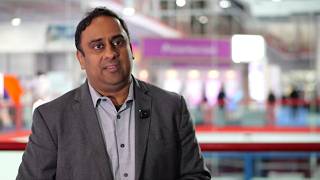
Nirav Niranjan Shah, MD, Medical College of Wisconsin, Milwaukee, WI, discusses the evolving treatment paradigm for frontline mantle cell lymphoma (MCL), highlighting the impact of recent clinical trials on the decision between upfront stem cell transplantation (SCT) and targeted therapy approaches. Dr Shah explains that the use of BTK inhibitors (BTKi) as part of induction and maintenance has demonstrated encouraging outcomes, and that measurable residual disease (MRD) status is now a key factor in determining whether a patient should proceed to transplant following frontline BTKi therapy. This interview took place virtually.
These works are owned by Magdalen Medical Publishing (MMP) and are protected by copyright laws and treaties around the world. All rights are reserved.
Transcript
So, the treatment paradigm for frontline mantle cell lymphoma has really evolved. It was a disease that originally we tried to do an upfront transplant in all the patients to offer them the best, first, longest progression-free survival that we could. However, new data has emerged from two very large clinical trials. The first is the TRIANGLE study, which largely showed that if you include a BTK inhibitor as part of induction and maintenance, that actually you get better outcomes than patients who did not get a BTK inhibitor, but got a transplant...
So, the treatment paradigm for frontline mantle cell lymphoma has really evolved. It was a disease that originally we tried to do an upfront transplant in all the patients to offer them the best, first, longest progression-free survival that we could. However, new data has emerged from two very large clinical trials. The first is the TRIANGLE study, which largely showed that if you include a BTK inhibitor as part of induction and maintenance, that actually you get better outcomes than patients who did not get a BTK inhibitor, but got a transplant. Now, in that study, there was a third arm that got a transplant and a BTK inhibitor. And we need longer follow-up to see if the transplant adds anything. But so far, it’s unclear that the transplant added significant benefit.
In the United States, there was a study done through the cooperative group, through the ECOG group and their partners, and in this clinical trial, they basically took patients that got any frontline treatment for mantle cell lymphoma and they tested their blood for something called MRD. And if they were MRD negative, meaning no minimal residual disease, then they were randomized to getting a transplant or no transplant. And in this study, they actually saw that for those MRD-negative patients, there was no overall survival benefit and no progression-free survival benefit.
And so taking these data sets together, what I’m doing is offering a BTK inhibitor in the frontline, because we know that improves outcomes, checking that MRD at the end of treatment. And if you’re MRD negative, I am no longer recommending a stem cell transplant. In MRD positive patients, I’ll have a conversation with them about the risk and benefits of transplant, because that may be a group of patients that potentially could benefit. We don’t have clear data yet, but at least worth the conversation. So sort of trying to put all the data together and come up with the algorithm that makes appropriate sense for patients. But all of it is shared decision-making, and we go through the data and discuss it with the patients.
This transcript is AI-generated. While we strive for accuracy, please verify this copy with the video.
Read more...