The Community Focus Channel is supported with funding from Johnson & Johnson (Gold).
The Lymphoma Channel is supported with funding from AstraZeneca (Diamond), Johnson & Johnson (Gold), Takeda (Silver) and Galapagos (Bronze).
VJHemOnc is an independent medical education platform. Supporters, including channel supporters, have no influence over the production of content. The levels of sponsorship listed are reflective of the amount of funding given to support the channel.
Tandem Meetings 2026 | The biggest unanswered questions in sequential MCL care
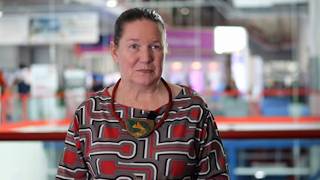
In this video, Nirav Niranjan Shah, MD, Medical College of Wisconsin, Milwaukee, WI, discusses the unanswered questions in sequential mantle cell lymphoma (MCL) care, highlighting the impact of moving treatments such as BTK inhibitors to the front line and the subsequent shift in second-line therapy algorithms. Dr Shah notes that the sequencing of treatments will continue to evolve based on the frontline therapy used, with options including CAR T-cell therapy or non-covalent BTK inhibitors in the second-line setting. This interview took place virtually.
These works are owned by Magdalen Medical Publishing (MMP) and are protected by copyright laws and treaties around the world. All rights are reserved.
Transcript
As we take treatments that were in the second line, like BTK inhibitors, and move them into the front line, the question is simply what comes next? And so if you get a BTK inhibitor up front, that means the second line therapy is now impacted. And so does that mean you give CAR T-cell therapy sooner? Or do you go to a non-covalent BTK inhibitor in the second-line setting? And so what we’re seeing is a shifting of the algorithms...
As we take treatments that were in the second line, like BTK inhibitors, and move them into the front line, the question is simply what comes next? And so if you get a BTK inhibitor up front, that means the second line therapy is now impacted. And so does that mean you give CAR T-cell therapy sooner? Or do you go to a non-covalent BTK inhibitor in the second-line setting? And so what we’re seeing is a shifting of the algorithms. I think for patients who do get a BTK inhibitor up front, if they get a prolonged remission, then maybe we can try a BTK inhibitor again. But for those who progress early, we’re going to be moving CAR T-cell therapy up to a second-line therapy. And so how the sequencing is going to continue to evolve, it’s going to be dependent on what that frontline therapy looks like and then shifting everything based on that frontline pattern.
This transcript is AI-generated. While we strive for accuracy, please verify this copy with the video.
Read more...