The Lymphoma Channel is supported with funding from AstraZeneca (Diamond), BMS (Gold), Johnson & Johnson (Gold), Takeda (Silver) and Galapagos (Bronze).
VJHemOnc is an independent medical education platform. Supporters, including channel supporters, have no influence over the production of content. The levels of sponsorship listed are reflective of the amount of funding given to support the channel.
CAR-T Meeting 2024 | The impact of CAR-T on the role of SCT in lymphoma
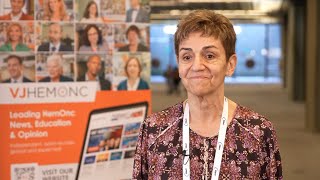
In this video, Anna Sureda, MD, PhD, Catalan Institute of Oncology, Duran I Reynals Hospital, Barcelona, Spain, outlines her talk on the impact of CAR T-cell therapy on the role of hematopoietic stem cell transplantation (SCT) in lymphoma. In the treatment of diffuse large B-cell lymphoma (DLBCL), CAR-T was first approved in the third-line setting, resulting in a decrease in the number of patients receiving allogeneic (allo) SCT. Autologous (auto) SCT has traditionally been used in the second-line setting, and as CAR-T is now being used following early relapse, the rate of autoSCT is also decreasing. Prof. Sureda highlights that the evidence is not yet as extensive in other lymphomas, such as mantle cell lymphoma (MCL) and follicular lymphoma (FL). Still, CAR-T will likely also become well-established in these malignancies shortly. This interview took place at the EBMT-EHA 6th European CAR T-cell Meeting in Valencia, Spain.
These works are owned by Magdalen Medical Publishing (MMP) and are protected by copyright laws and treaties around the world. All rights are reserved.
Transcript
So I gave a presentation in the lymphoma session and basically it was a kind of exercise to try to understand how the introduction of CAR-T in lymphomas, which, by the way, is a major indication for CAR T-cell therapy right now, had an impact on the first type of cellular therapy that we have been using for many, many years, which is, stem cell transplantation, both autologous and allogeneic transplant...
So I gave a presentation in the lymphoma session and basically it was a kind of exercise to try to understand how the introduction of CAR-T in lymphomas, which, by the way, is a major indication for CAR T-cell therapy right now, had an impact on the first type of cellular therapy that we have been using for many, many years, which is, stem cell transplantation, both autologous and allogeneic transplant.
Probably the best example to try to understand this impact is the case of diffuse large B-cell lymphoma, because it’s the major indication for CAR-T, and the reality is that, the numbers of stem cell transplantations have significantly decreased over time. The first one that was impacted was allogeneic stem cell transplant, because CAR T-cells were approved in third line or plus. And in the old days, we used to do allogeneic stem cell transplantation in patients that had failed two prior lines of therapy and of course were candidates for an allo transplant. But of course, nowadays with the movement of CAR-T into second line for primary refractory patients and for early relapses, autologous stem cell transplantations have also started to suffer in terms of numbers, and the numbers of auto transplants are already decreasing. Basically because in centers or in areas around the globe where CAR T-cells are reimbursed and are approved, we are doing CAR-T instead of autologous transplant for these specific patients and we are keeping auto transplants for late relapses.
So, I think that this is already a reality in 2024 and probably these numbers are going to be even more extreme in the near future when second line therapy, for diffuse large B-cell lymphoma is more established, around the globe.
I also presented a little bit, to support this information, some data on the different pivotal trials that we have for diffuse large B-cell lymphoma. And I ended my presentation also with a little bit of information on the pivotal trials on mantle cell lymphoma and follicular lymphoma, where the evidence is not as big as the one that we have for diffuse large B-cell lymphoma and maybe this kind of dichotomy between transplant and CAR-T is not so clear, but it will be coming, in the near future too.
Read more...


Disclosures
Takeda: Consultancy, Honoraria, Research Funding, Speakers Bureau; BMS/Celgene: Consultancy, Honoraria, Research Funding; MSD: Consultancy, Honoraria; Kite: Consultancy, Honoraria; Novartis: Consultancy, Honoraria; Jannsen: Consultancy, Honoraria; Sanofi: Consultancy, Honoraria; GenMab: Consultancy, Honoraria; Pierre Fabre: Consultancy, Honoraria; Astra Zeneca: Consultancy, Honoraria.