The Chronic Lymphocytic Leukemia Channel is supported with funding from AstraZeneca (Diamond), Johnson & Johnson (Gold) and Lilly (Silver).
VJHemOnc is an independent medical education platform. Supporters, including channel supporters, have no influence over the production of content. The levels of sponsorship listed are reflective of the amount of funding given to support the channel.
ESH CLL 2026 | Selecting targeted therapies in CLL: infection and cardiovascular risk considerations
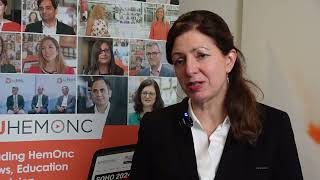
Barbara Eichhorst, MD, University Hospital Cologne, Cologne, Germany, discusses considerations when selecting targeted therapies for chronic lymphocytic leukemia (CLL), including infection risk with CD20 antibodies and the long-term safety profile of BTK inhibitors, particularly cardiovascular risks associated with continuous treatment. This interview took place at the ESH CLL 2026 congress in Stockholm, Sweden.
These works are owned by Magdalen Medical Publishing (MMP) and are protected by copyright laws and treaties around the world. All rights are reserved.
Transcript
Yeah, I mean, we have seen in the pandemic that in particular when CD20 antibodies are used, this has a huge impact for patients and some of them suffered from severe or even died of severe COVID-19 infections. Therefore, we have to always consider patients’ immune status and the environment, how patients are exposed to potential dangerous viral infections on the one hand side, and then on the other hand, the continuous treatment, though they are not associated with such a high rate of severe infections, on the other hand, they have continuous side effects, and so most of them occur in the first year, but even the second, third, or fourth year, patients may still have side effects...
Yeah, I mean, we have seen in the pandemic that in particular when CD20 antibodies are used, this has a huge impact for patients and some of them suffered from severe or even died of severe COVID-19 infections. Therefore, we have to always consider patients’ immune status and the environment, how patients are exposed to potential dangerous viral infections on the one hand side, and then on the other hand, the continuous treatment, though they are not associated with such a high rate of severe infections, on the other hand, they have continuous side effects, and so most of them occur in the first year, but even the second, third, or fourth year, patients may still have side effects. Also among these side effects, there are cardiac risks in the group of all BTK inhibitors, particularly the covalent BTK inhibitors existing, and therefore certainly an aging patient being for a long time on these types of inhibitors certainly has a continuous risk of developing these side effects.
This transcript is AI-generated. While we strive for accuracy, please verify this copy with the video.
Read more...