The Lymphoma Channel is supported with funding from AstraZeneca (Diamond), Johnson & Johnson (Gold), Takeda (Silver) and Galapagos (Bronze).
VJHemOnc is an independent medical education platform. Supporters, including channel supporters, have no influence over the production of content. The levels of sponsorship listed are reflective of the amount of funding given to support the channel.
EHA 2026 | AVENUE final analysis supports frontline avelumab in Hodgkin lymphoma
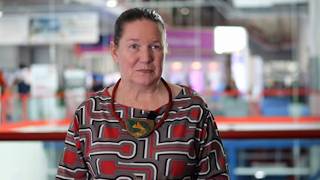
Graham Collins, MA, MBBS, MRCP, FRCPath, DPhil, Oxford University Hospitals NHS Foundation Trust, Oxford, UK, discusses the final 3-year results from the AVENUE study (NCT03617666) evaluating avelumab in frontline classical Hodgkin lymphoma. He highlights the strong progression-free and overall survival outcomes achieved with this PD-L1 inhibitor-based approach, while also reflecting on the evolving role of immunotherapy combinations in Hodgkin lymphoma treatment. This interview took place at the 31st Congress of the European Hematology Association (EHA) in Stockholm, Sweden.
These works are owned by Magdalen Medical Publishing (MMP) and are protected by copyright laws and treaties around the world. All rights are reserved.
Transcript
It was a real pleasure to present the final results of the three-year follow-up now from the AVENUE study. So the AVENUE study was an investigator-initiated study. It was looking at using avelumab, which is a PD-L1 inhibitor in the first-line treatment of classical Hodgkin lymphoma. We gave it before then embarking on the RATHL approach, which is two ABVDs, PET scan, four AVDs if you’re PET negative, escalated BEACOPP if you’re positive...
It was a real pleasure to present the final results of the three-year follow-up now from the AVENUE study. So the AVENUE study was an investigator-initiated study. It was looking at using avelumab, which is a PD-L1 inhibitor in the first-line treatment of classical Hodgkin lymphoma. We gave it before then embarking on the RATHL approach, which is two ABVDs, PET scan, four AVDs if you’re PET negative, escalated BEACOPP if you’re positive. Now, we’ve already presented the overall response rate. That was 45%. Now, that made it a positive study, but perhaps it was a little bit lower than we sort of had hoped. And it was only an 11% complete metabolic response rate. However, the progression-free survival was excellent. So the three-year PFS is 91%, so very few people relapsed, and 100% overall survival. So, you know, great data. It’s not going to be taken forward for avelumab in classical Hodgkin lymphoma. You know, there are other PD-1-interrupting drugs that have now got an established role, such as nivolumab. But it was certainly a very interesting trial to do. We had some patients who experienced immune-related adverse events, which we will see with nivolumab and AVD, if and when we’ll be able to use that as a standard of care in the front line. And it was certainly very gratifying to see such a high cure rate with that trial.
This transcript is AI-generated. While we strive for accuracy, please verify this copy with the video.
Read more...