The Community Focus Channel is supported with funding from Johnson & Johnson (Gold).
VJHemOnc is an independent medical education platform. Supporters, including channel supporters, have no influence over the production of content. The levels of sponsorship listed are reflective of the amount of funding given to support the channel.
EHA 2026 | Meta-analysis highlights disparities in CML outcomes across healthcare settings
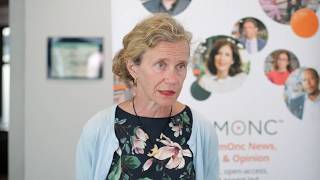
Jorge Cortes, MD, The University of Alabama at Birmingham, Birmingham, AL, discusses findings from a recent meta-analysis evaluating outcomes with imatinib in chronic myeloid leukemia (CML) across diverse healthcare settings. He highlights persistent disparities in outcomes between large academic centers and smaller institutions, emphasizing the need to improve access to monitoring tools, resources, and standardized care to ensure more equitable treatment for patients with CML worldwide. This interview took place at the 31st Congress of the European Hematology Association (EHA) in Stockholm, Sweden.
These works are owned by Magdalen Medical Publishing (MMP) and are protected by copyright laws and treaties around the world. All rights are reserved.
Transcript
We tried to analyze in this study the outcomes that have been reported in the literature and in databases from large academic institutions, smaller academic institutions, and community outcomes because we realized that the settings, the populations that we treat, the availability of resources, from monitoring tools, and all of these are very different. And indeed we find that the outcomes seem to be much better in the very large referral institutions compared to the smaller institutions...
We tried to analyze in this study the outcomes that have been reported in the literature and in databases from large academic institutions, smaller academic institutions, and community outcomes because we realized that the settings, the populations that we treat, the availability of resources, from monitoring tools, and all of these are very different. And indeed we find that the outcomes seem to be much better in the very large referral institutions compared to the smaller institutions. So the key message there is how do we equalize that because we have the tools, we have the medications, we have the guidelines, we have the monitoring, we have all of that available somewhere, but how can you make it reach everybody that can benefit? And that’s probably one of the biggest challenges that we face. And if that happens in the U.S., you can imagine that translated to the whole world when there’s even greater variability in how much access and availability, and all of that comes. Some of that is knowledge, but the overwhelming majority of the disparities here is the availability of resources.
This transcript is AI-generated. While we strive for accuracy, please verify this copy with the video.
Read more...