The Community Focus Channel is supported with funding from Johnson & Johnson (Gold).
The Multiple Myeloma Channel is supported with funding from AbbVie (Platinum), Sanofi (Gold), Legend Biotech (Bronze), and through an educational grant from Alexion Pharma GmbH.
VJHemOnc is an independent medical education platform. Supporters, including channel supporters, have no influence over the production of content. The levels of sponsorship listed are reflective of the amount of funding given to support the channel.
IMS 2026 | Frailty-adapted therapy for patients with myeloma: overcoming barriers in community practice
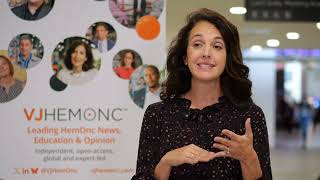
Ashley Rosko, MD, Ohio State University Comprehensive Cancer Center, Columbus, OH, discusses the importance of adapting treatment regimens for patients with multiple myeloma based on frailty and notes that a practical geriatric assessment can be a low-resource starting point for community oncologists without access to a formal assessment. Dr Rosko highlights the need to bridge the gap between myeloma and general geriatric oncology to improve education and knowledge for patients and providers. This interview took place at the 23rd International Myeloma Society (IMS) Annual Meeting in Glasgow, UK.
These works are owned by Magdalen Medical Publishing (MMP) and are protected by copyright laws and treaties around the world. All rights are reserved.
Transcript
So a comprehensive geriatric assessment is one that is recommended for all adults 65 years and older, including multiple myeloma patients. We do recognize that there are some limitations with the ability to deliver a comprehensive geriatric assessment, whether that’s in expertise, knowledge, or resources. So as such, for the general cancer oncology community, there is the practical geriatric assessment, which is oftentimes patient-delivered to be able to identify measures of vulnerability across different domains of health that’s one example for patients who have cancer broadly but for patients with multiple myeloma specifically at our session we talked a bit about some of the limitations of the myeloma-specific frailty tools...
So a comprehensive geriatric assessment is one that is recommended for all adults 65 years and older, including multiple myeloma patients. We do recognize that there are some limitations with the ability to deliver a comprehensive geriatric assessment, whether that’s in expertise, knowledge, or resources. So as such, for the general cancer oncology community, there is the practical geriatric assessment, which is oftentimes patient-delivered to be able to identify measures of vulnerability across different domains of health that’s one example for patients who have cancer broadly but for patients with multiple myeloma specifically at our session we talked a bit about some of the limitations of the myeloma-specific frailty tools. It is great that we are moving past age-based therapy, and at the same time, we recognize that there are significant limitations to the frailty measures that we have in myeloma. So being able to bridge the gap between what we have in myeloma and what we have generally in geriatric oncology is one way to be able to broaden our education and knowledge for patients and providers in academic settings, community settings, or wherever they practice.
This transcript is AI-generated. While we strive for accuracy, please verify this copy with the video.
Read more...