The Community Focus Channel is supported with funding from Johnson & Johnson (Gold).
The Lymphoma Channel is supported with funding from AstraZeneca (Diamond), BMS (Gold), Johnson & Johnson (Gold), Takeda (Silver) and Galapagos (Bronze).
VJHemOnc is an independent medical education platform. Supporters, including channel supporters, have no influence over the production of content. The levels of sponsorship listed are reflective of the amount of funding given to support the channel.
ASH 2025 | Combined chemotherapy and consolidative radiation versus chemotherapy alone in early-stage cHL
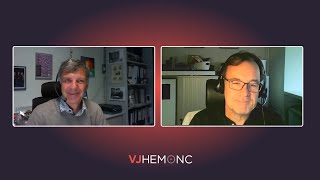
Jakub Svoboda, MD, Abramson Cancer Center, University of Pennsylvania, Philadelphia, PA, provides insight into the HODGKIN25 study, a multicenter retrospective real-world analysis of combined chemotherapy followed by consolidative radiation versus chemotherapy alone in the management of early-stage classical Hodgkin lymphoma (cHL). Dr Svoboda highlights that the study found no significant differences in survival outcomes between patients receiving combined modality therapy (CMT) and those receiving chemotherapy alone. This interview took place at the 67th ASH Annual Meeting and Exposition, held in Orlando, FL.
These works are owned by Magdalen Medical Publishing (MMP) and are protected by copyright laws and treaties around the world. All rights are reserved.
Transcript
The HODGKIN25 study is really a multicenter effort to look at outcomes of patients with limited-stage disease in Hodgkin lymphoma. And again, the reason why we ask these questions is that compared to advanced stage, there’s a lot of controversies on what to do in patients with stage 1 and 2 Hodgkin lymphoma. Traditionally patients were treated with combined modality therapies where we used a short course of chemotherapy followed by consolidative radiation but there have been efforts to sort of peel away the radiation and again a lot of controversies around who may benefit from the combined modality or who should be getting chemotherapy only and so Nikita Dave, Dr Nikita Dave, from our center who unfortunately cannot be here this ASH but she led this effort multi-site efforts included eight academic centers in the United States...
The HODGKIN25 study is really a multicenter effort to look at outcomes of patients with limited-stage disease in Hodgkin lymphoma. And again, the reason why we ask these questions is that compared to advanced stage, there’s a lot of controversies on what to do in patients with stage 1 and 2 Hodgkin lymphoma. Traditionally patients were treated with combined modality therapies where we used a short course of chemotherapy followed by consolidative radiation but there have been efforts to sort of peel away the radiation and again a lot of controversies around who may benefit from the combined modality or who should be getting chemotherapy only and so Nikita Dave, Dr Nikita Dave, from our center who unfortunately cannot be here this ASH but she led this effort multi-site efforts included eight academic centers in the United States. And we put together a very large, actually, data cohort of 800-plus patients with limited-stage Hodgkin lymphoma. Majority had nodular sclerosing subtype. Actually, about two-thirds were unfavorable limited-stage patients, and a majority received ABVD or AVD-like regimens for the systemic therapy. I think 90% of patients received that type of treatment. So we had about one-third of patients who received combined modality as opposed to two-thirds who had chemo-only approach.
And when we looked at the whole cohort of these limited-stage patients, there were really no significant differences in terms of PFS or OS, depending, you know, within those two groups, combined modality treatment versus chemo-only treatment. But I think it was really interesting that we started to look at some of the subsets of patients and cohorts, and we did find that there are certain groups that seem to benefit, at least in terms of the PFS, the sort of initial cure, with combined modality. And those were patients who had bulky disease, and so they benefited in the local control. Patients who had interim positive PET scans and then also patients who had unfavorable disease and received only four or less cycles of ABVD-like systemic therapy without radiation.
So again I mean this study is obviously a retrospective study that has all the limitations of retrospective studies. But on the other hand, I think it does provide some additional information that may benefit both the patients and also help the providers to sort of tailor the therapy specifically for each individual patient. Because again, in this setting, in this early-stage Hodgkin lymphoma, there’s a lot of heterogeneity. And even though we do have prospective trials that are looking at the same questions, I think having more data from the real world is helpful.
This transcript is AI-generated. While we strive for accuracy, please verify this copy with the video.
Read more...